
On this page
- What CFM actually means for a bathroom
- Step 1: Measure the room and check the ceiling height
- Step 2: Use the square-foot method for small bathrooms
- Step 3: Use the fixture method for large bathrooms
- Step 4: Adjust for tall or vaulted ceilings
- A worked example from start to finish
- Picking the actual fan once you have the number
- Your quick sizing recap
The first bathroom fan I ever replaced was in a small ranch house where the homeowner swore the old one was broken. It wasn’t broken. It was a 50 CFM builder-grade unit trying to clear the steam from a big walk-in shower in a 110 square foot bathroom. The math had failed long before the motor did.
That job stuck with me because it is the most common mistake I see: people shop for a fan by price or noise rating and never once check whether it can actually move enough air for the room. Sizing a fan by bathroom exhaust fan cfm is not complicated, and you can do the whole thing with a tape measure and a pocket calculator.
What CFM actually means for a bathroom
CFM stands for cubic feet per minute. It is simply the volume of air the fan pulls out of the room every minute it runs.
A bathroom fan’s job is to swap out the humid, warm air after a shower with drier air fast enough that moisture never gets a chance to settle on walls, grout, and the ceiling. If the fan moves too little air, that steam lingers, condenses, and feeds mold.
The Home Ventilation Institute, the group that certifies these ratings, recommends that a bathroom fan be able to exchange the room’s air at least eight times per hour. That target is the reason the sizing rules below work out the way they do.
For a standard 8-foot ceiling and a bathroom of 100 square feet or less, one CFM per square foot of floor space gets you very close to the right number.
Step 1: Measure the room and check the ceiling height
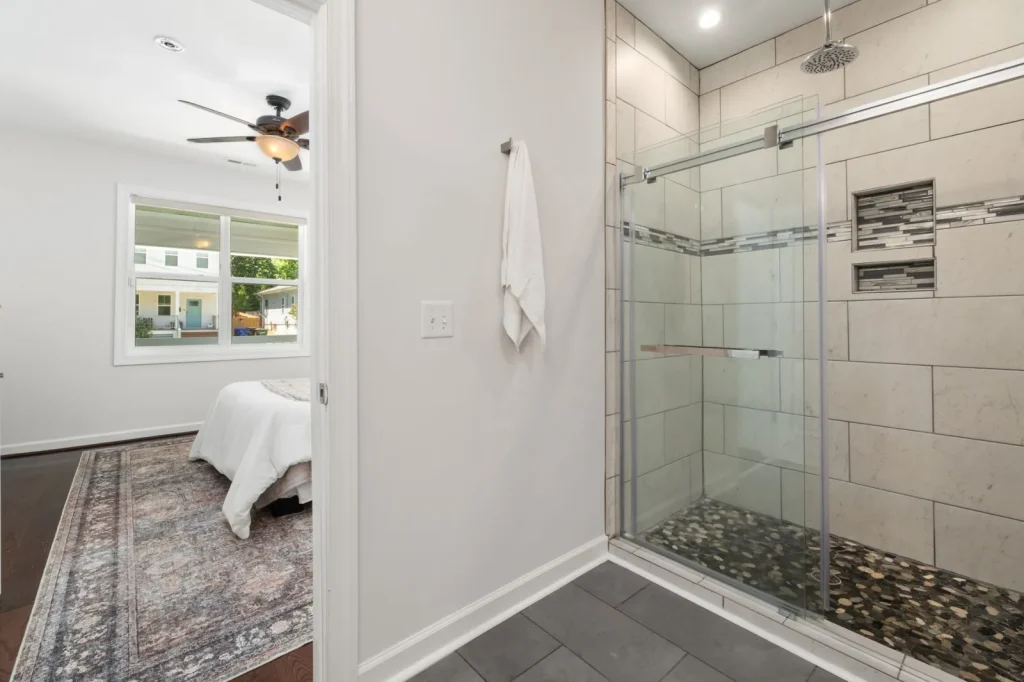
Grab a tape measure and record the length and width of the bathroom floor in feet. Multiply them to get square footage. A room that is 8 feet by 9 feet is 72 square feet.
Now check the ceiling height. The simple square-foot method assumes a standard 8-foot ceiling. If your ceiling is taller, say 9 or 10 feet, or the room has a vaulted section, skip ahead to the volume method in Step 4. Otherwise, keep going.
Measure to the nearest half foot and round the square footage up, not down. A fan that is slightly oversized costs almost nothing extra to run and clears the room faster.
Step 2: Use the square-foot method for small bathrooms
If your bathroom is 100 square feet or smaller with an 8-foot ceiling, this is the whole calculation:
Square footage = minimum CFM.
A 72 square foot bathroom needs a fan rated for at least 72 CFM. Since fans come in standard sizes, you would round up to the next one available, usually 80 CFM. HVI also sets a floor of 50 CFM for any bathroom, so even a tiny powder room gets a 50 CFM fan minimum.
The number on the box is a starting point, not a promise. A 110 CFM fan only moves 110 CFM under ideal, near-zero-resistance conditions.
Step 3: Use the fixture method for large bathrooms

Once a bathroom passes 100 square feet, the square-foot rule starts to undersize things, because big master baths often have multiple wet fixtures spread out. For these rooms, HVI recommends adding up CFM by fixture instead.
| Fixture | CFM to add |
|---|---|
| Toilet | 50 |
| Shower (standard) | 50 |
| Bathtub | 50 |
| Jetted or whirlpool tub | 100 |
Add the values for every fixture in the room. A large master bath with a toilet, a separate shower, and a soaking tub comes out to 150 CFM.
In a big room with fixtures at opposite ends, you are often better off installing two smaller fans, one over the toilet and one over the shower, rather than a single large one. Each fan clears its own zone, and you avoid dead corners where steam hangs around.
Step 4: Adjust for tall or vaulted ceilings
The square-foot rule quietly assumes 8-foot ceilings. If yours are taller, the room holds more air, and you need to size by volume instead.
Here is the sequence:
- Multiply length by width by ceiling height to get cubic feet.
- Multiply that by 8 (the target air changes per hour).
- Divide by 60 minutes.
For a 10 foot by 10 foot bathroom with a 10-foot ceiling, that is 1,000 cubic feet, times 8 equals 8,000, divided by 60 equals roughly 133 CFM. You would round up to a 150 CFM fan.
Do not undersize to save 15 dollars. An underpowered fan runs far longer to clear the same steam, wears out sooner, and often still leaves a damp film on the ceiling. Oversizing by a size is cheap insurance.
A worked example from start to finish
Let me run a real one. Say you have a master bathroom that measures 11 feet by 10 feet with a standard 8-foot ceiling. It has a toilet, a walk-in shower, and a separate freestanding tub.
Floor area is 110 square feet, so we are over the 100 square foot line and use the fixture method.
- Toilet: 50 CFM
- Walk-in shower: 50 CFM
- Freestanding tub: 50 CFM
- Total: 150 CFM
The fixture total lands at 150 CFM. I would cross-check with the square-foot number (110) and take the larger of the two, which is 150. A single 150 CFM fan works here, though because the tub and shower sit at opposite ends, two 80 CFM fans would clear the room more evenly for a similar total.
Picking the actual fan once you have the number
With your target CFM in hand, there are two more numbers on the box worth a glance before you buy.
Sones (the noise rating)
Sones measure how loud the fan is. Under 1.0 sone is very quiet, around 3.0 is noticeable. Quieter fans usually cost more but people actually leave them running long enough to do the job, which matters more than the rating on paper.
The rated CFM is a best case
That box number is measured with almost no duct resistance. Real ductwork, elbows, and a longer run all cut into it. This is exactly why you round up and why the fan still has to move that air through the duct without choking. If you want the deeper story on where that air goes, the topic Do Bathroom Fans Need to Vent Outside? covers it well.
The U.S. Environmental Protection Agency has good background on why controlling indoor moisture is worth the effort, and you can read more at its indoor air quality pages. For broader home ventilation context, the topic Home Ventilation Systems: What They Do and When You Need One is a solid next read.
Your quick sizing recap
Measure the floor, check the ceiling height, and pick your method. Under 100 square feet with an 8-foot ceiling, use one CFM per square foot. Over 100 square feet, add up the fixtures. Tall ceilings get the volume calculation.
Then round up to the next available fan size and treat the box rating as optimistic. Do that, and you will end up with a fan that clears the mirror in a couple of minutes instead of one that hums along for twenty and still leaves the corners damp.
Frequently asked questions
How many CFM do I need for a standard 5x8 bathroom?
A 5 by 8 foot bathroom is 40 square feet. Even though the square-foot rule would suggest 40 CFM, the Home Ventilation Institute sets a minimum of 50 CFM for any bathroom. So you would install a 50 CFM fan. That size handles a single toilet and a standard shower or tub in a small room with an 8-foot ceiling comfortably.
Can a bathroom exhaust fan be too powerful?
An oversized fan is rarely a real problem in a bathroom. It clears steam faster and costs only pennies more to run. The one thing to watch is that a very high CFM fan in a tightly sealed home can struggle to pull in makeup air, which makes it noisier and less effective. For most homes, sizing up by one step is safe and smart.
Does ceiling height change the CFM I need?
Yes. The simple one CFM per square foot rule assumes a standard 8-foot ceiling. Taller or vaulted ceilings hold more air, so you should size by volume instead. Multiply length by width by height to get cubic feet, multiply by 8 air changes, then divide by 60. Round the result up to the next standard fan size.
Should I get one big fan or two smaller fans for a large bathroom?
For a large master bath with fixtures at opposite ends, two smaller fans usually beat one big one. Put one over the toilet and one over the shower or tub. Each clears its own zone, so steam does not hang in dead corners. Their combined CFM should still meet or exceed your fixture total for the room.
Is the CFM number on the fan box accurate?
It is measured under ideal lab conditions with almost no duct resistance, so treat it as a best case. Real ductwork with elbows and longer runs reduces actual airflow, sometimes significantly. That is why you round your target CFM up when choosing a fan, and why the duct run itself matters as much as the fan rating you buy.

Dharm Solanki
Dharm Solanki spends a lot of time thinking about the air inside people's homes, usually when no one else is. He writes about humidity, ventilation, and dehumidifiers, along with the small fixes that turn a stuffy or damp room into one that feels comfortable again. He would rather explain why a recommendation works than just point at a product, so his guides tend to answer the question you were about to ask next. And if something looks great on paper but struggles in a normal house, he says so.