
On this page
The first callback I ever got as a young tech was not a broken machine at all. A woman had run a brand new ultrasonic humidifier on the floor next to her oak dresser for two weeks, and the bottom drawer face had swelled so much it would not close. The unit worked perfectly. The problem was where she put it.
Placement is the part almost nobody reads the manual for, and it is the part that decides whether you get comfortable, even moisture or a damp ring on your furniture. Getting where to place a humidifier right takes about two minutes and saves you a warped tabletop and a lot of guessing.
Start with distance from walls and furniture
Mist needs room to mix with the air before it lands on something. Set the unit too close to a wall and you create a narrow band of very damp air that never spreads, which is how you end up with peeling paint or a faint gray shadow of mildew behind the machine.
Give it at least 2 to 3 feet of clearance on the side the mist comes out. That gap lets the moisture fan out and evaporate into the whole room instead of soaking one square foot of drywall.
Two to three feet from walls and furniture, two to three feet off the floor. If you remember nothing else, remember those two numbers.
The same logic applies to furniture. Keep the output away from bookshelves, upholstered chairs, and anything wooden. Cool mist units are the usual culprits here because the fine spray can settle as a thin wet film before it fully evaporates.
Get it up off the floor

Floor placement is the single most common mistake I see, and it is an easy one to make because the floor is right there and the cord reaches.
The trouble is that cool, moist air sinks. Run a humidifier at floor level and much of the output pools low, dampening your carpet or flooring while the air you actually breathe at sitting and standing height stays dry. Your hygrometer reads fine near the machine and the rest of the room feels parched.
Put the unit on a small table, dresser, or sturdy shelf, roughly 2 to 3 feet up. Higher placement gives the mist a head start and lets it disperse across a wider area before gravity pulls it down.
Whatever you set it on, protect the surface. Put down a waterproof tray or a towel. Even correctly placed units can leave a moisture ring over a long winter, and mineral dust from hard water settles on nearby surfaces as a fine white film.
A quick note on tabletop stability
Raised placement only works if the surface is solid and level. A wobbly plant stand or a stack of books invites a spill, and a full tank holding a gallon of water weighs around eight pounds. Choose something that will not tip if a pet brushes past it.
Aim the mist toward open space
Most units let you rotate the nozzle. Point it toward the center of the room or an open doorway, never straight at a wall, a window, or the nearest piece of furniture.
In a bedroom, angle the output across the room rather than directly at the bed. You want the humidity to reach you as evenly conditioned air, not as a stream of damp landing on your pillow and sheets. Damp bedding is uncomfortable and, over time, a place for mold to take hold. If you run one overnight, the same idea covered in Using a Humidifier at Night While Sleeping applies here: keep it a few feet from your head and aimed at open air.
A humidifier is trying to raise the moisture of a whole room, not spray a single spot. Placement is just making sure the whole room is what it treats.
Spots to avoid, no exceptions

Some locations cause enough trouble that they are worth calling out on their own. Keep the unit away from all of these.
- Near electronics. TVs, computers, speakers, and power strips do not mix with airborne moisture. Give them a wide berth, at least 4 to 5 feet.
- On or near wood furniture. Solid wood, veneer, and laminate all swell or lift when they take on moisture repeatedly.
- In a corner. Two walls trap the mist and choke off circulation. Corners are the worst of both worlds.
- Next to a heat source or in direct sun. A radiator or sunny sill throws off your humidity readings and can stress the tank.
- In a tight, closed nook. Behind a couch or inside a cabinet, the moisture has nowhere to go and just condenses.
Placement by room
The core rules hold everywhere, but each room has a wrinkle worth knowing.
| Room | Best spot | Watch for |
|---|---|---|
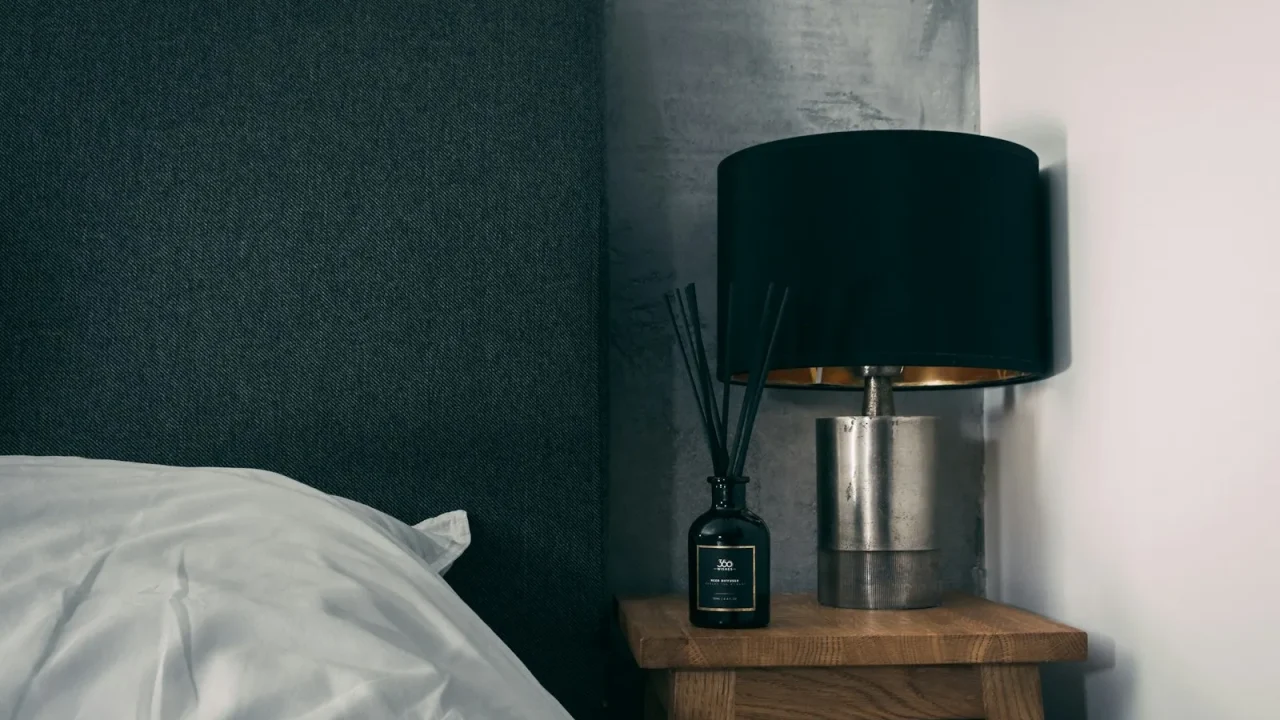
| Bedroom | Dresser or nightstand, 3+ feet from the bed, aimed at open space | Damp bedding, mist pointed at your face |
| Living room | Side table near the center, away from the TV and sofa | Electronics, wood coffee tables |
| Nursery | High shelf out of reach, cord fully managed | Warm mist burn risk, tipping hazards |
| Home office | A separate stand away from the desk | Computer, monitor, papers curling |
In a larger open floor plan, central placement matters even more. One unit in the middle of the space treats it far better than the same unit shoved against an end wall. If a single humidifier cannot keep up, that is a sizing question more than a placement one, and How to Size a Humidifier for a Room walks through matching capacity to square footage.
Warm mist needs extra thought
Warm mist and steam units heat water to near boiling, so placement is partly a safety decision. Keep them well out of reach of children and pets, on a stable surface, with the cord tucked so nobody trips into a tank of hot water. The trade-offs between the two styles come up in Warm Mist vs Cool Mist Humidifier, but for placement, the short version is give heat more clearance than cool mist.
A simple placement routine that works
Here is the two minute check I run through in any room. Set the unit on a stable surface 2 to 3 feet off the floor. Pull it 2 to 3 feet away from the nearest wall and furniture. Aim the nozzle at open space. Confirm no electronics, wood, or bedding sit in the mist path. Slide a tray underneath.
Put a small hygrometer on the far side of the room, not next to the humidifier. If that distant corner reads 40 to 50 percent relative humidity, your placement is spreading moisture the way it should. The EPA indoor air quality pages recommend keeping indoor humidity in that range to discourage mold and dust mites.
Run it for a day and trust your eyes and nose. Condensation on the windows, a damp patch on the floor, or a musty smell all mean the unit is too low, too close to something, or too big for the space. Nudge it higher, pull it toward the center, and the problem usually clears up fast.
Good placement is not fussy. It is a stable surface, a few feet of breathing room in every direction, and a nozzle pointed at nothing you care about. Get that right and the machine quietly does its job, no swollen drawers required. For the bigger picture on choosing and maintaining a unit, the ENERGY STAR humidifier guidance is a solid, unbiased starting point.
Frequently asked questions
How far from the wall should a humidifier be?
Keep at least 2 to 3 feet between the humidifier and any wall, measured on the side the mist comes out. That gap lets the moisture spread into the room instead of soaking a small patch of drywall, which can lead to peeling paint or mildew behind the unit. Corners are worse than flat walls because two surfaces trap the mist, so avoid them entirely.
Should a humidifier be placed on the floor or up high?
Raise it 2 to 3 feet off the floor on a table, dresser, or sturdy shelf. Moist air sinks, so a floor unit dampens your carpet and flooring while the air at breathing height stays dry. Elevated placement gives the mist room to disperse before gravity pulls it down, treating the whole room more evenly. Always use a stable, level surface with a tray underneath.
Can I put a humidifier next to my bed?
Keep it at least 3 feet from your bed and aim the mist toward open space, not at your pillow. A stream of moisture landing directly on sheets and pillows makes bedding damp and, over time, invites mold. A nightstand or dresser a few feet away works well, letting the humidity reach you as evenly conditioned air rather than a wet spray.
Is it safe to place a humidifier near a TV or computer?
No. Airborne moisture and electronics do not mix, and a fine mist settling on circuit boards or connectors can cause corrosion or shorts over time. Give TVs, computers, speakers, and power strips at least 4 to 5 feet of clearance. In a home office, set the humidifier on a separate stand well away from your desk and monitor.
Why is my furniture getting damp near the humidifier?
The unit is likely too close, too low, or aimed straight at the surface. Cool mist can settle as a thin wet film before it fully evaporates, and wood swells or lifts when it absorbs moisture repeatedly. Move the humidifier 2 to 3 feet away from the furniture, raise it off the floor, and rotate the nozzle to point at open space instead of the nearest object.
Where should I put a humidifier in a large open room?
Place it as close to the center of the space as you can, on an elevated surface. A central position lets one unit condition the whole area, while a machine pushed against an end wall leaves the far side dry. If a single humidifier still cannot keep up in a large room, the issue is usually capacity rather than placement, and you may need a unit sized for more square footage.

Dharm Solanki
Dharm Solanki spends a lot of time thinking about the air inside people's homes, usually when no one else is. He writes about humidity, ventilation, and dehumidifiers, along with the small fixes that turn a stuffy or damp room into one that feels comfortable again. He would rather explain why a recommendation works than just point at a product, so his guides tend to answer the question you were about to ask next. And if something looks great on paper but struggles in a normal house, he says so.