On this page
The first attic I crawled into as a young technician had frost on the underside of the roof deck. In July. The homeowner swore they had no leak, and they were right. The water was coming from inside the house, pumped up there every morning by a bathroom fan that vented into nothing but empty attic space.
That is the whole problem in one picture. So let me answer the question people actually type into search.
Do bathroom fans need to vent outside? Yes, always
A bathroom exhaust fan has one job: take the humid air from your shower and put it somewhere it cannot cause harm. The only place that qualifies is outdoors.
Venting into an attic, a soffit, a crawlspace, or a wall cavity does not remove the moisture from your home. It just relocates it a few feet to a spot you rarely look at, where it can quietly do damage for years.
If the duct does not end at a cap on your roof or an exterior wall with flaps that open to daylight, the fan is not really venting. It is redistributing your shower steam.
A single hot shower can release a pint or more of water into the air. Run that fan into your attic twice a day and you are delivering close to a gallon of water a week to your framing and insulation.
Why the attic is the worst place to send it
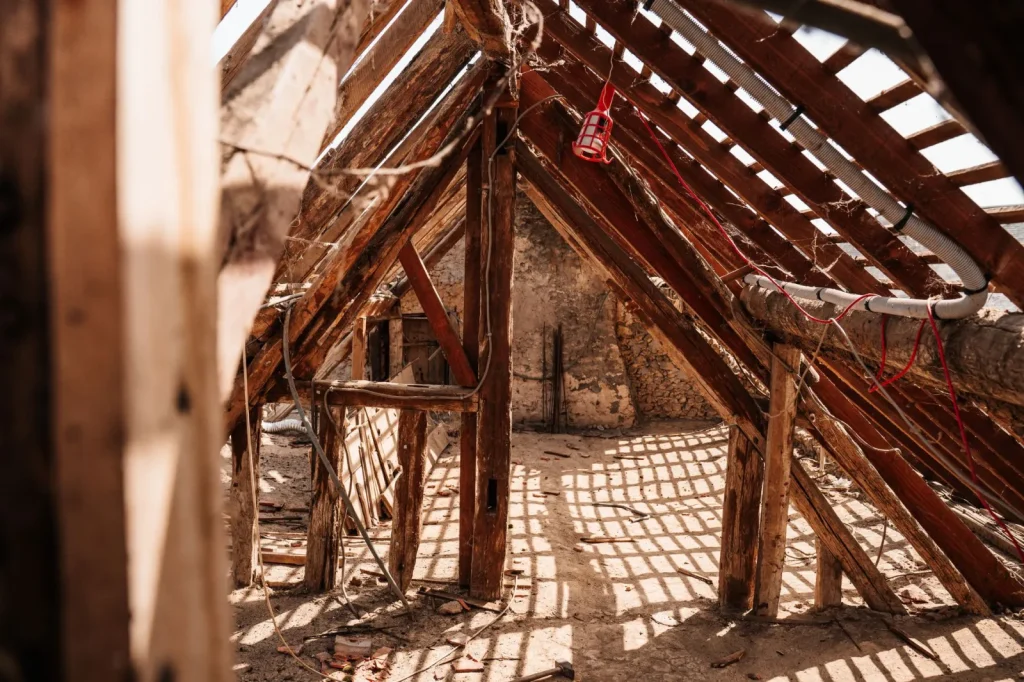
An attic in winter is cold. The air you pump up there from a shower is warm and loaded with moisture. When warm wet air hits a cold surface like the underside of your roof sheathing, it condenses into liquid water, exactly like a cold glass sweating on a summer day.
That condensation soaks into the wood and the insulation. Over a season or two you get the classic signs I still find on inspections all the time.
- Dark mold staining on the underside of the roof deck
- Insulation that looks flat, matted, and damp
- Rusty nail tips poking through the sheathing
- A musty smell the moment you lift the attic hatch
- Frost or ice on the rafters in cold weather
Wet insulation also stops insulating. Fiberglass that has absorbed moisture can lose a big chunk of its R-value, so you pay to heat the house and still feel cold.
Mold does not need a roof leak to grow. A misrouted bathroom fan will feed it just fine, one shower at a time.
The health side matters too. The EPA’s guidance on mold and moisture is blunt about it: control the moisture and you control the mold. A fan that dumps into the attic does the opposite.
What about venting into a soffit?
People try this because it looks tidy and the duct run is short. The trouble is that most soffit vents are intake vents. They pull outside air into the attic as part of the roof’s ventilation.
Blow moist bathroom air at a soffit intake and a good share of it gets sucked right back into the attic you were trying to protect. It is a loop that mostly defeats itself.
What the building code actually says
This is not just my opinion from crawling around attics. It is written down. Under the International Residential Code, section M1505, mechanical exhaust from a bathroom must discharge to the outdoors.
The code also calls for a backdraft damper so outside air does not blow back in, and it prohibits terminating the duct inside the building, including in the attic or crawlspace. Local jurisdictions adopt their own versions, so the exact wording varies, but the core rule is consistent across the country.
An attic-vented fan is a common find during home inspections, and it can hold up a sale or fail a permit. If you are buying or selling, check where every bath fan actually goes before it becomes a negotiation point.
If you want to read the reasoning behind the rules, the U.S. Department of Energy’s Energy Saver resources cover why moisture control and proper exhaust matter for both durability and efficiency.
How to vent a bathroom fan the right way
Getting the destination right is most of the battle. The path matters too, because a poorly built duct run can undo a correctly placed exit.
Pick a real exit point
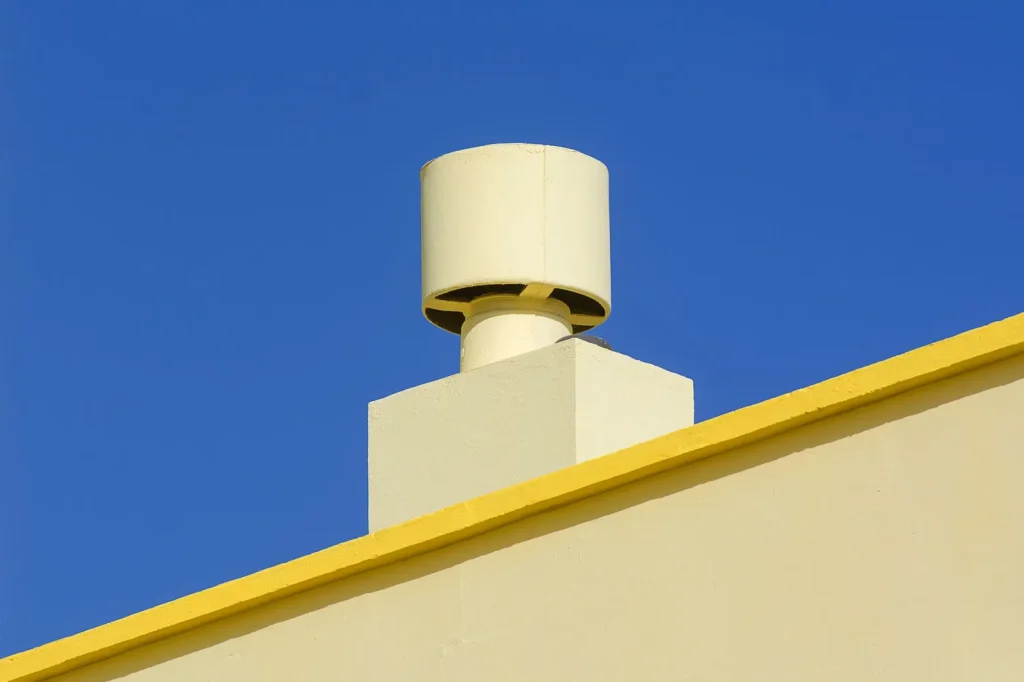
You have two solid choices. Run the duct up through the roof to a dedicated roof cap, or run it out through a gable or exterior wall to a wall cap. Both should have a hood or louvers that open when the fan runs and close when it stops.
| Termination | Best for | Notes |
|---|---|---|
| Roof cap | Fans centered in the house | Shortest run, needs proper flashing to stay watertight |
| Wall cap (gable or sidewall) | Fans near an outside wall | Easy to inspect, keep at least 3 ft from other openings |
| Soffit-mounted cap | Last resort only | Use a dedicated cap, never an open intake vent |
Build the duct run so it drains
Use smooth-wall rigid metal duct or insulated flex duct. Bare uninsulated flex through a cold attic is a condensation factory, because the air cools inside the duct and drips back toward the fan.
Keep the run as short and straight as you reasonably can. Every elbow and every foot of length cuts airflow, so a fan rated for 80 CFM might only move 50 by the time the air reaches the cap.
Slope the duct slightly downhill toward the outside cap. That way any condensation that does form runs out to daylight instead of back into the fan housing and your ceiling.
Seal the joints with foil tape or mastic, not cloth duct tape, which dries out and lets go within a couple of years. And insulate any duct that passes through unconditioned attic space so the air stays warm enough to reach the exit before it condenses.
While you are up there, this is also a good moment to confirm the fan is actually big enough for the room. Sizing is a separate topic, and our piece on how to size a bathroom exhaust fan by CFM walks through the math if the current fan feels weak.
A quick word on whole-house ventilation
Bath fans are the simplest form of exhaust ventilation, but they are not the only way homes move air. If your house feels stuffy or damp all over, not just in the bathroom, the fix might be a broader system.
Balanced systems like an HRV or ERV bring in fresh air and remove stale air on purpose, and they always vent to the outdoors by design. That is worth knowing if you are already opening up ceilings and thinking about air quality as a whole.
Fixing a fan that vents into the attic
If you just discovered your fan dumps into the attic, do not panic, but do put it on the short list. Here is the practical order of operations.
- Get into the attic and confirm where the duct ends. Look for a loose flex hose lying on the insulation.
- Check the sheathing and insulation nearby for staining, dampness, or mold.
- Route a proper duct to a roof or wall cap, using insulated or rigid duct.
- Address any existing mold or wet insulation before you close things up.
- Run the fan and step outside to confirm you feel air coming from the cap.
That last step is the one people skip. Watching the louvers on the cap flap open while the fan runs is the only proof that the whole path works end to end.
Your next move is simple: go look. Pop the attic hatch, find each bathroom duct, and trace it to where it ends. If it stops short of the outside, you now know exactly what to fix and why it is worth doing before the frost shows up.
Frequently asked questions
Can a bathroom fan vent into the attic if the attic is well ventilated?
No. Even a well ventilated attic cannot handle the concentrated moisture a fan delivers straight from a shower. The warm wet air condenses on cold surfaces faster than passive roof vents can clear it. Building codes prohibit terminating the duct in the attic for exactly this reason. Always run the duct all the way to an exterior cap.
Is it against code to vent a bathroom fan into the attic?
In most places, yes. The International Residential Code, section M1505, requires bathroom exhaust to discharge outdoors and specifically bars terminating the duct inside the building, including the attic. Local codes adopt their own versions, but the outdoor requirement is nearly universal. An attic-vented fan can fail an inspection or complicate a home sale.
What happens if my bathroom fan does not vent outside?
The moisture stays in your home instead of leaving it. Over time you can get mold on framing, damp and matted insulation that loses R-value, rusting fasteners, and rotting roof sheathing. You may also notice a musty smell or ceiling stains. None of it happens overnight, but the damage compounds shower after shower until you fix the duct.
How do I know where my bathroom fan currently vents?
The surest way is to look in the attic. Find the fan housing in the ceiling and follow the duct attached to it. If the duct just ends and lies loose on the insulation, it vents into the attic. If it runs to a cap on the roof or an exterior wall, it vents outside. Running the fan and checking for airflow at the exterior cap confirms it.
Can a ductless or recirculating bathroom fan work instead?
True bathroom exhaust fans are not designed to recirculate the way some kitchen hoods do, because they need to remove humidity, not just odor. A filter cannot capture water vapor. Any fan meant to control shower moisture has to move that air outdoors through a duct. If a room truly cannot be ducted, that is a job for a contractor to assess, not a filter.

Dharm Solanki
Dharm Solanki spends a lot of time thinking about the air inside people's homes, usually when no one else is. He writes about humidity, ventilation, and dehumidifiers, along with the small fixes that turn a stuffy or damp room into one that feels comfortable again. He would rather explain why a recommendation works than just point at a product, so his guides tend to answer the question you were about to ask next. And if something looks great on paper but struggles in a normal house, he says so.