
On this page
The first HRV I ever opened for a customer had not been touched in six years. The filters were gray felt mats, the core looked like a lint trap, and the homeowner could not figure out why the house felt stuffy every winter. Fifteen minutes with a vacuum and a bucket of warm water, and the airflow came back like a window had been cracked open.
That is the thing about a heat recovery ventilator. It works quietly in the background, so it is easy to forget it exists until the air feels stale or the energy bill creeps up.
None of this upkeep is hard. If you can change a furnace filter and hold a garden hose, you can handle hrv maintenance yourself. Here is the schedule I give homeowners, broken down by how often each task actually needs doing.
Why a schedule beats waiting for trouble
An HRV does not usually die in one dramatic moment. It fades. Dirty filters choke airflow, a clogged core loses its ability to transfer heat, and a blocked exterior hood can cut fresh air to a trickle.
By the time you notice condensation on windows or a musty smell, the unit has often been struggling for months. Regular checks catch that slow decline before it costs you comfort or money.
Tie each task to something you already remember. Filters at the change of every season, the core at spring and fall cleaning, grilles when you do your smoke detector batteries. Anchoring chores to habits you already have is the single best way to keep an HRV healthy.
Every 3 months: the filters
Filters are the job you do most and the one that matters most. Most HRV filters are washable foam or fine mesh, not the disposable pleated kind, though a few models use replaceable media.
Pull them out, hold them to the light, and see how much dust has built up. Four times a year is the standard interval, but if you live on a dirt road, run a woodstove, or have pets, bump it to monthly during heavy seasons.
How to clean them
- Switch the unit off at its own switch or the breaker. Never clean a running HRV.
- Open the front door or panel. Most latch or clip; a few use two thumbscrews.
- Slide the filters out and note their orientation so they go back the same way.
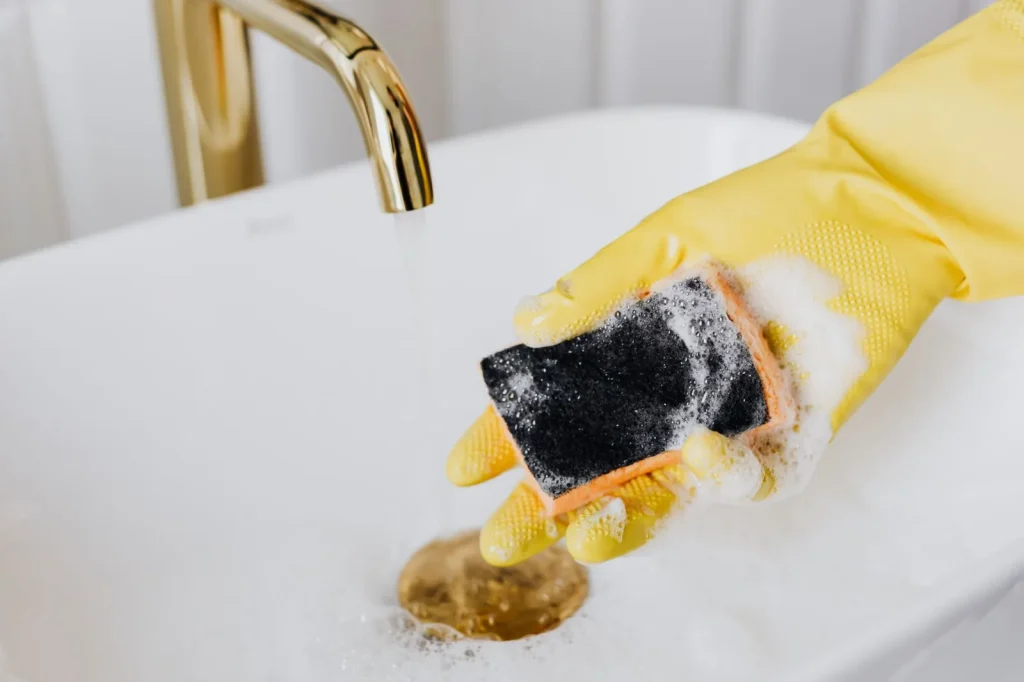
- Vacuum the surface dust first, then rinse washable filters under lukewarm water until it runs clear.
- Let them dry fully before reinstalling. A damp filter invites mold and drips into the cabinet.
Do not run the unit with the filters out, even for a day. Without them, dust loads straight onto the core, which is far harder to clean and much more expensive to replace than a filter you rinse in the sink.
Twice a year: the core
The core is the heart of the machine, a block of layered channels where outgoing stale air warms incoming fresh air without the two ever mixing. It needs cleaning far less often than the filters, but skipping it entirely is how you lose efficiency.
Spring and fall are the natural times. You are already thinking about heating and cooling seasons, so the core fits neatly into that rhythm.
Here is the one place you must check your manual first. Most aluminum cores can be rinsed or soaked, but many paper and resin cores in cheaper units cannot get wet at all. Getting this wrong ruins the part.
| Core type | How to clean | Roughly how often |
|---|---|---|
| Aluminum (metal) | Vacuum, then rinse or soak in warm water with mild soap | Twice a year |
| Plastic / polymer | Vacuum and rinse gently; no harsh detergent | Twice a year |
| Paper / enthalpy (ERV style) | Vacuum only, never wet; check manual | Once or twice a year |
If your unit is actually an energy recovery ventilator rather than a heat recovery one, the core usually handles moisture and almost always must stay dry. If you are still sorting out which system you own, our piece on HRV vs ERV walks through the difference.
Pulling and rinsing safely
Slide the core straight out by its handle or tabs. Vacuum the faces with a soft brush attachment to clear surface lint.
For washable cores, soak the block in a tub of warm water with a little dish soap for a few minutes, then flush it through the channels. Stand it on end to drain and dry completely, which can take several hours, before sliding it back in.
Twice a year: grilles, hoods, and condensate
Air enters and leaves your house through grilles inside and hoods outside. Both collect grime, and outside they collect worse: leaves, insect nests, and in one memorable attic job, a very cozy mouse.
Inside, wipe the supply and return grilles with a damp cloth and vacuum the register slots. Outside, check that the intake and exhaust hoods are clear and that their little screens or louvers move freely.
Stand outside on a windy day and hold a tissue near the exhaust hood. If it barely moves, something upstream is blocked: a clogged filter, a dirty core, or debris in the hood itself. It is a five-second airflow test anyone can do.
While you are in there, look at the condensate drain if your unit has one. HRVs pull moisture out of exhaust air, and that water needs a clear path to the drain. A plugged drain line or dried-out trap leads to water pooling in the cabinet, so pour a cup of water through to confirm it flows.
Once a year: the deeper look
Once a season a year, give the whole unit a slower inspection. This is the part people skip, and it is where small problems get caught cheap.
- Listen for new rattles, grinding, or a fan that sounds slower than usual.
- Vacuum dust from inside the cabinet and around the two fan blowers.
- Check that flexible ductwork has not sagged, kinked, or pulled loose at a collar.
- Confirm the exterior insulation or wrap on ducts in unheated space is intact.
- Verify your controller settings and any humidity target still match the season.
If your unit has a defrost cycle, winter is a good time to confirm it actually kicks in. A failed defrost lets frost build inside the core in cold climates and can crack it.
A mistake I see constantly: homeowners crank the HRV to its highest setting to fix a stuffy house, then leave it there. That runs the fans hard, wastes energy, and often just means the filters are overdue. Clean first, then adjust the speed.
Your simple maintenance calendar
Put these on a phone calendar with repeats and you will never fall a full year behind. The whole yearly commitment adds up to maybe two hours.
| Task | How often | Time it takes |
|---|---|---|
| Check and clean filters | Every 3 months | 10-15 minutes |
| Clean the core | Twice a year | 30 minutes plus drying |
| Wipe grilles and check hoods | Twice a year | 15-20 minutes |
| Flush condensate drain | Twice a year | 5 minutes |
| Full inspection | Once a year | 20-30 minutes |
Fifteen minutes a season keeps a fifteen-hundred-dollar appliance breathing the way it did the day it was installed.
Where to start this weekend
If your HRV has gone a while without attention, do not try to do everything at once. Start with the filters, since that single task delivers most of the airflow you have been missing.
Pull them, see how bad they are, and let what you find set your interval. Filthy after three months tells you to check monthly; barely dusty tells you the schedule above is plenty.
For deeper background on why fresh-air ventilation matters to indoor air quality, the EPA indoor air quality pages are a solid, plain read, and the Department of Energy Energy Saver site covers the efficiency side. Keep your own manual handy too, because core and filter details vary by brand.
Frequently asked questions
How often should I clean my HRV filters?
Check them every 3 months as a baseline, which works for most homes. If you have pets, run a woodstove, live near a dusty road, or do a lot of construction, look at them monthly during those heavy periods. The filters are your first line of defense, so it is better to check too often than too rarely.
Can I wash the HRV core, or will water ruin it?
It depends on the core. Aluminum and most plastic cores can be vacuumed and rinsed or soaked in warm soapy water, then dried fully. Paper and enthalpy cores, common in ERV units, usually must stay dry and only get vacuumed. Always check your manual before wetting a core, because a soaked paper core is ruined.
What happens if I never maintain my HRV?
It loses airflow and efficiency slowly rather than failing all at once. Clogged filters and a dirty core mean less fresh air, more window condensation, musty smells, and higher running costs as the fans work harder. Left long enough, a blocked condensate drain can pool water in the cabinet and a frost-clogged core can crack in cold weather.
Do I need a professional, or can I do HRV maintenance myself?
Nearly all routine upkeep is a homeowner job: filters, the core, grilles, hoods, and the condensate drain need only a vacuum, water, and a cloth. Call a technician if you hear grinding motors, find cracked ductwork, suspect the defrost cycle has failed, or want the unit rebalanced. That kind of service is worth a professional every few years.
How do I know if my HRV is actually working?
Hold a tissue near the exterior exhaust hood on a calm day; it should pull noticeably. Inside, the supply grilles should give a faint but steady flow of fresh air. Stuffy rooms, foggy windows in winter, or a stale smell usually point to overdue filters or a dirty core rather than a broken unit.

Dharm Solanki
Dharm Solanki spends a lot of time thinking about the air inside people's homes, usually when no one else is. He writes about humidity, ventilation, and dehumidifiers, along with the small fixes that turn a stuffy or damp room into one that feels comfortable again. He would rather explain why a recommendation works than just point at a product, so his guides tend to answer the question you were about to ask next. And if something looks great on paper but struggles in a normal house, he says so.