On this page
Open a window in July when it is 90 degrees and 70 percent humidity outside, and you feel it right away: the sticky air rolls in and your air conditioner starts working overtime to dry it back out. That single moment is the whole reason an energy recovery ventilator exists.
A modern house is built tight. Good for energy bills, tricky for air quality, because stale air, cooking smells, and moisture from showers and breathing have nowhere to go. You need fresh air, but you do not want to throw away the comfort you paid for every time you bring some in.
That is the problem an ERV is built to solve.
What an ERV actually does
An energy recovery ventilator (ERV) is a balanced ventilation appliance. It runs two airstreams at once: one pulling stale air out of your home, and one bringing an equal amount of fresh air in.
The clever part is where those two streams cross. They pass through a component called the core, and as they do, the outgoing air hands off most of its heat and moisture to the incoming air, or the other way around, depending on the season.
So in winter, warm humid air leaving your house pre-warms and pre-moistens the cold dry air coming in. In summer, the cool dry conditioned air leaving your house helps cool and dry the hot muggy air coming in. You get ventilation without starting from scratch on temperature and humidity every time.
An ERV does not heat, cool, or dehumidify your home on its own. It recovers energy from air you were already going to exhaust, so your existing systems do less work. Think of it as a comfort saver, not a replacement for your furnace or AC.
The enthalpy core: where heat and moisture move
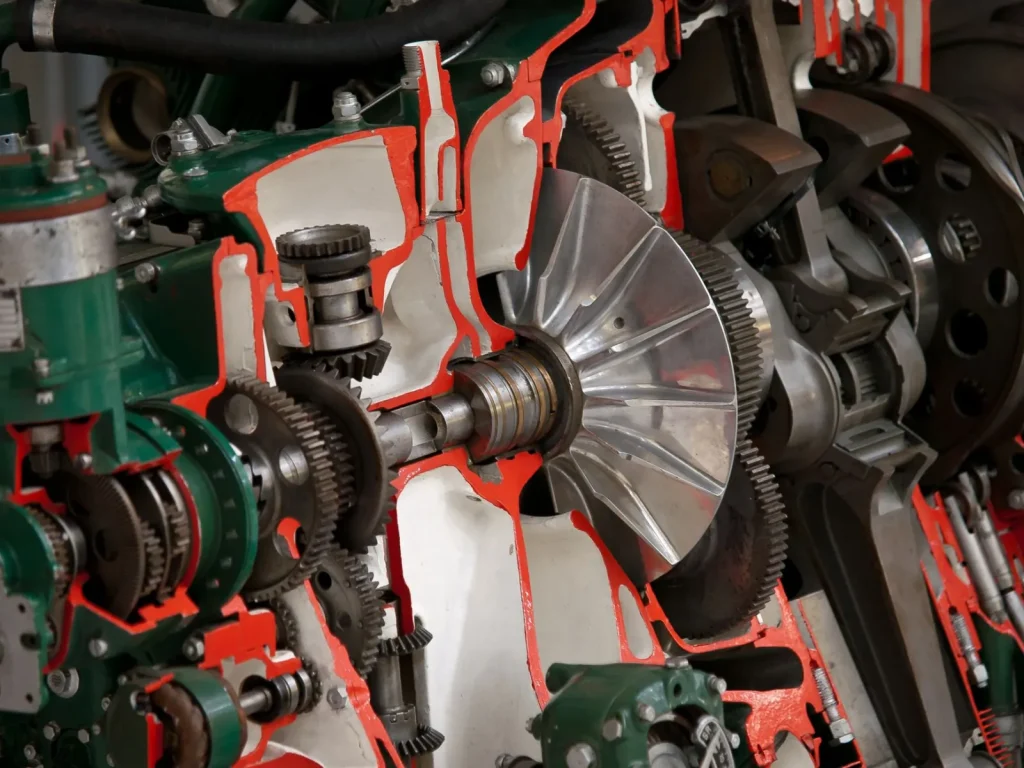
The heart of the unit is the enthalpy core. Enthalpy is just a fancy word for total energy in the air, meaning both temperature (sensible heat) and moisture (latent heat). The core is designed to transfer both.
Physically, the core is a block with hundreds of thin channels stacked in alternating directions. Fresh air flows through one set of channels, stale air through the other, and the two never actually mix. They share a wall.
How moisture crosses without the air mixing
The core walls are made from a special material, often a treated paper, polymer membrane, or desiccant-coated surface, that lets water vapor pass through while blocking the actual air and most contaminants. Humidity migrates from the wetter side to the drier side through that membrane.
This is the single feature that separates an ERV from its cousin. An HRV, or heat recovery ventilator, moves heat but keeps the two airstreams sealed off from each other, so moisture stays put. If you want the full side-by-side, the topics HRV vs ERV: Which One Is Right for Your Home and What Is an HRV and How It Works go deeper on that split.
The moisture transfer is not a bonus feature bolted on. It is the entire point of choosing an ERV over an HRV.
Why moisture recovery matters in your climate
Whether an ERV helps you depends a lot on where you live and what your air feels like across the year.
Humid climates and sticky summers
In a hot, humid region, the problem in summer is too much moisture coming in. A plain ventilator would dump muggy outdoor air straight into your cooled house, and your AC would fight to pull that water back out.
An ERV shifts some of that incoming humidity onto the drier exhaust air before it ever reaches your living space. Your air conditioner sees a lighter latent load, which can mean lower bills and a house that feels less clammy.
Dry winters and static-shock season
The flip side shows up in cold, dry winters. Heated indoor air in January can drop below 25 percent relative humidity, dry enough for cracked skin, scratchy throats, and shocks off every doorknob.
Here the ERV works in reverse. Instead of exhausting your precious indoor humidity out the wall, it recycles a good share of that moisture back into the incoming fresh air. You ventilate without turning your home into a desert.
If you already run a humidifier hard all winter or a dehumidifier all summer, an ERV can lighten that load. It is not magic, but recovering 50-70 percent of the moisture you would otherwise lose or gain adds up over a season.
Where an ERV fits in the house
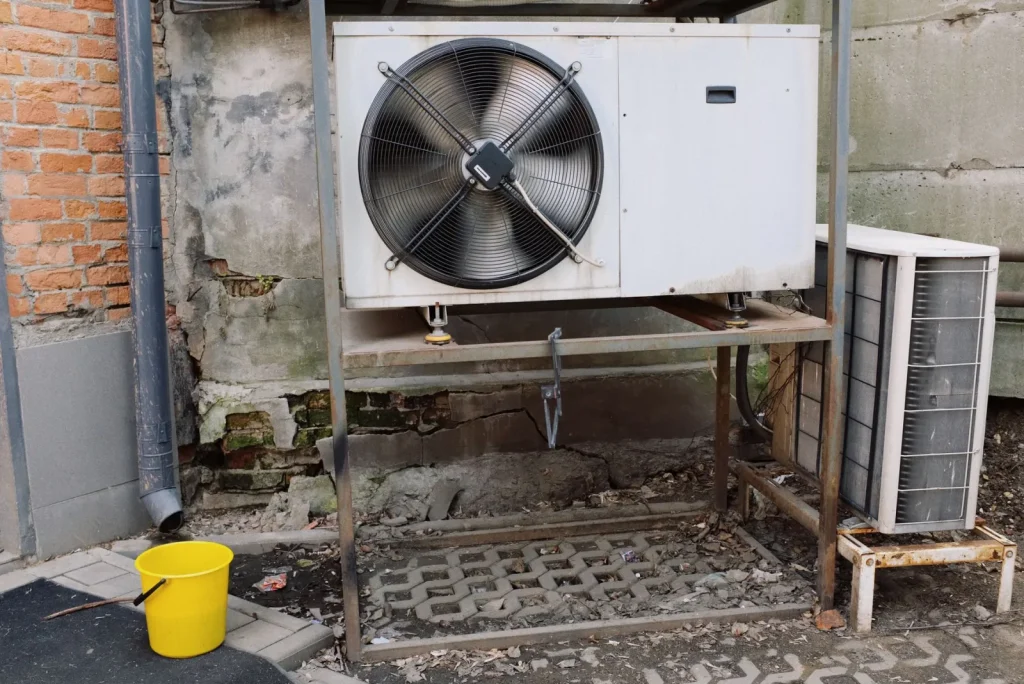
An ERV is a boxy unit, usually mounted in a basement, mechanical closet, or attic. It connects to four ducts: fresh air in from outside, stale air out to outside, supply to the living spaces, and return from the living spaces.
Some homes run those ducts on their own dedicated network. Others tie the ERV into existing forced-air ductwork. Both work, though a dedicated setup gives you cleaner control over where fresh air lands.
Because it supplies and exhausts equal amounts, an ERV is a form of balanced ventilation. That balance keeps your house from going positively or negatively pressurized, which matters for backdrafting and for keeping outdoor air from sneaking in through gaps.
| Spec | Typical range | Why it matters |
|---|---|---|
| Airflow | 50-200 CFM residential | Sized to home volume and occupancy |
| Energy recovery | ~50-80 percent | How much heat and moisture it reclaims |
| Installed cost | $1,500-$4,500 | Unit plus ductwork and labor |
| Filter type | MERV 8-13 common | Higher MERV catches finer particles |
Is an ERV right for your situation?
An ERV earns its keep in specific conditions. It is not the automatic answer for every house.
- Your home is newer or well air-sealed and feels stuffy
- You live somewhere with humid summers, dry winters, or both
- You want controlled fresh air without giving up conditioned comfort
- You have room for the unit and a path for four ducts
- You are willing to change filters a few times a year
A mistake I ran into on a job years ago: a homeowner in a mild coastal climate installed an ERV expecting it to fix a musty basement. The real culprit was a crawlspace moisture problem and no vapor barrier. The ERV was fine, but it was solving the wrong problem. Ventilation moves air; it does not seal out ground water. Diagnose first.
In very cold climates, the moist exhaust air can freeze inside the core. Quality ERVs include a defrost or recirculation cycle to handle this, but a bargain unit without one can ice up and lose efficiency. Confirm the frost strategy before you buy.
Running and maintaining one
Day to day, an ERV is quiet and mostly hands-off. It runs continuously at a low rate or ramps up on a timer, humidity sensor, or a boost switch you hit after a long shower or a big cooking session.
Maintenance is light. Pull and clean or replace the filters every 3-6 months, vacuum the core once or twice a year per the manual, and check that the outdoor hoods are clear of leaves and snow. That is most of it.
For the technical standards behind residential ventilation rates, the EPA indoor air quality pages are a solid starting point, and the Department of Energy Energy Saver site covers recovery ventilators in plain language.
The short version before you shop
An ERV gives your tight house a steady supply of fresh air while holding onto most of the heat and moisture you have already conditioned. The enthalpy core is what makes the moisture part possible, and that moisture handling is exactly why people in sticky-summer or bone-dry-winter regions reach for an ERV over a plain heat recovery unit.
Your next step is honest: figure out your climate, check how tight your home really is, and confirm the frost-control feature on any unit you consider. Get those three right and the box in the basement quietly does its job for years.
Frequently asked questions
What is the difference between an ERV and an HRV?
Both recover heat between incoming and outgoing air. The difference is moisture. An ERV transfers water vapor through its enthalpy core, so it also balances humidity. An HRV keeps the two airstreams sealed and moves heat only. In humid summers or very dry winters an ERV usually gives more comfort, while an HRV can suit homes that are already too humid indoors year-round.
Does an ERV replace my air conditioner or furnace?
No. An ERV only ventilates and recovers energy from air you were already exhausting. It reduces the load on your heating and cooling equipment, but it cannot heat, cool, or fully dehumidify your home by itself. You still need a furnace, heat pump, or AC to actually condition the space. Think of the ERV as a helper that makes those systems work less.
How much does an ERV cost to install?
For a typical home, installed costs often land between 1,500 and 4,500 US dollars. The unit itself might run 500 to 1,800 dollars, with the rest going to ductwork, controls, and labor. Price climbs if you need a dedicated duct network rather than tying into existing ducts, or if the mechanical space is hard to reach. Running costs are low since the fans draw modest power.
Will an ERV make my house too dry or too humid?
An ERV does not add or remove moisture on its own. It only transfers a share of the humidity between the two airstreams, moving water vapor from the wetter side toward the drier side. That tends to moderate extremes rather than create them. If your home is already too humid indoors in every season, an HRV or a dedicated dehumidifier may be a better match than an ERV.
How often do ERV filters need changing?
Most ERVs use filters you should clean or replace every 3 to 6 months, depending on outdoor dust, pollen, and how hard the unit runs. The enthalpy core usually needs a gentle vacuum once or twice a year, following the manufacturer manual. Check outdoor intake and exhaust hoods seasonally for leaves, insects, or snow that could block airflow and cut efficiency.

Dharm Solanki
Dharm Solanki spends a lot of time thinking about the air inside people's homes, usually when no one else is. He writes about humidity, ventilation, and dehumidifiers, along with the small fixes that turn a stuffy or damp room into one that feels comfortable again. He would rather explain why a recommendation works than just point at a product, so his guides tend to answer the question you were about to ask next. And if something looks great on paper but struggles in a normal house, he says so.