On this page
The first kitchen call I ever ran as a young tech had nothing to do with the stove. A homeowner complained that her carbon monoxide alarm chirped every time she cooked Sunday dinner. Turned out her brand new 600 CFM hood was so strong it pulled exhaust back down the water heater flue. The hood worked perfectly. The kitchen, as a system, did not.
That is the thing most people miss. Kitchen ventilation is not a single appliance. It is the whole room moving air in and out in a way that keeps grease, smoke, and moisture from settling into your cabinets and lungs.
Let’s look at the parts beyond the hood itself.
What kitchen ventilation actually has to do
Cooking throws three things into your air: heat, grease and combustion byproducts, and a surprising amount of water. A good ventilation setup has to deal with all three, not just the smoke you can see.
The hood captures the plume rising off your burners. But the room still needs a way to replace that exhausted air, and the moisture from a simmering pot has to go somewhere too. When any of those pieces is missing, you get the classic symptoms: foggy windows, sticky cabinet doors, and a faint fried-food smell that never fully leaves.
If you can see steam or smoke lingering above the stove more than a few seconds after you turn off the burner, your kitchen is not moving enough air.
Makeup air: the piece nobody talks about
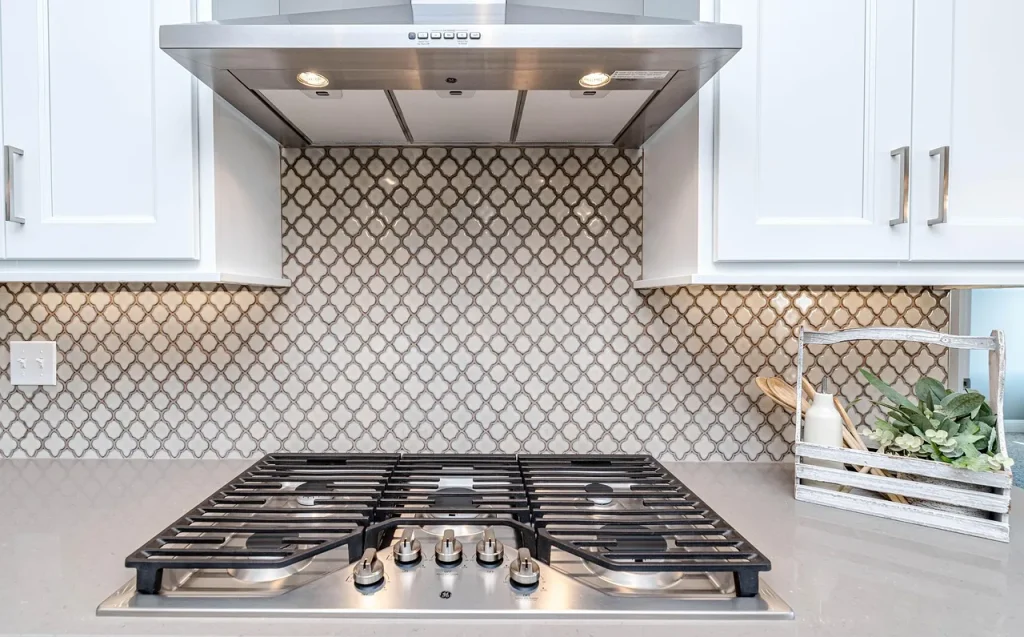
Every cubic foot of air a hood blows outside has to be replaced by a cubic foot coming in from somewhere. That replacement is called makeup air, and in a leaky old house it sneaks in through gaps around windows and doors without anyone noticing.
In a tighter, newer home it is a real problem. A strong hood can create enough negative pressure to reverse the draft in a chimney or a natural-draft water heater, which is exactly what happened on that Sunday-dinner call.
A hood does not just push air out. It reaches into the whole house looking for that air to replace, and it will find the path of least resistance even if that path is your furnace flue.
When you need a dedicated makeup air setup
As a general guide, hoods rated above 400 CFM in a reasonably tight home should have a planned makeup air source. Many building codes now require it at that threshold. The system can be as simple as a motorized damper that opens a duct to outside whenever the hood runs.
If you have any gas appliance that vents up a natural-draft flue (older water heaters and furnaces especially), test for backdrafting after installing a powerful hood. Hold a lit match near the flue draft hood with the hood on high and windows shut. If the flame pulls away from the flue, you have a makeup air problem. The EPA indoor air quality pages cover combustion safety in more detail.
The window question
Cracking a window while you cook is the oldest kitchen ventilation trick there is, and it is not useless. But it does different jobs depending on your setup.
If your hood is ducted outside, an open window nearby gives that exhausted air an easy way to be replaced, which reduces strain on the rest of the house. If your hood only recirculates (filters the air and blows it back into the room), a window is your only real path for moisture and smoke to actually leave.
| Your setup | What a cracked window does |
|---|---|
| Hood ducted outside | Provides easy makeup air, eases house pressure |
| Recirculating hood | Becomes your main exit for steam and odor |
| No hood at all | Cross-breeze is your entire ventilation plan |
A window helps, but it is weather-dependent and weak on a still summer day. Treating an open window as equal to a ducted hood is one of the more common mistakes I see. It is a helper, not a replacement.
The moisture you cannot see
Here is a number that surprises people. Boiling a pot of water for pasta can release close to a pint of water vapor into your kitchen. An evening of simmering sauce, steaming vegetables, and boiling water can easily add two to three pints of moisture to the air.
That vapor does not vanish. It condenses on your coolest surfaces: window glass, exterior wall corners, the inside of cabinets against an outside wall. Over months, that is how you grow mold behind the toe-kick and warp cabinet bottoms.
Gas burners make it worse because burning natural gas produces water vapor as a byproduct of combustion. So a gas cooktop adds moisture from both the food and the flame itself.
Run your hood or fan for the whole cooking session and leave it going three to five minutes after you finish. That tail end clears the moisture and odor that hang around after the burners are off. Put your bathroom exhaust habits to work here too: same principle, different room.
How the kitchen fits into the whole house
Your kitchen does not breathe in isolation. In many homes the kitchen exhaust is the single biggest air mover, and it interacts with every other vent and appliance under the roof.
If you have a whole-house ventilation system, the kitchen hood usually runs separate from it. A balanced system like an HRV or ERV keeps steady low-level airflow across the house, while the range hood handles the big, short bursts of cooking pollution. They complement each other rather than compete.
What you should not do is duct a grease-heavy kitchen hood into a shared ventilation system. Grease gums up ductwork and heat-exchange cores fast. Kitchen exhaust wants its own dedicated run straight outside.
Sizing the airflow to your cooking
You do not need a restaurant hood over a two-burner apartment stove. Match the airflow to how you actually cook.
- Light cooking, electric stove: a modest 200-300 CFM hood is usually plenty.
- Regular cooking with some frying: aim for 300-400 CFM.
- Gas range or heavy searing and wok work: 400-600 CFM, and plan for makeup air.
- Any setup: the hood should cover the front burners, not just sit behind them.
A hood that is undersized or mounted too high lets the plume escape around the edges before it gets captured. Height matters as much as raw CFM. Most hoods want to sit 24 to 30 inches above the cooktop.
A grounded plan for a better kitchen
You do not have to rebuild anything to breathe easier. Start by watching what your kitchen already does. Cook a normal meal, then look for fog on the windows and check how long steam lingers over the stove.
If the air clears fast and surfaces stay dry, your setup is working. If not, the fix is usually one of three things: run the fan longer, get your recirculating hood ducted outside, or add makeup air so a strong hood can actually do its job. For anyone with gas appliances on a natural-draft flue, that combustion-safety check is the first thing to handle, not the last.
Good kitchen ventilation is quiet, boring, and easy to ignore once it works. That is the goal: a room that dries out and clears the air on its own so you can get back to cooking.
Frequently asked questions
Is a range hood enough on its own for kitchen ventilation?
Often, but not always. A properly sized hood ducted outside handles smoke and grease well. It still needs replacement air to work, and it does not fix moisture from a recirculating unit. On a tight house or a powerful hood, you also need makeup air so the fan does not pull exhaust down other flues.
Do I really need makeup air for my range hood?
It depends on the fan strength and how airtight your home is. Hoods above 400 CFM in a tight house usually need a planned makeup air source, and many codes require it. Leaky older homes often get enough replacement air through natural gaps, but a backdrafting test is the only way to know for sure.
Does opening a window replace a range hood?
No, though it helps. An open window gives exhausted air an easy way to be replaced and is the main moisture exit for a recirculating hood. But it depends on weather and wind, and it does almost nothing on a still, humid day. Treat a window as a helper, not a substitute for a ducted hood.
How much moisture does cooking actually add to my kitchen?
More than most people expect. Boiling a pot of water can release close to a pint of vapor, and a full evening of cooking can add two to three pints. Gas burners add even more because burning gas produces water as a byproduct. That vapor condenses on cool surfaces and can lead to mold if it is not vented.
Why does my carbon monoxide alarm go off when I use my hood?
A strong hood can create enough negative pressure to reverse the draft in a natural-draft flue and pull combustion gases back into the house. This is a serious safety issue. Stop using the hood on high with windows shut, and have a professional check for backdrafting and add makeup air if needed.
Can I connect my kitchen hood to my HRV or whole-house system?
No. Kitchen exhaust carries grease that gums up ductwork and heat-exchange cores quickly. A range hood should have its own dedicated duct straight outside. Let your HRV or ERV handle steady low-level whole-house airflow while the hood handles the short, greasy bursts from cooking.

Dharm Solanki
Dharm Solanki spends a lot of time thinking about the air inside people's homes, usually when no one else is. He writes about humidity, ventilation, and dehumidifiers, along with the small fixes that turn a stuffy or damp room into one that feels comfortable again. He would rather explain why a recommendation works than just point at a product, so his guides tend to answer the question you were about to ask next. And if something looks great on paper but struggles in a normal house, he says so.