
On this page
The first dehumidifier I ever bought for my own house was too small, and I only figured that out three weeks into a soggy July. It ran nonstop, the tank filled every few hours, and the basement still smelled like a wet dog. The unit was not broken. It was simply the wrong size for a 900 square foot basement that had water wicking up through the slab.
That is the trap most shoppers fall into. Not price, not brand, but capacity and drainage. Get those two right and the rest of this dehumidifier buying guide gets a lot easier.
Start with what “pints” actually means
Portable dehumidifiers are rated by how many pints of water they pull from the air in 24 hours. You will see numbers like 20, 35, and 50 pints on the front of the box.
Here is the wrinkle. Manufacturers changed how they test in 2019, so a unit labeled “50 pint” under the old standard is often relabeled as roughly 32-35 pints today, even though the machine is identical. Both numbers describe the same hardware, just tested at different temperatures.
When you compare two units, check whether the pint rating uses the current DOE standard. An older listing showing a big “70 pint” number may be the same physical machine as a newer “50 pint” model. Read the fine print before you assume bigger is better.
Match capacity to your room and its dampness
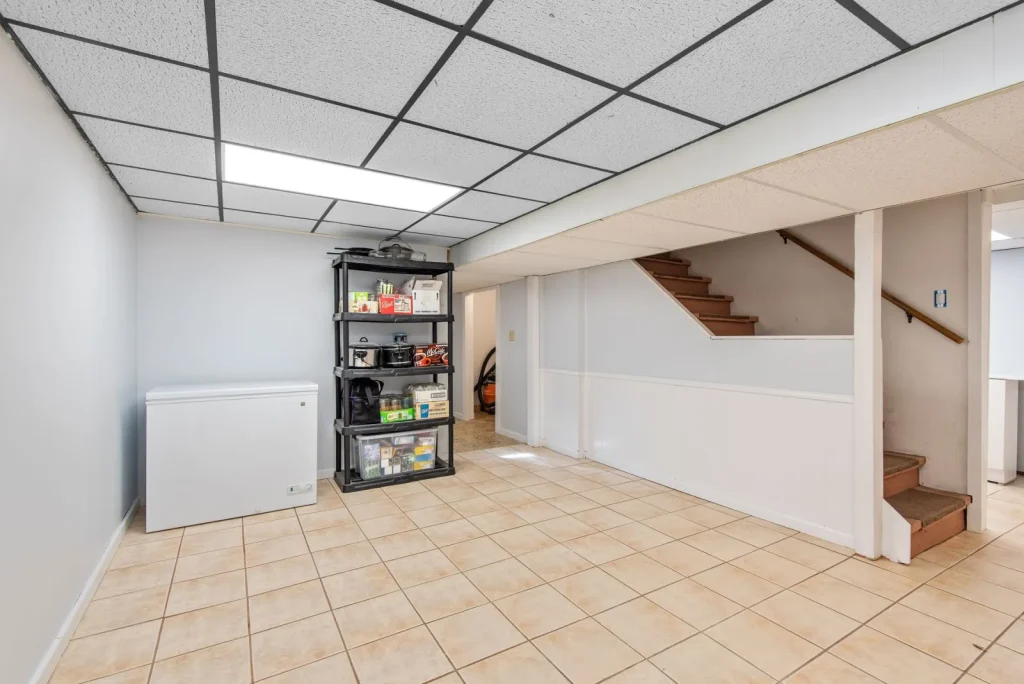
Sizing comes down to two things: how big the space is and how wet it feels. A closet that smells musty needs far less than a basement with standing moisture after every rain.
Use the room’s square footage as your starting point, then bump up a size if the space is genuinely damp, cold, or below grade. The table below uses current DOE pint ratings.
| Room condition | Up to 300 sq ft | 500-1,000 sq ft | 1,000-1,500 sq ft |
|---|---|---|---|
| Slightly damp (musty smell only) | 20 pint | 25-30 pint | 35 pint |
| Very damp (damp walls, clammy air) | 25 pint | 35 pint | 45 pint |
| Wet (visible moisture, seepage) | 30 pint | 45 pint | 50 pint |
These are practical targets, not lab absolutes. If your space sits right on a line, round up. An oversized unit cycles off sooner and costs you little; an undersized one runs itself ragged and never wins.
For a full, cool, below-grade basement, start at 35 pints and go up from there. Basements run colder and wetter than the same square footage upstairs, and cold air holds moisture stubbornly.
Basements and closed rooms behave differently
A basement is the hardest room in the house. It is cool, often below the dew point of the soil around it, and it rarely gets fresh airflow. That combination is why I push people toward more capacity than the square footage alone suggests.
A closed room, like a spare bedroom or a home gym you keep shut, is a different animal. It is warmer and smaller, so a 20-30 pint unit usually holds it around a comfortable 45-50 percent relative humidity without straining.
The EPA’s guidance on mold and moisture suggests keeping indoor humidity below 60 percent, and ideally between 30 and 50 percent. That range is your real target, not a dry number of pints.
Drainage is the feature people forget
Every portable dehumidifier catches water somewhere. Your three options change how much babysitting the unit needs.
- Manual tank: you empty a bucket, usually 0.5 to 1.5 gallons, by hand. Fine for a small, mildly damp room. A pain for a hardworking basement unit.
- Gravity drain: a hose runs from the unit to a floor drain or sump. No emptying, as long as the drain sits lower than the outlet port.
- Built-in pump: pushes water up and out, so you can drain into a sink or out a window even when there is no low drain nearby.
A mistake I see all the time: someone buys a great 50 pint unit, sets it on the basement floor, then runs a gravity hose to a floor drain that sits at the same height. Water has nowhere to fall, so it backs up and the tank fills anyway. If your drain is not clearly below the unit, you want a pump model.
Set a gravity-drained unit up on a sturdy shelf or a couple of cinder blocks. Raising it 12-18 inches gives the hose the slope it needs to drain on its own, and you never touch a tank again.
Read the energy label before you buy
A dehumidifier that runs from May through September is a real line on your power bill. Two units with the same pint rating can differ noticeably in what they cost to run.
Look for the DOE combined energy factor, listed in liters per kilowatt-hour. Higher is more efficient. An Energy Star certified model is a safe shortcut, since it has already cleared an efficiency bar. You can check current listings on the Energy Star products page.
The cheapest dehumidifier on the shelf is rarely the cheapest one to own by Labor Day.
A simple walk-through to pick your unit
Here is the order I actually use when someone hands me a room and asks what to buy.
- Measure the room in square feet. Length times width is close enough.
- Judge the dampness honestly. Musty smell, clammy walls, or visible water? Pick the matching row in the table above.
- Read the capacity where those two meet, then round up if you are near a boundary or the space is a cold basement.
- Check the drain path. Is there a floor drain or sump below where the unit will sit? Gravity works. If not, choose a pump.
- Confirm efficiency and features. Energy Star, a built-in humidistat so it holds a set percentage, and an auto-restart after a power blip.
A humidistat matters more than people expect. Without one, the unit runs flat out and can overdry a room down to 30 percent, which wastes power and can dry out wood trim. With one, you set 50 percent and walk away.
Standard portable dehumidifiers struggle below about 60 degrees Fahrenheit, because coils can frost over. For a cold crawlspace or an unheated garage in shoulder season, look specifically for a “low temperature” or desiccant model rated for cooler air.
What this costs and where to spend
A capable 20-30 pint unit for a closed room runs roughly $150 to $220. A 35-50 pint basement unit with gravity drain lands around $220 to $320, and adding a built-in pump pushes that to $270 to $400. Those are typical 2026 retail prices for name-brand units, not the bargain-bin specials.
If your budget is tight, spend on capacity and drainage first. A slightly plainer 45 pint pump model will serve a wet basement far better than a fancy 25 pint unit with a phone app and a light show.
If you are outfitting a whole house rather than one room, it is worth reading up on how to buy home humidity and air equipment as a system before you commit, since a single portable may not be the right tool for a persistent, house-wide moisture problem.
Your next step
Go stand in the damp room with a tape measure and a cheap hygrometer. Get the square footage, note the current humidity, and look for a drain below where the unit will sit. Those three facts point you straight to the right pint rating and drainage type, and they turn a wall of confusing product listings into a short, honest shortlist.
Frequently asked questions
How many pints do I need for a 1,000 square foot basement?
For a cool, below-grade basement around 1,000 square feet, start at a 35 pint unit if the air is just musty. If the walls feel damp or you see occasional seepage, step up to 45 or 50 pints. Basements run colder and wetter than the same footage upstairs, so rounding up is smart and rarely a waste.
Is a bigger dehumidifier always better?
Not always, but oversizing costs you little while undersizing costs you comfort. A larger unit reaches your target humidity faster and cycles off, so it may use similar power to a smaller unit running nonstop. The real waste is buying too small, since it runs constantly and still loses to a genuinely wet room.
Do I need a dehumidifier with a pump, or is gravity drainage enough?
Gravity drainage works only when the unit sits higher than the drain, so water can flow downhill through the hose. If your floor drain or sink is at the same height or higher than the unit, choose a built-in pump. A pump pushes water up and out, letting you drain into a sink or out a window.
What humidity level should I set the dehumidifier to?
Aim for 45 to 50 percent relative humidity in most rooms. The EPA recommends keeping indoor humidity below 60 percent to discourage mold, and between 30 and 50 percent is the comfortable, healthy band. A unit with a built-in humidistat lets you set a target and holds it automatically instead of running flat out.
Will a dehumidifier work in a cold garage or crawlspace?
A standard compressor dehumidifier struggles below roughly 60 degrees Fahrenheit, because its coils frost over and it stops pulling water efficiently. For cold spaces, look for a model labeled low temperature, which includes an auto-defrost cycle, or a desiccant dehumidifier, which handles cool air well and works down near freezing.
How much does it cost to run a dehumidifier all summer?
It varies with size, run time, and local power rates, but a hardworking basement unit can add several dollars a week to your bill across the season. Choosing an Energy Star model with a good combined energy factor, and using the humidistat so it cycles off, keeps that number down without sacrificing dryness.

Dharm Solanki
Dharm Solanki spends a lot of time thinking about the air inside people's homes, usually when no one else is. He writes about humidity, ventilation, and dehumidifiers, along with the small fixes that turn a stuffy or damp room into one that feels comfortable again. He would rather explain why a recommendation works than just point at a product, so his guides tend to answer the question you were about to ask next. And if something looks great on paper but struggles in a normal house, he says so.