
On this page
The first service call like this I ever took was from a homeowner convinced his brand-new dehumidifier was defective. It ran nonstop in his basement, the fan roared, but the tank was bone dry after two days. He wanted a refund. Ten minutes later I handed him a thermometer instead. The basement was sitting at 58 degrees F, and that changed everything.
A dehumidifier not collecting water feels like a failure, but a running unit that pulls nothing is usually giving you a clue, not a death rattle. The trick is reading the clue correctly before you box it up.
Let me walk you through the checks in the order I actually use them, from the fastest to the most involved.
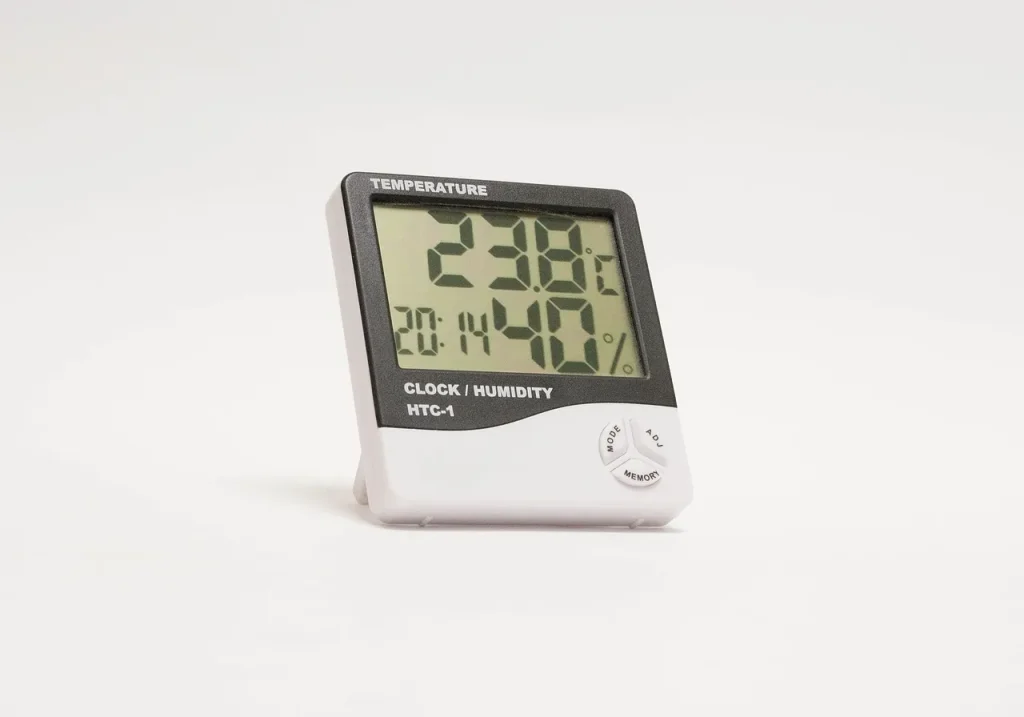
Before you troubleshoot anything, put a cheap hygrometer in the room and let it settle for 20 minutes. Half the “no water” calls I have taken were rooms that were already dry. You cannot squeeze water out of air that does not hold much.
Start with the humidistat and target setting
This is the boring answer that solves maybe a third of cases, so I check it first. Your dehumidifier only runs its compressor when the room humidity is above the number you dialed in.
If you set it to 50 percent and the room is already at 45 percent, the fan may still spin, but the compressor stays off and no water forms. Some units run the fan continuously by design, which is exactly what fools people into thinking it is working when it is not removing moisture.
Drop the target well below the current reading, say to 35 percent or “continuous” mode, and listen. Within a minute or two you should hear the compressor kick in, a low hum distinct from the fan.
Fan noise alone is not dehumidifying. You want to hear the compressor engage and feel warm air off the back exhaust. No warm exhaust usually means no moisture removal.
Check the room temperature, the most common culprit
Standard compressor-based dehumidifiers are cold-blooded. Below roughly 65 degrees F they lose efficiency fast, and below about 60 degrees F many simply stop collecting because their coils freeze faster than they can pull water.
That was my basement caller’s whole problem. Cool concrete floors, a cold spring, and a machine built for a warm laundry room.
If your space runs cold, you have three practical options.
- Warm the room a few degrees so the unit sits above 65 degrees F while it works.
- Buy a desiccant dehumidifier, which uses a drying wheel instead of a compressor and works fine down into the 40s F.
- Look for a compressor model with a listed low-temperature or auto-defrost rating if you must stay cold.
Desiccant units cost a little more to run but they are the honest fix for a cold crawlspace or a garage in shoulder season. If you are shopping for one, the same thinking shows up in the Dehumidifier Buying Guide for Damp Rooms, where cold-room performance is a real dividing line between models.
How cold is too cold, roughly
| Room temp | What a compressor unit does |
|---|---|
| Above 70 degrees F | Works well; expect steady water |
| 65-70 degrees F | Works, slightly slower |
| 60-65 degrees F | Struggles; coils may frost |
| Below 60 degrees F | Often collects nothing; consider desiccant |
Look for frozen or frosted coils
Pop the front grille or filter cover and look at the coils inside. If you see a sheet of frost or a block of ice on the metal fins, that is your answer, and it ties straight back to temperature.
When coils ice up, air stops flowing across them and water stops dripping into the tank. The machine keeps running, quietly doing nothing useful.
Unplug it and let the coils thaw completely, which can take an hour or more. Then either warm the room or switch to a desiccant type. If the unit has an auto-defrost feature and still ices solid, the room is simply too cold for it.
Never chip ice off the coils with a screwdriver or knife. The fins bend easily and the tubing behind them holds refrigerant. One puncture and the unit is scrap. Patience and a thaw are the only safe route.
Rule out airflow and filter problems
A choked air filter starves the coils. Less air across cold coils means faster frosting and less water, so a dirty filter and an icing problem often travel together.
Pull the filter and hold it up to a light. If you cannot see through it, rinse it or vacuum it and let it dry fully before reinstalling. I have seen a felted pet-hair mat on a filter drop a unit’s output by half.
While you are in there, make sure nothing blocks the intake or exhaust grilles. A dehumidifier shoved against a wall or wedged behind boxes cannot move enough air to do its job.
Nine times out of ten, a dry tank is a cold room, an iced coil, or a setting problem. The tenth time is a real fault, and by then you have earned the right to suspect it.
Confirm the tank, float, and drain are not fooling you
Some units genuinely collect water but never seem to fill because they are draining it somewhere you did not expect.
If a continuous drain hose is attached, water bypasses the tank entirely and runs out through the port. Check the far end of that hose; you may find your missing water pooling in a floor drain or a sink.
Also inspect the float switch inside the tank. If it is stuck in the “full” position, the machine shuts off collection to protect against overflow, even with an empty bucket. Wiggle the float, make sure it moves freely, and reseat the tank firmly so its sensor lines up.
When it really is a hardware fault
If the room is warm, the coils are clear, the filter is clean, the setting is aggressive, and you have waited a full day with still no water, then you are looking at a genuine failure.
The usual suspects are a dead compressor or a slow refrigerant leak. A unit low on refrigerant often runs with coils that are only lukewarm instead of properly cold, and it will never pull real water.
These are rarely worth repairing on a consumer dehumidifier. A sealed-system fix can run more than a replacement unit, which is why most people in the $180 to $300 unit range simply buy new. If yours is under warranty, this is the moment to call the maker.
Give it time, then decide
Here is the step people skip: patience. In a room that is only mildly damp, a perfectly healthy dehumidifier might collect just a cup or two over the first several hours. Judging it after 30 minutes tells you almost nothing.
My rule is to make one change, warm the room, clear the ice, drop the setting, then let it run a full 24 hours before deciding it failed. If you want a deeper sense of what “normal” looks like for humidity levels in a home, the U.S. EPA keeps solid, plain-language guidance on indoor moisture and mold, and the Department of Energy’s Energy Saver pages cover how these appliances draw power.
Work the list top to bottom: setting, temperature, coils, filter, drain, then hardware. Nine times in ten you will find the fix before you reach the bottom, and it will cost you nothing but a warmer room and a day of patience.
Frequently asked questions
Why does my dehumidifier run but collect no water?
The three usual reasons are a room that is too cold, coils that have iced over, or a humidistat set above the current room humidity. A running fan does not mean the compressor is removing moisture. Check the room temperature and the target setting first, since those two account for most dry-tank complaints and cost nothing to correct.
What temperature is too cold for a dehumidifier to work?
Standard compressor dehumidifiers start losing efficiency below about 65 degrees F and often stop collecting entirely below 60 degrees F because the coils freeze. If your basement or garage runs that cold, a desiccant dehumidifier is the better tool, since it uses a drying wheel and keeps working down into the 40s F.
How long should I wait before deciding my dehumidifier is broken?
Give it a full 24 hours after making one change. In a room that is only mildly damp, a healthy unit might collect just a cup or two in the first several hours, so judging it after 30 minutes is misleading. Make one fix, warm the room or clear the ice, then let it run a full day.
Can I scrape ice off my dehumidifier coils to speed things up?
No. The fins bend easily and the tubing behind them carries refrigerant under pressure. One slip with a screwdriver and you have a punctured, unrepairable unit. Unplug the machine and let the ice thaw naturally, which can take an hour or more, then fix the underlying cause, which is almost always a room that is too cold.
My dehumidifier collects water but the tank stays empty. Why?
Check whether a continuous drain hose is attached. If so, the water bypasses the tank and runs out to a floor drain or sink, so the bucket stays dry by design. Also inspect the float switch inside the tank; if it is stuck in the full position, the unit stops collecting even when the bucket is empty.

Dharm Solanki
Dharm Solanki spends a lot of time thinking about the air inside people's homes, usually when no one else is. He writes about humidity, ventilation, and dehumidifiers, along with the small fixes that turn a stuffy or damp room into one that feels comfortable again. He would rather explain why a recommendation works than just point at a product, so his guides tend to answer the question you were about to ask next. And if something looks great on paper but struggles in a normal house, he says so.