On this page
The first ultrasonic humidifier I ever set up left a fine gray film on a black nightstand within three days. I thought the unit was defective. It was not. It was doing exactly what it was built to do: taking the minerals dissolved in my hard tap water and flinging them into the room as a fine powder.
That powder is the heart of the whole distilled vs tap water humidifier question. What you pour into the tank decides how much you scrub, how much dust lands on your shelves, and sometimes how clean the mist really is.
Let me walk through what actually changes, and where the difference is real versus where people worry for nothing.
What is actually in your water
Tap water carries dissolved minerals, mostly calcium and magnesium. That is what “hardness” measures. Rain and city treatment do not remove it, and your humidifier cannot tell the difference between soft and hard water until the residue shows up.
Distilled water is boiled and re-condensed, which leaves those minerals behind in the still. What you get is close to zero mineral content. Reverse-osmosis and deionized water land in a similar low-mineral range.
Hardness varies a lot by region. You can look up your local water report or check the USGS water hardness data for your area. Roughly speaking, anything above about 120 mg/L of dissolved minerals counts as hard, and that is where tap water starts causing visible trouble.
Where the two waters really differ
The three things people care about are mineral buildup inside the unit, white dust in the room, and germ risk. They do not all favor distilled equally.
| Concern | Tap water (hard) | Distilled water |
|---|---|---|
| Scale inside tank | Builds crust in days to weeks | Very little buildup |
| White dust in room | Common with ultrasonic units | Almost none |
| Wick or filter life | Clogs faster, replace sooner | Lasts closer to rated life |
| Germ growth | Depends on cleaning, not water | Depends on cleaning, not water |
| Cost per gallon | Near zero | About $1 to $1.50 |
Mineral buildup and scale
Every time water evaporates, the minerals stay behind and cling to the tank, heating element, or nebulizer. With hard tap water you can see chalky white scale in under a week of daily use.
That scale is not just ugly. It insulates warm mist heating plates so they work harder, and it can throw off the vibrating disc in an ultrasonic unit until the mist output drops.
Distilled water nearly erases this problem. The tank stays clear, and you spend far less time with a vinegar-soaked cloth.
White dust settling on your furniture
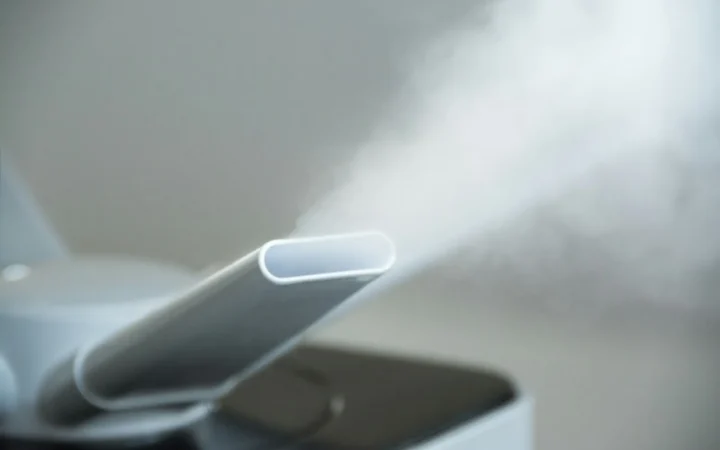
Here is the split that trips people up. White dust is almost entirely an ultrasonic-humidifier problem, because those units atomize water without heating it, so whatever is dissolved gets sprayed out too.
Evaporative and steam units do not do this. An evaporative wick traps the minerals, and a steam unit leaves them in the boiling chamber. So if you run an evaporative model, tap water will not dust your room even if it does shorten wick life.
If you have an ultrasonic humidifier and hard water, distilled water is the single cleanest fix for white dust. If you have an evaporative or steam unit, the dust issue barely applies.
Germs and the water myth
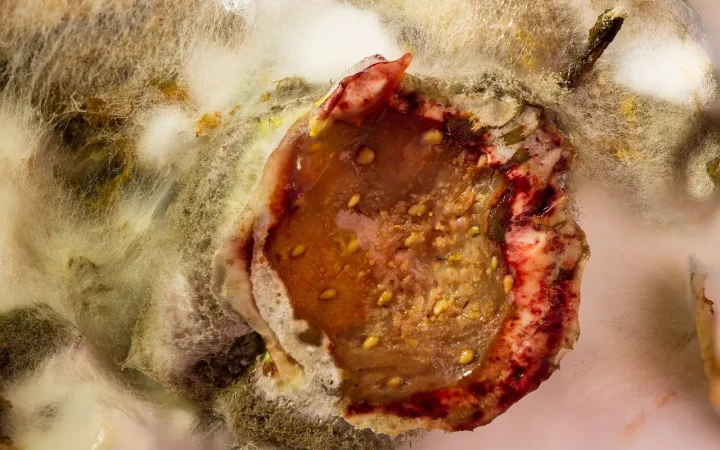
A lot of shoppers assume distilled water is “cleaner” and therefore safer against bacteria and mold. That is the part people get wrong.
Distilled water is low in minerals, not sterile once it sits in a warm tank. Bacteria and mold grow in any standing water, tap or distilled, if you leave it for days. The EPA guidance on humidifiers is blunt about this: empty the tank daily, dry it, and clean it regularly no matter what water you use.
The water you choose controls dust and scale. Your cleaning habits control germs. Do not confuse the two.
When tap water is perfectly fine
You do not always need to buy jugs of water. Tap water is a reasonable choice in several cases.
- You have soft or moderately soft water, under about 120 mg/L
- You run an evaporative or steam unit, so white dust is a non-issue
- You are diligent about daily emptying and weekly descaling
- Your unit uses a demineralization cartridge that you replace on schedule
- You run the humidifier only occasionally, not all winter
A mistake I see all the time is someone buying distilled water for an evaporative unit to “stop the dust” that their unit was never going to make anyway. Save the money and just change the wick on time.
When distilled is worth the cost
Distilled earns its keep in specific situations, and it is fine to be picky about when.
Buy distilled if you run an ultrasonic humidifier with hard water and you are tired of dusting. Buy it if the mist sits near electronics, a piano, or dark furniture where residue shows. And consider it if someone in the home has asthma and you want to keep inhaled particles as low as possible.
You do not have to go all distilled. Mixing half distilled and half tap noticeably cuts white dust and scale while keeping your water cost down. It is a fair middle ground for daily winter use.
Cost is the real deciding factor. Distilled runs about $1 to $1.50 a gallon at most grocery stores. A large 1.5-gallon ultrasonic tank run daily for four winter months can burn through 40-plus gallons, so you are looking at $40 to $60 a season. For a small bedroom unit that empties slowly, it is closer to pocket change.
A quick word on softened water
If you have a whole-house water softener, do not assume that water is a good pick. Softeners swap calcium for sodium, so you trade white mineral dust for a sodium residue that can be just as visible and is harder on some units. For a humidifier, distilled or plain tap usually beats softened water.
Never pour essential oils or additives into an ultrasonic tank unless the maker approves it. Oils break down plastic tanks and gunk up the nebulizer far faster than any mineral would.
How to decide in two minutes
Start with your humidifier type, because it settles most of the question. Ultrasonic plus hard water points strongly toward distilled or a demineralization cartridge. Evaporative or steam means tap water is usually fine.
Then look at your water hardness and your patience for cleaning. Hard water and a low tolerance for scrubbing tilt you toward distilled. Soft water and a steady cleaning routine let you stick with the tap and keep your money.
If you are still setting things up, the water choice pairs with getting the humidifier type and placement right in the first place. A well-matched unit run at a sensible level will always beat fancy water in a poorly chosen machine.
My own rule after years of this: match the water to the machine, empty the tank every day, and let hardness, not marketing, tell you whether distilled is worth the trip to the store.
Frequently asked questions
Does distilled water prevent mold in a humidifier?
No. Distilled water has fewer minerals, but it is not sterile once it sits in a warm tank. Mold and bacteria grow in any standing water left for days. The only reliable defense is emptying the tank daily, drying it, and cleaning it regularly. Water choice affects dust and scale, not germ growth.
Is tap water safe to use in a humidifier?
For many people, yes. If you have soft water or run an evaporative or steam unit, tap water works fine with regular cleaning. The main downsides of hard tap water are faster mineral scale inside the tank and white dust from ultrasonic models. Match the choice to your unit type and local water hardness.
Why does my humidifier leave white dust on furniture?
That dust is dissolved minerals from your water, sprayed into the room by an ultrasonic humidifier that atomizes water without heating it. Hard tap water makes it worse. Switching to distilled water, using a demineralization cartridge, or moving to an evaporative unit will stop or greatly reduce the dust.
Can I mix distilled and tap water in my humidifier?
Yes, and it is a practical middle ground. A roughly half and half mix cuts white dust and mineral scale meaningfully while keeping your water cost lower than going all distilled. Many people who run large ultrasonic tanks daily settle on this to balance cleanliness against the price of buying jugs.
Is softened water good for a humidifier?
Usually not the best pick. Water softeners replace calcium with sodium, so instead of white mineral dust you get a sodium residue that can still show and may be harder on some units. For a humidifier, plain tap or distilled water generally performs better than water from a whole-house softener.

Dharm Solanki
Dharm Solanki spends a lot of time thinking about the air inside people's homes, usually when no one else is. He writes about humidity, ventilation, and dehumidifiers, along with the small fixes that turn a stuffy or damp room into one that feels comfortable again. He would rather explain why a recommendation works than just point at a product, so his guides tend to answer the question you were about to ask next. And if something looks great on paper but struggles in a normal house, he says so.