
On this page
The first humidifier complaint I ever got as a field tech was not about broken parts. A homeowner called because a fine white film had settled over her black nightstand, her lamp, and the screen of her tablet. She thought the unit was leaking something toxic. It was doing exactly what it was built to do.
She had an ultrasonic humidifier and hard tap water. That combination is the single biggest reason people end up comparing the two mist technologies in the first place.
So let’s put them side by side and settle the evaporative vs ultrasonic humidifier question with real numbers, not marketing.
How each one actually makes mist
An evaporative humidifier works the same way a wet towel on a radiator does. A fan pulls dry room air through a damp wick or filter, and the moving air lifts water off the wick as invisible vapor.
Because it relies on evaporation, it self-limits. When the air in the room is already near your target humidity, evaporation slows on its own. You physically cannot push the room to swamp levels with a healthy evaporative unit.
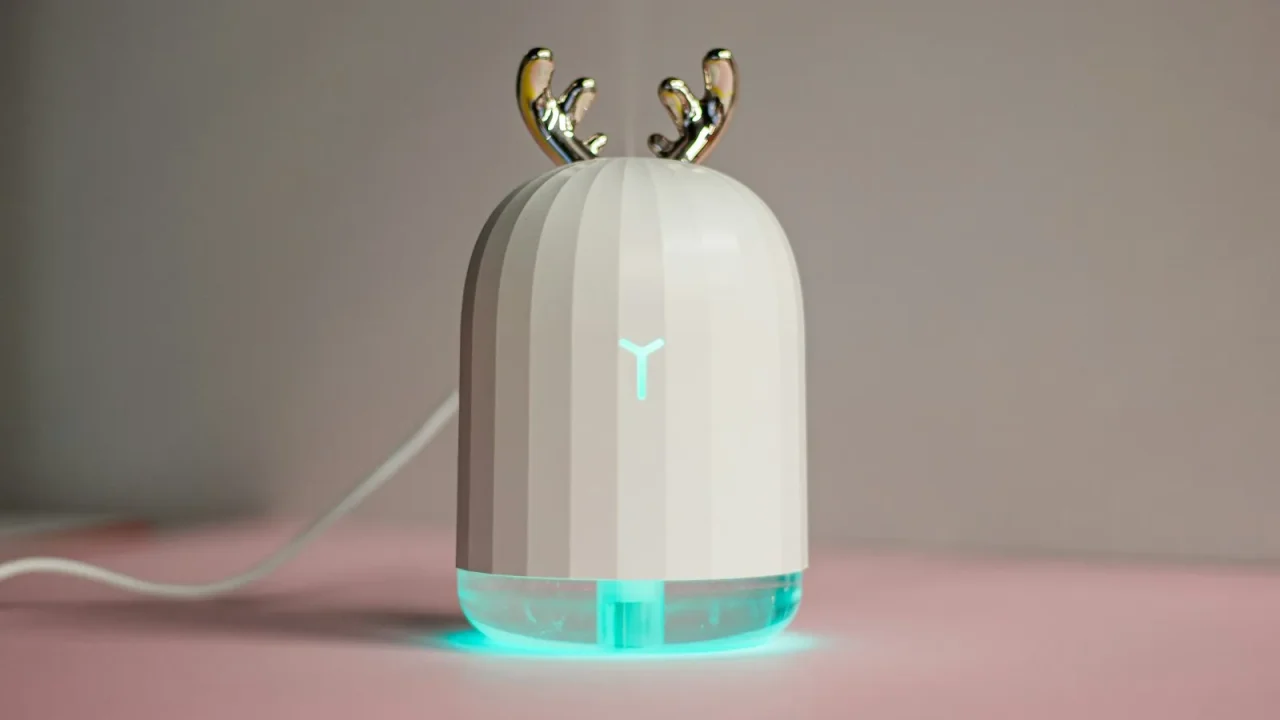
An ultrasonic humidifier uses a small metal plate that vibrates millions of times per second. Those vibrations shatter the water surface into a cool fog you can actually see leaving the spout.
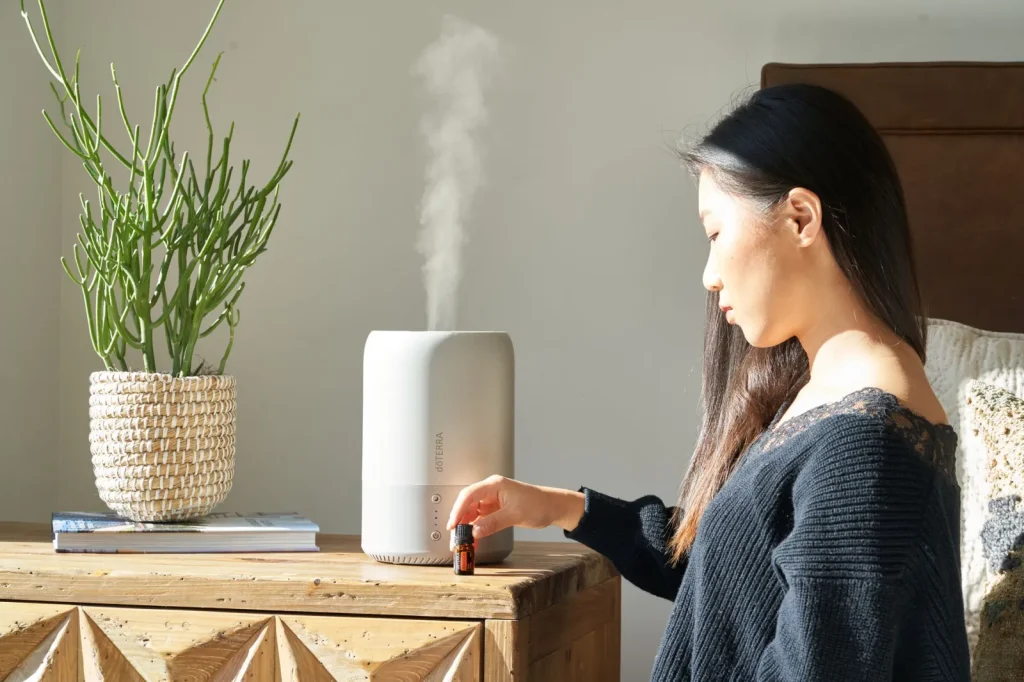
The visible fog is the whole difference. Evaporative units release vapor you can’t see; ultrasonic units release tiny droplets you can, and anything dissolved in the water rides along inside them.
That last point is where white dust comes from, and it is worth its own section.
The white dust question

When an ultrasonic unit atomizes tap water, it atomizes the dissolved minerals too. The water droplets evaporate in mid-air and leave the calcium and magnesium behind as a chalky powder that coats nearby surfaces.
Evaporative units never do this. The minerals stay trapped in the wick, which is exactly why the wick eventually stiffens and needs replacing.
If you run an ultrasonic humidifier on hard tap water near electronics or dark furniture, expect white dust within a day or two. Distilled or demineralized water fixes it almost entirely. A cartridge-style demineralization filter helps but does not fully eliminate it.
A mistake I see all the time: people buy distilled water for the first week, decide it is a hassle, switch back to tap, and blame the humidifier when the dust returns. If you will not commit to distilled water, an evaporative unit removes the decision entirely.
Noise, side by side
This is where ultrasonic pulls ahead for most bedrooms. With no fan forcing air through a filter, an ultrasonic unit runs at roughly 25-35 decibels, which is quieter than a whisper. Many people cannot tell it is on.
Evaporative units have a fan, and a fan makes noise. Expect something in the 40-55 decibel range depending on the speed setting, closer to a quiet conversation or a soft box fan.
Neither is loud in absolute terms. But if you are a light sleeper, or you are picking a unit for a sleeping baby, that fan hum is the deciding factor for a lot of readers. This connects closely to what we cover in Using a Humidifier at Night While Sleeping.
Some light sleepers actually prefer the evaporative fan hum because it doubles as white noise. If silence keeps you awake, the “louder” option might help you, not bother you.
Energy use and running cost
Both types are cheap to run, but ultrasonic is the more efficient of the two because vibrating a plate takes less electricity than spinning a fan.
| Factor | Evaporative | Ultrasonic |
|---|---|---|
| Typical power draw | 20-40 watts | 15-30 watts |
| Noise level | 40-55 dB (fan) | 25-35 dB (near silent) |
| White dust | None | Yes, unless distilled water |
| Over-humidify risk | Self-limiting | Can over-saturate a room |
| Ongoing part | Wick, every 1-3 months | No wick; clean plate weekly |
| Mist temperature | Cool | Cool |
| Upfront price | $40-$120 | $30-$90 |
At a few cents a day either way, electricity should not drive your choice. The wick replacement on an evaporative unit, roughly $8-$15 every couple of months, is the more meaningful recurring cost.
The over-humidifying trap
Because an ultrasonic unit pumps out mist regardless of the room’s current moisture level, it can genuinely over-humidify a space. I have seen condensation running down bedroom windows in January because someone left an ultrasonic unit on high all night in a small closed room.
That damp buildup is not harmless. Persistent moisture on cold surfaces feeds mold, and the U.S. Environmental Protection Agency recommends keeping indoor humidity below 50 percent to control it. You can read their guidance at the EPA mold and moisture pages.
If you buy an ultrasonic humidifier, buy one with a built-in humidistat, or pair it with a $10 hygrometer. An evaporative unit forgives you for forgetting; an ultrasonic one does not.
Cleaning and maintenance
Both need regular cleaning, because any standing water tank can grow biofilm. The CDC and most manufacturers say to empty and dry the tank daily and do a deeper vinegar clean weekly.
The practical difference is the wick versus the plate.
- Evaporative: rinse the tank, and swap the wick every 1-3 months once it stiffens or smells musty.
- Ultrasonic: rinse the tank, and gently clean the vibrating plate weekly so mineral scale does not choke the mist output.
- Both: never leave water sitting in the tank between uses.
Which room fits each type
Here is the short version, sorted by the room and the person.
Choose ultrasonic when
You want near silence, such as a nursery or a light sleeper’s bedroom. You are willing to use distilled water, or you do not mind occasional dusting. The room is small to medium and you will watch the humidity level.
Choose evaporative when
You have hard tap water and refuse to buy jugs of distilled. You are filling a large room, an open living area, or a dry basement. You want a set-and-forget unit that cannot flood the room with moisture, or you simply hate the idea of white dust.
If you are still torn on capacity and room size, How to Size a Humidifier for a Room walks through the pint-per-day math that applies to both technologies equally.
Making the call
Start with two questions before you look at a single product page. What water will you realistically use, and how much noise can you sleep through?
If your honest answer is “tap water and I need it dead quiet,” you have a conflict, and evaporative resolves it. If it is “I have distilled on hand and I cannot stand a fan,” ultrasonic is your unit. Everything else, from price to energy, is a rounding error next to those two.
Pick the technology that matches your habits, not the one with the nicer box. The best humidifier is the one you will actually keep clean and keep running.
Frequently asked questions
Is an evaporative or ultrasonic humidifier better for a baby's room?
For a nursery, most parents lean ultrasonic because it runs almost silently and both types produce a safe cool mist. The catch is white dust, so use distilled water and add a hygrometer to keep humidity between 40 and 50 percent. If you would rather not manage distilled water, an evaporative unit is nearly silent enough and eliminates the dust entirely.
Why does my ultrasonic humidifier leave white powder everywhere?
That powder is the dissolved minerals in your tap water. The ultrasonic plate turns water into fine droplets, the water evaporates in the air, and the calcium and magnesium settle out as dust on nearby surfaces. Switching to distilled or demineralized water removes almost all of it, and a demineralization cartridge reduces it. Evaporative units never produce this dust.
Which humidifier type is quieter at night?
Ultrasonic is quieter. With no fan, it runs around 25 to 35 decibels, below a whisper, while evaporative units hum at 40 to 55 decibels because of the fan. That said, some light sleepers find the evaporative hum works as soothing white noise, so quieter is not automatically better for everyone.
Do evaporative humidifiers cost more to run?
Slightly, but the electricity gap is trivial. Evaporative units draw about 20 to 40 watts versus 15 to 30 for ultrasonic, a difference of pennies per day. The real recurring cost is the replacement wick, roughly 8 to 15 dollars every one to three months. Ultrasonic units have no wick but need weekly plate cleaning to keep working well.
Can an ultrasonic humidifier make a room too humid?
Yes. It pushes out mist regardless of the room's current moisture, so in a small closed room on a high setting it can over-saturate the air and cause window condensation. Persistent dampness feeds mold. Choose a model with a built-in humidistat or pair it with a cheap hygrometer. Evaporative units self-limit and rarely over-humidify.

Dharm Solanki
Dharm Solanki spends a lot of time thinking about the air inside people's homes, usually when no one else is. He writes about humidity, ventilation, and dehumidifiers, along with the small fixes that turn a stuffy or damp room into one that feels comfortable again. He would rather explain why a recommendation works than just point at a product, so his guides tend to answer the question you were about to ask next. And if something looks great on paper but struggles in a normal house, he says so.