
On this page
The first whole house humidifier I ever serviced was a bypass model quietly rusting on the side of a furnace in a 1970s ranch. The homeowner had bought three portable units over the years, gotten tired of hauling water jugs, and forgotten the built-in one existed. That house, in one furnace room, told the whole story of this decision.
Both machines chase the same goal: moisture in dry indoor air. How they get there, and what they ask of you, is where they split.
So let’s put a furnace-mounted whole house system next to a standalone portable unit and look at cost, coverage, install effort, and upkeep honestly.
What each one actually is
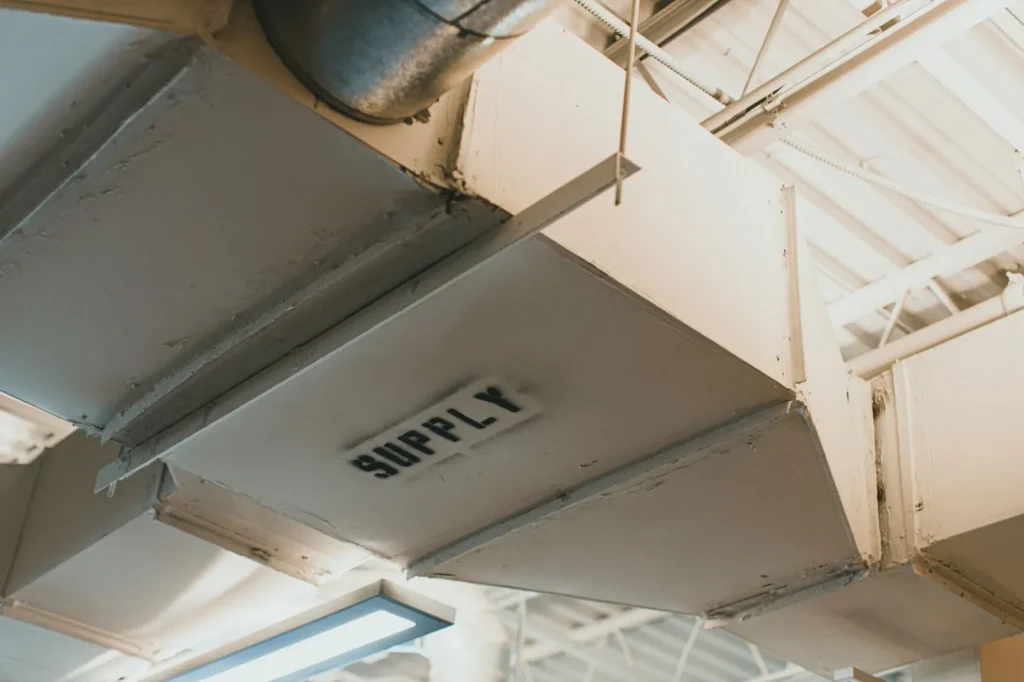
A whole house humidifier is plumbed into your forced-air heating system. Most are bypass or fan-powered models mounted on the supply or return duct near the furnace, fed by a small water line, and controlled by a humidistat on the wall or the unit itself.
It adds moisture to the air as it moves through your ductwork, so every room served by a vent gets treated at once. The catch is right there in the design: it mostly works when the blower is running.
A portable humidifier is the tabletop or tower unit you already picture. You fill a tank, set it on a dresser, and it humidifies the air in that room and maybe the next one over.
One is part of your house. The other is an appliance you carry. That difference shapes every number below.
Cost, up front and over time
This is usually the first question, and the honest answer has two layers: what you pay today and what you pay to keep it running.
| Factor | Portable unit | Whole house system |
|---|---|---|
| Hardware price | $40-$250 | $150-$350 for the unit |
| Professional install | None | $250-$650 labor |
| Typical all-in cost | $40-$250 | $400-$1,000 |
| Coverage | 1-2 rooms | Whole home on forced air |
| Ongoing supplies | Filters/wicks, water | Water panel once or twice a season, roughly $15-$30 |
A capable portable that covers a large bedroom runs $60-$150. Step up to a console unit that can handle an open floor of 1,000 square feet and you are closer to $150-$250.
The whole house system looks expensive until you divide it across every room. Treating a 2,000 square foot house with portables could mean four or five units and a lot of refilling.
If you are handy and your furnace is accessible, some homeowners install a bypass humidifier themselves for the price of the unit alone. It is real work involving ductwork and a water tap, so know your limits before you cut into a plenum.
Coverage and where each one wins
Coverage is not just square footage. It is about matching the tool to where your dry air actually lives.
When a portable makes more sense
If one room feels like the Sahara and the rest of the house is fine, a portable is the obvious pick. Bedrooms are the classic case: dry sinus passages and static sheets at 2 a.m. do not need a whole-home solution.
Renters, apartments, and homes without forced-air heat also land here by default. You cannot mount a furnace humidifier if there is no furnace, and no landlord wants you tapping their ductwork.
Sizing still matters. If you are unsure how big a unit you need, our guide on How to Size a Humidifier for a Room walks through matching tank output to square footage.
When a whole house system earns its keep
Whole house units shine in cold, dry climates with forced-air heat, the kind of place where winter indoor humidity drops into the teens and hardwood floors start to gap. If the entire house feels dry, treating it at the furnace is cleaner than scattering units around.
There is a real limitation worth repeating. A furnace humidifier adds moisture when the blower runs, so in a mild winter where the heat rarely kicks on, it may not move the needle much. In a Minnesota January, that same unit runs constantly and pays off.
A whole house humidifier is only as good as its humidistat and drainage. Set too high, it can push moisture into cold wall cavities and cause hidden condensation. I have seen frost form on the inside of window frames because someone dialed theirs to 55 percent in single-digit weather.
Install effort and disruption
Here the two could not be more different, and it is worth being clear-eyed about it.
A portable is install-free. Unbox it, rinse the tank, fill it, plug it in. Total setup time is about ten minutes, and if you move it to another room, you just carry it.
A whole house system is a project. It means mounting hardware on the duct, cutting an opening, running a water supply line, wiring the humidistat, and setting up a drain for bypass models. A pro typically finishes in two to four hours; a first-time DIYer should block off a weekend.
If you would not comfortably splice into your furnace ductwork and tap a water line, budget for professional installation. This is not the place to learn by trial and error.
Upkeep, the part people underestimate
Both need maintenance. The difference is how the work is spread out.
With a portable, the labor is frequent but small. You refill the tank every day or two, and you clean it regularly so it does not grow the pink film that turns a humidifier into a bacteria mister.
- Empty and rinse the tank when you refill it
- Deep clean with a vinegar solution once a week
- Replace the wick or filter every 1-3 months on evaporative models
- Use distilled water if you have hard water or an ultrasonic unit
A mistake I see constantly: people run a portable for a full season without ever descaling it, then wonder why the bedroom smells musty. The tank is doing exactly what a dirty tank does.
A whole house system flips the pattern. Day to day you do nothing, because it draws water automatically and there is no tank to fill.
Once or twice a heating season you swap the water panel (the evaporator pad), clear any mineral scale, and check the drain line. That is roughly a fifteen-minute job. The tradeoff is that neglect hides longer here, so a clogged pad or crusted line can quietly cut performance for weeks before you notice.
Whichever you pick, the humidity target is the same. The EPA’s indoor air quality pages and Mayo Clinic both point to keeping indoor relative humidity between 30 and 50 percent. A cheap hygrometer, about $10-$15, keeps you honest on either system.
Picking the right scale for your home
Strip away the specs and the choice comes down to a few plain questions.
Is only one room dry, or the whole house? Do you have forced-air heat, or something else like radiators or baseboard? Do you own or rent? And how much upfront commitment feels right?
If your dry zone is a single bedroom, you rent, or you want to spend under $150 today, buy a portable. It is the lower-risk move, and you can always add a second unit later. Choosing between models is its own decision, and comparisons like Warm Mist vs Cool Mist Humidifier help there.
If you own a home with forced-air heat, the whole house feels dry every winter, and you are tired of refilling tanks, the furnace-mounted system is worth the install cost. Over five or six seasons, the per-room math and the hands-off convenience usually win.
Start with a $12 hygrometer this week. Put it in the room that bothers you most, watch it for a few dry days, and let the actual numbers, not a hunch, decide how much humidifier you really need.
Frequently asked questions
Is a whole house humidifier worth the cost over portables?
It depends on how much of your home is dry and how you heat it. If you have forced-air heat and the whole house feels dry every winter, a furnace-mounted system usually pays off within a few seasons through per-room value and hands-off convenience. If only one or two rooms are dry, portables are the smarter spend.
Can I use a whole house humidifier without forced-air heating?
Not the standard furnace-mounted kind, since it relies on your ductwork and blower to move moist air through the house. Homes with radiators, baseboard, or ductless mini-splits generally cannot use bypass or fan-powered models. In those homes, several well-placed portable units or a large console humidifier are the realistic path.
How much moisture can a portable humidifier really cover?
A typical tabletop unit handles one bedroom of 300-500 square feet. Larger tower and console models are rated for 1,000 square feet or more of open space, though real coverage drops with closed doors and dry air. Check the manufacturer's square-footage rating and size up if your home is especially dry or drafty.
Which one is easier to keep clean?
They trade different chores. Portables need frequent small cleaning, rinsing the tank at each refill and descaling weekly, or they can grow mold and bacteria. A whole house system needs almost nothing day to day, then a water panel swap and drain check once or twice per heating season. Neither is truly maintenance-free.
Will a whole house humidifier damage my home if set too high?
It can, which is why the humidistat setting matters. Pushing humidity too high in cold weather drives moisture into wall cavities and windows, causing condensation, frost, and eventually mold. Keep indoor relative humidity between 30 and 50 percent, and lower the setting further during very cold snaps to avoid window sweating.

Dharm Solanki
Dharm Solanki spends a lot of time thinking about the air inside people's homes, usually when no one else is. He writes about humidity, ventilation, and dehumidifiers, along with the small fixes that turn a stuffy or damp room into one that feels comfortable again. He would rather explain why a recommendation works than just point at a product, so his guides tend to answer the question you were about to ask next. And if something looks great on paper but struggles in a normal house, he says so.