
On this page
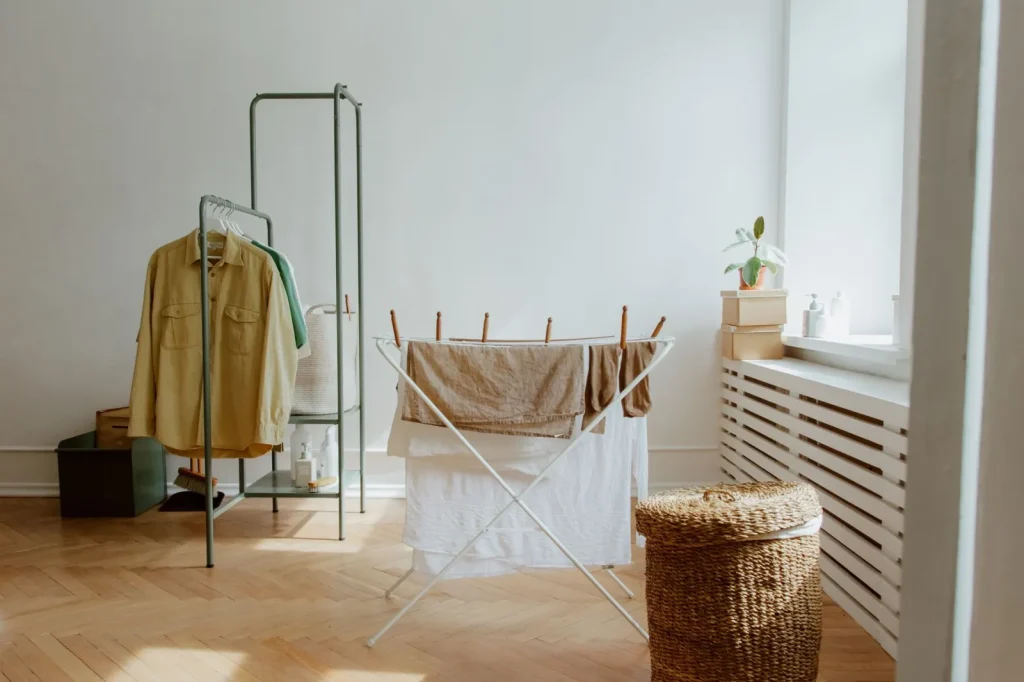
The first winter I lived in a flat without a tumble dryer, I hung a full load on a clothes horse in the spare room and shut the door, thinking I was being tidy. Two days later the clothes were still faintly damp, and the window in that room had a puddle on the sill.
That water did not vanish. It moved into the air, then onto the coldest surface it could find.
A dehumidifier fixes both problems at once. It pulls the moisture out of the room so your clothes dry in hours instead of days, and it keeps that water from settling on your windows, walls, and eventually growing mold. Here is how to do it properly.
Why a closed room and a dehumidifier beat an open airer
When wet laundry dries, every drop of water it loses becomes water vapor in the room. A single spun-out load holds roughly 2-4 pints of water. In an open house, that vapor drifts around and takes forever to leave, which is why open-air drying is slow and damp-smelling.
Seal the room and run a dehumidifier, and you flip the whole thing. The machine keeps the surrounding air dry and thirsty, so water leaves the fabric fast. Dry air pulls moisture from clothes the way a dry sponge pulls a spill.
The goal is not a warm room. It is a dry room. Dry air does the drying, and the dehumidifier is what keeps it dry.
This is also a quiet win for the rest of your home. Airing a wet wash in the living room is one of the most common causes I see behind winter condensation on windows and damp patches on interior walls.
Before you start: what you need
You do not need much, but a few things make the difference between a soggy morning and dry clothes by lunch.
- A small, closeable room: spare bedroom, utility room, or even a large bathroom.
- A compressor or desiccant dehumidifier sized for the space (most homes do fine with a 20-30 pint unit).
- A clothes airer or rack, not clothes piled on a radiator.
- A cheap hygrometer, around $10-15, so you can actually see the humidity drop.
- Good spin: run your washer on its highest safe spin speed first.
Spin speed matters more than people think. Bumping from 800 to 1200 rpm removes noticeably more water before the clothes ever reach the rack, which shortens the dehumidifier’s job.
Step by step: setting up your drying room
1. Space the clothes out
Do not bunch garments together. Air needs to reach every surface, so leave a gap between items and turn thick things like jeans inside out. A crammed rack dries unevenly and slowly, no matter how good the machine is.
2. Put the dehumidifier in the room, close to the wash
Place the unit a couple of feet from the airer, with its air outlet pointing toward the clothes if it has a directional vent. You want the drier air moving across the fabric, not sitting in a corner.
3. Shut the door and any windows
This is the step people skip, and it is the one that matters most. An open door lets the dehumidifier fight the moisture of your whole home instead of just one room of laundry. A closed room is a small, winnable battle.
4. Set a sensible target
Aim for around 45-55% relative humidity. Below that you are spending energy for little extra speed. If your unit has a laundry mode, it usually runs flat out for a set stretch, which is fine for a heavy load.
5. Add gentle airflow if you can
A small fan on low, pointed at the rack, moves damp air off the fabric surface and speeds things up a lot. It does not need to be strong. A quiet desk fan is plenty.
Closed door, unit near the clothes, one small fan, target 50% RH. That combination dries a normal load in about 4-8 hours depending on room size and how wet the clothes started.
How long it actually takes
Timing depends on the load, the room, and the machine, but here is what I see in practice with a well-spun load in a small closed room.
| Setup | Rough drying time |
|---|---|
| Open living room, airer only | 18-36 hours |
| Closed room, airer only | 12-24 hours |
| Closed room + dehumidifier | 5-10 hours |
| Closed room + dehumidifier + small fan | 4-7 hours |
Thick towels and jeans sit at the long end. Shirts and light cottons often feel dry in three or four hours. Start a load after breakfast and it is usually ready to fold by early evening.
What it costs versus a tumble dryer
This is where the dehumidifier really earns its keep. A compressor dehumidifier draws roughly 150-300 watts while running. Drying one load might take 5-7 running hours, so you are looking at around 1-2 kWh total.
At a US average of about 16-17 cents per kWh, that is roughly 15-40 cents per load. Some efficient units come in lower.
A vented or standard electric tumble dryer, by contrast, often uses 2-4 kWh for a single cycle, so 35 cents to over a dollar per load, and more on older machines. The US Department of Energy has good background on appliance running costs if you want to check your own numbers at their Energy Saver pages.
Do not drape wet clothes directly over the dehumidifier or block its air intake. It needs clear airflow to work, and covering the vents can cause it to overheat or shut off.
There is a comfort bonus too. The dehumidifier gives off a little warmth as it runs, so the drying room stays pleasant rather than clammy. And unlike a dryer, it is gentle on fabrics, since there is no tumbling and no high heat to shrink your favorite sweater.
Keeping the rest of your home dry and healthy
The whole point of the closed door is to contain the moisture so the machine can capture it rather than letting it spread. If you dry clothes in a bedroom you sleep in, run the dehumidifier until the room is back to a normal 40-50% RH before bed. Sleeping in a damp room is not good for you or the walls.
Keeping indoor humidity in a sensible band also holds mold at bay. The EPA notes that keeping indoor humidity generally below 50-60% helps prevent mold growth, which you can read more about on the EPA mold pages.
If you find you are drying laundry indoors most days through winter, it may be worth reading up on sizing a dehumidifier by pints, so the unit you buy comfortably handles a full wet load rather than wheezing through it.
Putting it into practice this week
Try it with one load. Pick your driest, warmest small room, spin the wash hard, space it on a rack, set the dehumidifier a couple of feet away, and shut the door. Check the hygrometer in an hour and you will see the humidity climb then start falling as the machine gets ahead of it.
Once you have done it a few times you will know your own timings by feel. For most people it becomes the default way to dry through the colder months, cheaper than the dryer, kinder to clothes, and no more puddles on the windowsill.
Frequently asked questions
Does drying clothes with a dehumidifier use less electricity than a tumble dryer?
Usually yes. A compressor dehumidifier drawing 150-300 watts over 5-7 hours uses about 1-2 kWh per load, roughly 15-40 cents. A typical electric tumble dryer uses 2-4 kWh per cycle. The dehumidifier is slower but noticeably cheaper to run, and it doubles as damp control for the room.
What humidity level should I set for drying laundry?
Aim for around 45-55% relative humidity while the clothes dry. That keeps the air dry enough to pull moisture from fabric quickly without burning extra energy chasing a very low reading. Once the wash is dry, let the room settle back to a normal 40-50% RH, especially if it is a room you sleep in.
Do I really need to close the door?
Yes, this is the single most important step. With the door open, the dehumidifier has to dry your whole home instead of one small room, so it works far harder for a weaker result. A closed room concentrates the moisture where the machine can capture it, cutting drying time dramatically.
Can a dehumidifier replace my tumble dryer completely?
For most everyday loads, yes, as long as you have a small room you can close off. It is slower, so it suits people who can start a wash and leave it for the day. It is gentler on clothes and much cheaper to run. For same-hour drying of a large load, a tumble dryer still wins on speed.
Will drying laundry indoors cause damp or mold?
Only if the moisture has nowhere to go. Airing wet washing in an open room is a common cause of window and wall condensation. Running a dehumidifier in a closed room captures that water instead, so it lowers your mold risk rather than raising it, provided you keep the room back under about 55% RH afterward.
Where should I place the dehumidifier in the room?
Set it a couple of feet from the clothes airer with its outlet aimed toward the wash and its intake clear. Do not tuck it in a corner or drape clothes over it. If you can add a small fan on low pointed at the rack, the extra airflow moves damp air off the fabric and speeds drying further.

Dharm Solanki
Dharm Solanki spends a lot of time thinking about the air inside people's homes, usually when no one else is. He writes about humidity, ventilation, and dehumidifiers, along with the small fixes that turn a stuffy or damp room into one that feels comfortable again. He would rather explain why a recommendation works than just point at a product, so his guides tend to answer the question you were about to ask next. And if something looks great on paper but struggles in a normal house, he says so.