On this page
The first basement I ever tried to dry out had three plug-in dehumidifiers running at once, all fighting a losing battle against a 1,600 square foot floor plan. The homeowner had bought them one at a time, each after the last one failed to keep up. By the third bucket-emptying trip of the day, she was ready to throw all three out the window.
That is the trap a lot of people fall into. They keep buying more portable units when the real answer was a different kind of machine entirely. So let me lay out the honest head to head.
What each machine actually is
A portable dehumidifier is the boxy unit you see at the hardware store. It plugs into a standard outlet, pulls moisture out of the air, and collects the water in a removable tank or sends it out a hose. You move it where you need it.
A whole house dehumidifier is a larger appliance that ties into your home’s HVAC ductwork or runs on its own dedicated ducts. It treats the air for the entire conditioned space and drains continuously to a condensate line or pump.
The difference in the portable vs whole house dehumidifier question is not really about which pulls more water per hour. It is about how much area each one is built to serve and how much work you want to do to keep it running.
If you are trying to dry one room or a small, self-contained basement, think portable. If damp shows up on multiple floors or across a large open plan, think whole house.
Coverage and capacity, side by side
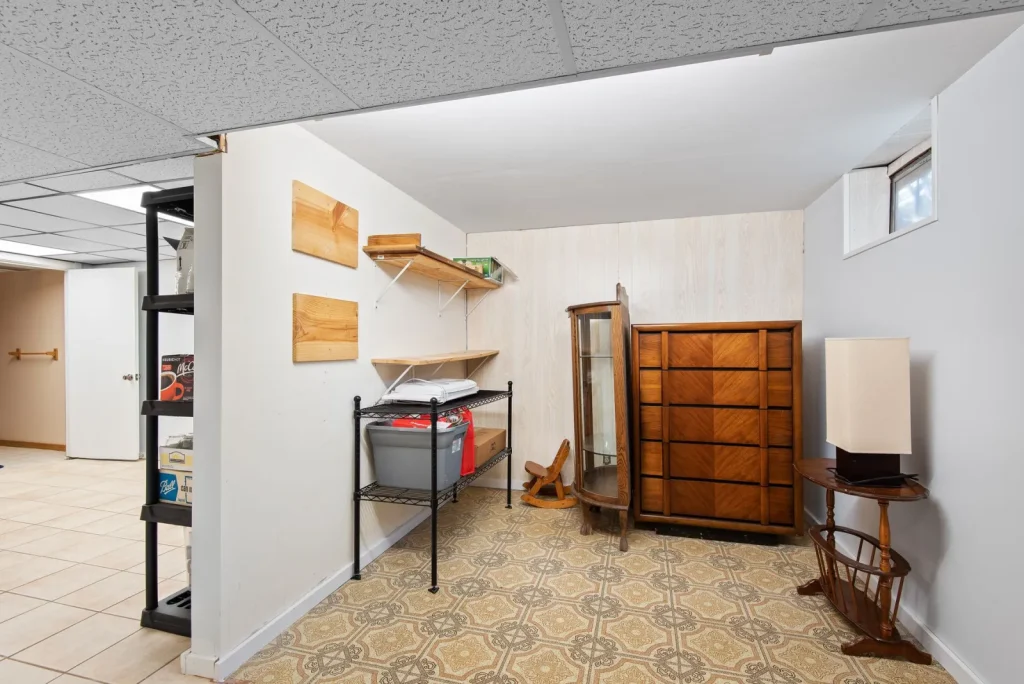
Portable units are rated by how many pints of water they remove in 24 hours, commonly 20, 35, or 50 pints under the current testing standard. A 50-pint portable can handle a moderately damp basement up to roughly 1,000 to 1,500 square feet, but only if that space is somewhat closed off.
Whole house systems are rated in pints too, often 70 to 130 pints per day, and they are engineered to move that dry air through ducts to every room. That ducted delivery is the real advantage. A portable dries the air right around it, while a whole house unit distributes evenly.
| Factor | Portable | Whole house |
|---|---|---|
| Typical coverage | One room to ~1,500 sq ft | Entire home, 1,500-5,000+ sq ft |
| Capacity range | 20-50 pints/day | 70-130 pints/day |
| Water handling | Empty tank or run a hose | Automatic drain, no tending |
| Noise | Noticeable in the room | Quiet, tucked away |
| Portability | Move it anywhere | Fixed install |
Sizing is where people go wrong most often, and it applies to both types. Getting the pint rating right for your actual moisture load matters more than the number printed on the box. Our guide on how to size a dehumidifier by pints walks through the math if you want to nail it down.
Install effort and what it costs
This is where the two really separate.
Portable install
There is no install. You take it out of the box, plug it in, set the humidity target, and walk away. If you do not want to empty the tank, you clip on a garden hose and route it to a floor drain or a small pump. Total setup time is about ten minutes.
The catch is the ongoing effort. A full 50-pint portable in a wet basement can fill its tank two or three times a day. Miss an emptying and the unit shuts off, and the humidity climbs right back.
If you go portable, spend the extra $40 to $60 on a model with a built-in pump. Gravity draining needs a drain lower than the unit, and a pump lets you push water up and out a window or utility sink instead.
Whole house install
This one usually needs an HVAC pro. The unit gets connected to your ductwork or its own supply and return ducts, wired in, and plumbed to a condensate drain. Plan on a half day of labor, sometimes a full day if ducting is tricky.
Here is how the money shakes out.
| Item | Portable | Whole house |
|---|---|---|
| Unit price | $180-$400 | $1,000-$2,000 |
| Install | $0 (DIY) | $300-$800 labor |
| Total to running | $180-$400 | $1,300-$2,800 |
| Yearly energy | $50-$180 | $100-$300 |
The gap looks large until you count the failed portables. That homeowner with three units had spent close to $900 on machines that never solved her problem. A single properly sized whole house system would have cost more up front and actually worked.
The cheapest dehumidifier is the one that fixes the problem the first time, not the one with the lowest sticker price.
Living with each one, day to day
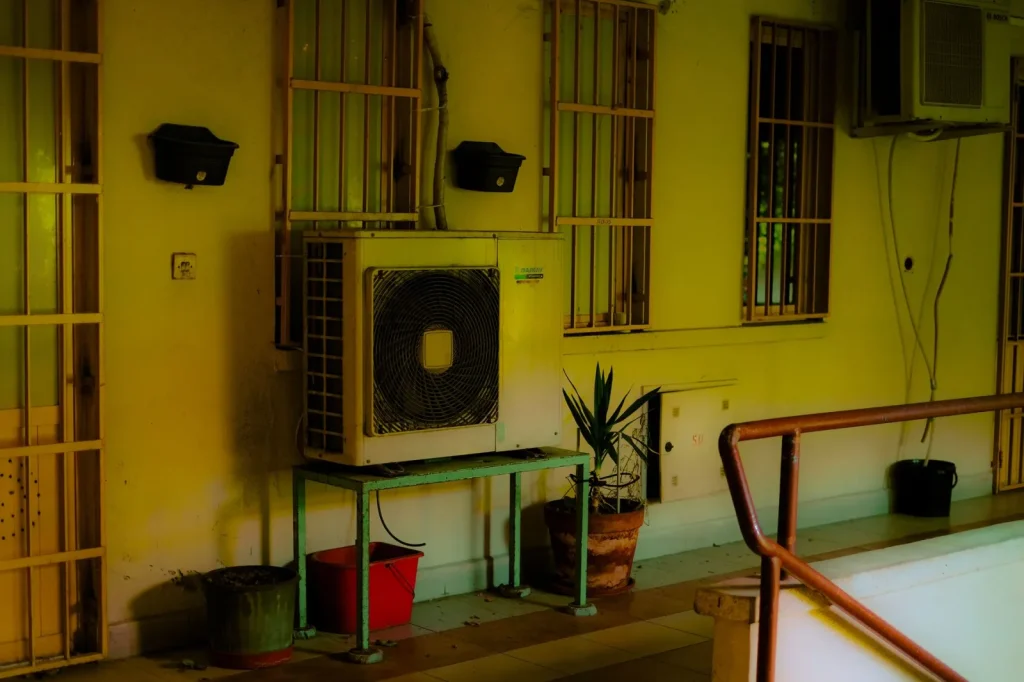
Noise is a real quality-of-life difference. A portable running in a finished basement rec room is loud enough that people turn up the TV. A whole house unit sits near the air handler and you forget it exists.
Maintenance tips the other way in effort but not in frequency. Portables need tank emptying and a filter rinse every couple of weeks. Whole house units mostly need a filter change and an annual once-over, plus a glance at the condensate line so it does not clog.
If your damp problem comes with a musty basement smell or you keep wiping condensation off interior walls, that usually signals moisture spread wide enough that spot-treating with a portable will disappoint you.
Which one fits your situation
Let me make this concrete with the scenarios I see most.
- One damp room or a small basement under 1,000 sq ft: a 35 to 50-pint portable is the right call, cheaper and plenty capable.
- Seasonal damp you fight for two or three months a year: portable, because you can store it the rest of the year.
- High humidity across a whole finished basement or multiple floors: whole house, hands down.
- You are already replacing or upgrading your HVAC: whole house, since the ducting work overlaps and labor is cheaper bundled.
- A rental or a home you will leave soon: portable, since it moves with you and needs no permanent change.
A whole house dehumidifier will not fix bulk water. If your basement floods, seeps, or has standing puddles, no dehumidifier of either type is the answer. Solve the water source first, then dry the air.
There is a middle ground worth naming. Some homes do fine with a larger 50-pint portable draining to a permanent hose and a pump, left running all season in a fixed spot. That is basically a poor man’s whole house setup, and for a single-level home with one problem area it can be enough.
Making the call without second-guessing
Start by measuring. Get a cheap hygrometer, check the humidity in the wettest spots over a week, and note the square footage you actually need to treat. The EPA’s guidance on indoor moisture puts the healthy target between 30 and 50 percent relative humidity, and the Department of Energy’s Energy Saver pages can help you weigh running costs.
If one room reads high and the rest of the house is fine, buy the portable and be done. If the whole floor plan sits above 55 percent through the humid months, the whole house unit will pay you back in comfort and in machines you never had to replace. Measure first, then buy once.
Frequently asked questions
Can a portable dehumidifier cover a whole house?
Not well. A portable dries the air right around it and struggles to move that dry air to distant rooms without open doors and fans. You can chain a couple together, but that gets loud, costly, and tank-heavy fast. For an entire floor plan above 1,500 square feet or across multiple levels, a ducted whole house unit distributes evenly and does the job a single portable cannot.
Is a whole house dehumidifier worth the extra cost?
It depends on the size of your problem. For one damp room, no, a portable is smarter money. For persistent humidity across a large or multi-level home, yes. The whole house unit runs quieter, drains automatically, and treats every room. Counted against the portables people buy and replace chasing a big problem, the higher up-front price often works out cheaper over a few years.
Do whole house dehumidifiers need their own ductwork?
Not always. Many tie directly into your existing HVAC ducts, sharing the air handler to distribute dry air. Others run on a dedicated duct or two that an installer adds. Which setup fits depends on your current system and layout, so an HVAC pro should look at your ducts before you buy. This is the main reason whole house install costs vary from about $300 to $800.
How many pints per day do I actually need?
It comes down to square footage and how wet the space is. A moderately damp 1,000 square foot area often needs 40 to 50 pints per day, while a very wet or larger space can need 70 pints or more. Measuring the humidity and area beats guessing from the box label. Sizing by pints for your real moisture load is the single most important step for either type of unit.
Will either type stop basement condensation and musty smells?
A correctly sized unit will help a lot, because dropping humidity below 50 percent slows mold and cuts the damp odor at its source. But if the smell is strong or condensation is heavy, that often means moisture is entering from outside or through the slab. Fix the water intrusion first, then let the dehumidifier maintain the dry air. Drying alone cannot outrun an active leak.

Dharm Solanki
Dharm Solanki spends a lot of time thinking about the air inside people's homes, usually when no one else is. He writes about humidity, ventilation, and dehumidifiers, along with the small fixes that turn a stuffy or damp room into one that feels comfortable again. He would rather explain why a recommendation works than just point at a product, so his guides tend to answer the question you were about to ask next. And if something looks great on paper but struggles in a normal house, he says so.