On this page
Short answer up front: yes, air purifiers work, but only for a specific job and only if you buy and run one correctly. A good HEPA unit sized for the room will measurably drop the count of airborne particles, sometimes cutting fine-particle levels by half or more in under an hour. What it will not do is scrub odors from your walls, pull moisture out of the air, or fix whatever is making the air bad in the first place.
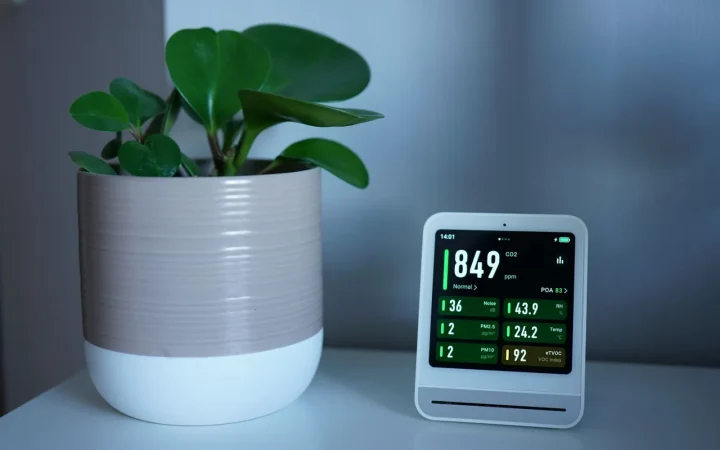
I keep a small particle monitor on my desk. The first time I ran a purifier next to a plate of pan-seared salmon, the PM2.5 reading spiked past 150 and then slid back under 20 in about 25 minutes once the fan kicked into high. That is the honest version of “it works.” Not magic, just physics.
What air purifiers genuinely help with
The strong, well-supported use case is airborne particles. That means wildfire and cooking smoke, dust, pollen, pet dander, and the particulate side of everyday indoor pollution.
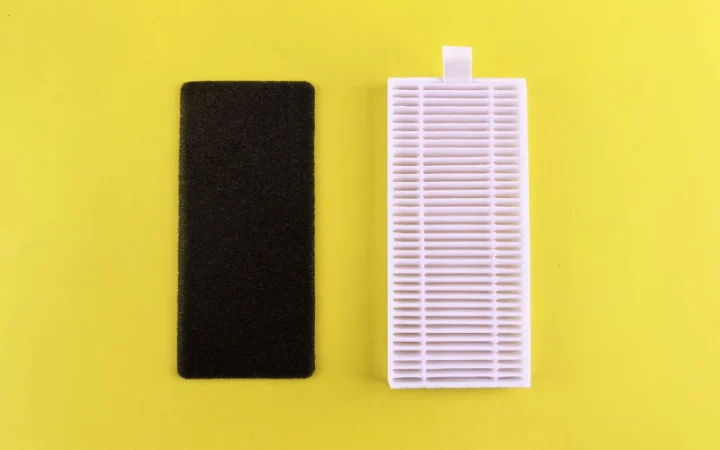
A true HEPA filter is tested to capture 99.97 percent of particles at 0.3 microns, which is close to the hardest size to catch. Bigger and smaller particles are caught even more efficiently. So when a room is full of smoke or dander, a HEPA unit moving enough air does exactly what the label promises.
Match the purifier’s CADR to your room size, then run it continuously. A unit rated for 200 square feet, parked in a 400 square foot living room and left on low, will feel like it “doesn’t do anything.” It is just too small for the space.
The US Environmental Protection Agency is measured but clear on this: portable air cleaners can reduce indoor particle concentrations, especially when source control and ventilation are also in play. You can read their plain-language take on the EPA indoor air quality pages.
If you have allergies or asthma and your triggers are pollen or dander, a bedroom-sized HEPA unit running overnight is one of the few consumer devices with a real, felt payoff. That is the sweet spot.
What they do not fix (and never will)
This is where most disappointment comes from. People expect a particle filter to solve problems that are not particle problems.
Gases, VOCs, and odors
Standard HEPA media does not capture gases. Cooking smells, off-gassing from new furniture, and many household fumes are molecules, not particles, so they slip right through. Some purifiers add an activated carbon stage that adsorbs a portion of these, but the carbon is usually thin and saturates fast.
If your concern is off-gassing, look at the topic of what VOCs in the home are and why they matter, because the real fixes there are source removal and ventilation, not a filter.
A purifier can make a room smell “cleaner” while doing nothing about the actual gas. Perceived odor drops because you also removed the particles that carry some scent, but the harmful gas may still be there. Do not treat a fresher smell as proof the air is safe.
Radon, carbon monoxide, and humidity
Radon is a gas and a serious health issue in many homes; a purifier does essentially nothing for it. The fix is a radon mitigation system, and you should test for it. Carbon monoxide needs a detector and a repaired appliance, not a filter. And moisture is a job for a dehumidifier or better ventilation, never an air cleaner.
A HEPA filter is a fantastic particle net and a terrible everything-else machine. Buy it for what it does.
Mold, dust mites, and source problems
A purifier may catch some airborne mold spores, but it will not stop mold growing on a damp wall. If there is a moisture source feeding it, you are treating a symptom. Same with dust mites: filtering the air helps a little, but mattress covers and lower humidity do more.
The overclaims: ozone and ionizers
Here is where the industry gets slippery. A whole category of devices sells itself on doing more than filtering, and the evidence is weak to negative.
Ozone generators
Skip these. Devices sold to “purify” by producing ozone are producing a lung irritant. The EPA has warned for years that ozone at concentrations high enough to affect pollutants is also high enough to be unsafe to breathe. There is no safe amount of intentional ozone in your living space.
Ionizers and “ionic” purifiers
Ionizers charge particles so they clump and settle or stick to surfaces. They can lower the count of airborne particles you measure, but the particles often land on your furniture and floor rather than getting captured. Some ionizing devices also emit ozone as a byproduct.
The consumer research group Consumer Reports has repeatedly flagged that many ionizers underperform good HEPA units and that some produce ozone. My advice: if a unit’s headline feature is ions rather than a filter, treat the claims with heavy skepticism.
| Technology | Works for particles? | Main concern |
|---|---|---|
| True HEPA + fan | Yes, well proven | Filter replacement cost |
| HEPA + activated carbon | Yes, plus some gas capture | Carbon saturates quickly |
| Ionizer / ionic | Partial, often modest | Deposits on surfaces, possible ozone |
| Ozone generator | No, and unsafe | Releases a lung irritant |
| UV-only “purifier” | Minimal in typical units | Contact time too short to matter |
Why some purifiers seem useless
When a working HEPA purifier feels like it is doing nothing, the cause is almost always one of a few boring things.
- The unit is undersized for the room, so its clean-air delivery rate cannot keep up.
- It is run on the quietest, lowest setting, which can move a fraction of the rated air.
- The filter is old and clogged, or it was never a real HEPA filter to begin with.
- Doors and windows stay open, so outdoor or adjacent-room air keeps refilling the space.
- The real problem is a gas, moisture, or source issue the purifier was never built to solve.
A mistake I see constantly: someone buys a beautiful, quiet, undersized unit for a big open-plan space, runs it on low so it stays silent, and concludes purifiers are a scam. The device was fine. The match was wrong.
Verify with a cheap PM2.5 monitor. Fry something, watch the number climb, then run the purifier on high and time how fast it falls. If the reading drops meaningfully within an hour, your unit is working. If it barely moves, it is undersized or the filter is spent.
The hidden cost that decides whether it keeps working
A purifier is only as good as its current filter. A true HEPA filter typically runs 40 to 100 dollars and lasts 6 to 12 months depending on use, and a carbon pre-filter may need changing more often. Ignore this and your “working” purifier quietly becomes a fan that pushes dirty air around.
Run the numbers before buying. A cheaper unit with a proprietary 90 dollar filter you replace twice a year can cost more over three years than a pricier unit with an affordable standard filter. That ongoing cost is the part almost nobody checks at the store.
So, should you get one
If you deal with wildfire smoke, allergies, pets, or cooking particulates, a right-sized true HEPA purifier is a genuinely useful buy, and you will likely feel the difference in a bedroom within a night or two. Pair it with the basics: cook with the range hood on, keep humidity in check, and open windows when outdoor air is good.
Buy for particles, size for the room, run it on a setting that actually moves air, and budget for filters. Ignore anything selling ozone, and stay skeptical of ion-first marketing. Do that, and the honest answer to “do air purifiers work” is a confident yes, for the job they were built to do.
Frequently asked questions
Do air purifiers actually remove smoke?
Yes, for the particle side of smoke. A true HEPA unit sized for the room captures the fine particulates in wildfire and cooking smoke very well, often cutting levels sharply within an hour. It does less for the gas and odor part of smoke unless it has a meaningful activated carbon stage, and even then the carbon saturates over time and needs replacing.
Are ionizers or ozone generators safe to use?
Ozone generators are not safe. They release ozone, a lung irritant, and should be avoided in occupied spaces. Ionizers are less dangerous but often underperform good HEPA units, deposit particles onto your furniture instead of trapping them, and some emit ozone as a byproduct. If a device leads with ions instead of a filter, treat its claims with heavy skepticism.
Do air purifiers help with mold or humidity?
Only marginally. A purifier may catch some airborne mold spores, but it cannot stop mold growing on a damp surface, because that is a moisture problem. Air cleaners also do nothing for humidity itself. For moisture and mold, the real tools are a dehumidifier, better ventilation, and fixing the leak or source feeding the dampness.
How long does it take a purifier to clean a room?
With a correctly sized unit run on a high setting, you often see a clear drop in fine-particle readings within 20 to 60 minutes. Speed depends on the clean-air delivery rate versus room size and how much you keep doors closed. An undersized unit, or one left on the lowest quiet setting, can take far longer or never really catch up.
Do I really need to replace the filter?
Yes, and skipping it is the most common way a good purifier stops working. True HEPA filters usually last 6 to 12 months and cost roughly 40 to 100 dollars, while carbon pre-filters need changing more often. A clogged filter chokes airflow and quietly turns your purifier into a fan. Factor filter cost into the purchase, since it often exceeds the price of the unit over a few years.

Dharm Solanki
Dharm Solanki spends a lot of time thinking about the air inside people's homes, usually when no one else is. He writes about humidity, ventilation, and dehumidifiers, along with the small fixes that turn a stuffy or damp room into one that feels comfortable again. He would rather explain why a recommendation works than just point at a product, so his guides tend to answer the question you were about to ask next. And if something looks great on paper but struggles in a normal house, he says so.