On this page
The first time I metered the air in my own kitchen, I felt a little embarrassed. I’d spent years telling homeowners their houses were tighter than they thought, then I seared a steak on a Tuesday night and watched my PM2.5 reading climb past 300. Outside, the number was 8.
That gap is the whole story. The air you breathe indoors is shaped less by the weather outside and more by what happens inside your four walls.
The EPA has found that indoor levels of many pollutants run 2 to 5 times higher than outdoor levels, and after certain activities they spike much higher than that. Since most of us spend around 90 percent of our time indoors, that math matters. This is the front door to everything we cover, so let me lay out the whole picture before you go deeper on any one piece.
What “indoor air quality at home” actually means
Indoor air quality at home is a measure of how clean and healthy the air is inside your living space. It covers the pollutants floating in the air, the humidity level, and how well fresh air moves through.
It is not one single number. A house can have low particulates but stale, carbon dioxide heavy air. Another can have great airflow but a mold problem festering behind the drywall.
Think of it as three overlapping questions. What is in the air, how much fresh air is coming in, and is anything actively feeding the problem.
If you can smell it, taste it, or it makes your eyes itch, your air quality is already telling you something. Trust your senses first, then confirm with a meter.
The pollutants that show up in real houses
You do not need to memorize a chemistry chart. A handful of categories cause the vast majority of household air problems, and they behave in predictable ways.
Particulate matter
These are the tiny solid bits floating in your air, and PM2.5 (particles under 2.5 microns) is the one to watch. They lodge deep in your lungs because they are small enough to slip past your body’s defenses.
Cooking is the single biggest indoor source in most homes. Frying, searing, and toasting throw off enormous amounts, which is why reducing PM2.5 from cooking deserves its own attention. Candles, fireplaces, and dusty vacuuming add to the load.
Gases and VOCs
Volatile organic compounds are gases that off-gas from paint, new furniture, cleaning products, air fresheners, and building materials. That “new” smell in a fresh sofa or a just painted room is VOCs leaving the material and entering your air.
Understanding what VOCs are in the home and why they matter is worth a few minutes of reading, because the fixes are cheap and simple once you know the sources.
Combustion byproducts
Gas stoves, furnaces, water heaters, and fireplaces produce carbon monoxide and nitrogen dioxide when they burn fuel. A gas cooktop with no range hood can push nitrogen dioxide to levels that would be illegal outdoors.
Carbon monoxide is odorless and can be deadly. A regular air quality monitor does not detect it. You need dedicated CO alarms, and the CDC’s guidance on carbon monoxide is worth reading if you burn any fuel indoors.
Biological growth and moisture
Mold, dust mites, and bacteria all thrive in damp conditions. This is where humidity and air quality overlap, and it is the corner of the field I know best from my field days.
Keep relative humidity between 30 and 50 percent and most biological problems starve out. Let it drift past 60 percent and you are running a greenhouse for mold. A short list of the usual suspects lives in our piece on common indoor air pollutants found at home.
How to measure what you cannot see
For years the standard method was guessing. Someone felt stuffy, so they cracked a window. That still works, but a cheap monitor turns guesswork into information.
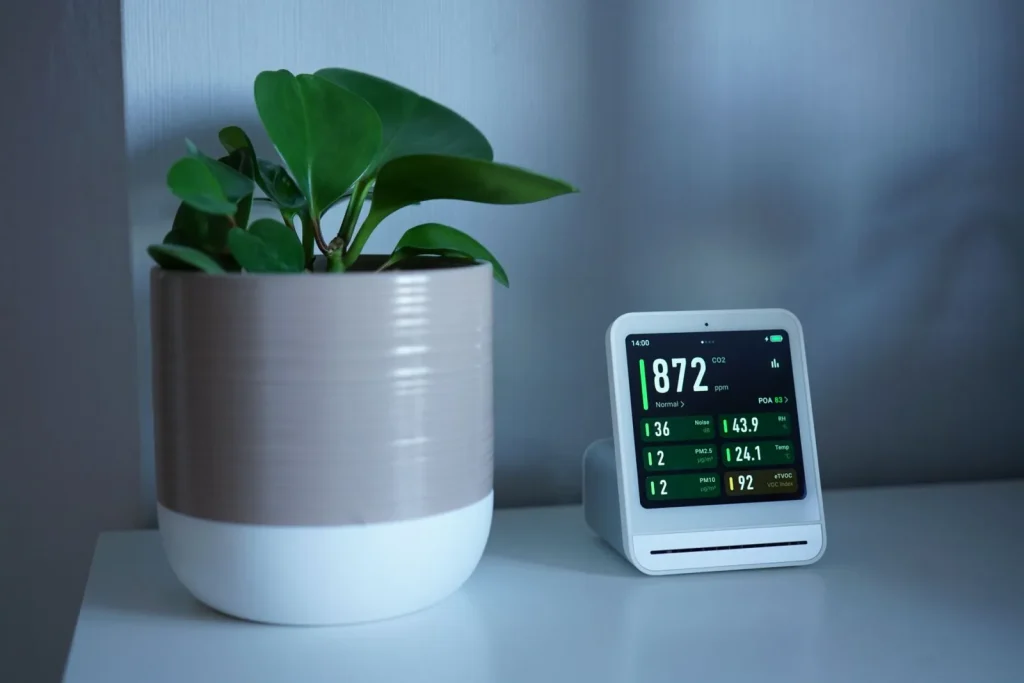
A good home monitor tracks three things at minimum: PM2.5, carbon dioxide, and humidity. Carbon dioxide is your ventilation gauge. When it climbs above 1,000 ppm, the room is not getting enough fresh air, and drowsiness and headaches often follow.
| What it reads | Good target | Time to act |
|---|---|---|
| PM2.5 | Under 12 ug/m3 | Above 35 ug/m3 |
| Carbon dioxide | Under 800 ppm | Above 1,000 ppm |
| Relative humidity | 30 to 50 percent | Above 60 percent |
If you want the full breakdown, how indoor air quality monitors work and what is a good indoor air quality reading both go deeper than I can here. The short version: a monitor that just glows green is nearly useless. You want actual numbers you can watch change.
You cannot manage what you do not measure. A 100 dollar monitor pays for itself the first time it shows you that your “fresh” bedroom is sitting at 1,400 ppm all night.
The three levers every homeowner can pull
Once you know what is in your air, fixing it comes down to three moves. They stack, and you should attack them in this order.
1. Source control
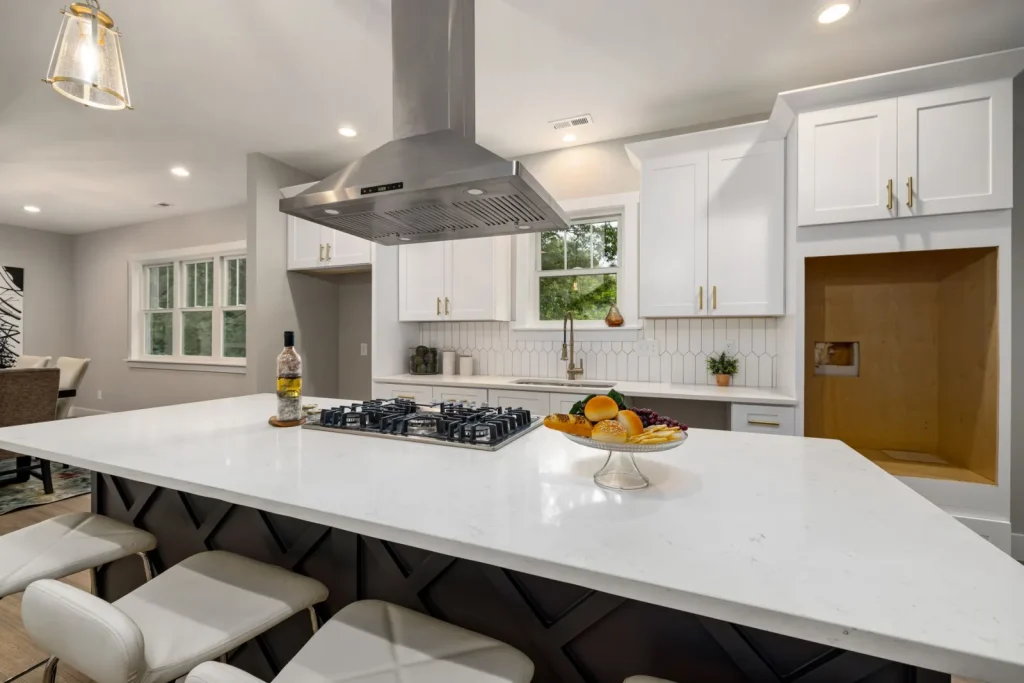
This is the cheapest and most effective lever, full stop. Stop the pollution before it starts. Use the range hood every single time you cook, switch to low VOC paints and cleaners, take shoes off at the door, and fix leaks before they grow mold.
A mistake I see constantly: people buy a 400 dollar air purifier to fight cooking smoke while a perfectly good range hood sits unused two feet away. Turn the hood on first.
2. Ventilation
Fresh air dilutes indoor pollutants. Opening windows works when outdoor air is clean, and running bathroom and kitchen exhaust fans pulls bad air out. In tight modern homes, a mechanical ventilation system may be needed because the house simply does not leak enough on its own. The EPA’s page on improving indoor air quality is a solid, no-nonsense reference here.
3. Filtration
Filtration catches what you could not stop at the source. Your furnace filter is the first line, and MERV filter ratings tell you how much it actually traps. A portable purifier with a true HEPA filter handles a single room well.
Two topics do the heavy lifting on the details: HEPA filters explained covers what these filters actually trap, and sizing an air purifier by CADR keeps you from buying a unit that is too weak for the room. Get the size right or you are just running a fan.
Change your furnace filter every 60 to 90 days, sooner if you have pets. A clogged filter chokes airflow and stops doing its job, and I have pulled filters so packed they looked like grey felt.
A simple starting checklist
If you do nothing else this month, work through this list. It targets the biggest sources with the least money.
- Run the kitchen range hood every time the stove is on
- Put a monitor in the room where you spend the most time
- Check that your furnace filter is at least MERV 11 and not clogged
- Keep indoor humidity between 30 and 50 percent
- Test your carbon monoxide alarms and replace dead batteries
- Crack windows on days when outdoor air is clean
Where to go from here
Good indoor air is not a product you buy once. It is a set of small habits backed by a couple of tools that show you what is happening.
Start by measuring. Put a monitor in your bedroom or living room and watch it for a week. The numbers will point you straight at your real problem, whether that is cooking smoke, stale air, or creeping humidity, and from there each supporting topic gives you the specific fix. You do not have to solve everything at once. You just have to know which lever to pull first.
Frequently asked questions
Is indoor air really worse than outdoor air?
Often yes. The EPA reports that indoor levels of many pollutants run 2 to 5 times higher than outdoor levels, because pollutants build up in an enclosed space instead of dispersing. After activities like cooking or using strong cleaners, indoor spikes can climb much higher. Since most people spend around 90 percent of their time indoors, that concentrated air is what you breathe most.
What is the single most important thing to fix first?
Source control, and usually that means your kitchen. Cooking is the biggest indoor source of fine particulates in most homes, so running your range hood every time you cook removes a huge chunk of the problem for free. Stopping pollution at the source beats trying to filter it out after it is already in the air.
Do I need an expensive air quality monitor?
No. A monitor in the 80 to 150 dollar range that tracks PM2.5, carbon dioxide, and humidity gives you the three readings that matter most. Avoid units that only show a vague color light with no actual numbers. You want to watch the values change so you can connect spikes to real events like cooking or a stuffy closed room.
What humidity level keeps my air healthy?
Aim for 30 to 50 percent relative humidity. Below that, dry air irritates your eyes, skin, and sinuses. Above 60 percent, you create ideal conditions for mold, dust mites, and bacteria. A cheap hygrometer or any decent air quality monitor tracks this, and it is one of the easiest numbers to control with a humidifier or dehumidifier.
Will an air purifier fix everything?
No, and buying one first is a common mistake. A purifier handles airborne particles in one room, but it does nothing for the gas leaking from your stove, the humidity feeding mold, or the VOCs off-gassing from new furniture. Use it as your third lever after source control and ventilation, and size it to the room using its CADR rating.

Dharm Solanki
Dharm Solanki spends a lot of time thinking about the air inside people's homes, usually when no one else is. He writes about humidity, ventilation, and dehumidifiers, along with the small fixes that turn a stuffy or damp room into one that feels comfortable again. He would rather explain why a recommendation works than just point at a product, so his guides tend to answer the question you were about to ask next. And if something looks great on paper but struggles in a normal house, he says so.