On this page
The first service call I ever made for a “broken” dehumidifier turned out to be a full tank. The homeowner had run a 50-pint unit in a wet basement, forgot about it for two days, and the auto-shutoff did exactly what it was designed to do. Nothing was broken. It just had nowhere to put the water.
That is the whole story of drainage in one sentence. A dehumidifier pulls pints of water out of your air every day, and that water has to go somewhere. How you handle it decides whether the machine runs on its own for weeks or nags you every morning.
Let me walk through the three dehumidifier drainage options you actually have, and how to pick the one that fits your floor.
The three ways water leaves a dehumidifier
Every portable and whole house dehumidifier uses one of three methods. Some units support all three, and you get to choose. Others lock you into one, so it pays to check before you buy.
| Method | Hands off? | Needs a low drain? | Extra cost |
|---|---|---|---|
| Manual tank | No | No | $0 |
| Gravity hose | Yes | Yes | $5-15 hose |
| Built in or external pump | Yes | No | $0-60 |
Manual tank emptying
The default. Water collects in a bucket, usually holding 6 to 16 pints, and when it fills the unit shuts off and beeps or flashes at you.
It costs nothing and needs no setup. The catch is frequency. In a genuinely damp basement running at 60 percent relative humidity, a 50-pint machine can fill a 12-pint tank in eight to twelve hours. That is two trips a day to the sink.
Manual works fine for a bathroom, a closet, or a room you are actively drying out and checking on anyway. For anything long term or out of sight, it turns into a chore you will resent by week two.
Line the tank rim area with a quick wipe of the sink every few emptyings. Standing bucket water grows a biofilm fast, and that slime is what makes a dehumidifier start to smell musty.
Gravity hose draining
Most units have a threaded port, often hidden behind a pop-out panel, where you screw on a standard garden hose or a 5/8-inch drain hose. Water then runs continuously downhill to a floor drain, sump pit, or the outdoors.
This is the cleanest hands off setup when your layout allows it, because there is no pump to fail and no tank to check. You set it once and walk away.
Gravity does not negotiate. If the drain sits even an inch higher than the hose outlet on the unit, water backs up and the tank fills anyway.
The outlet on a portable dehumidifier is usually only 6 to 12 inches off the floor. So gravity draining only works if your floor drain, sump, or a downhill run to a sink is lower than that outlet. In a basement with a floor drain, you are often in luck. On a slab with no drain, or an upstairs room, you are out of luck.
Keep the hose sloped downhill the entire way with no dips or coils. A single low loop holds water, and that trapped water blocks flow just like a clog. I have seen a “failed” gravity drain that was nothing more than a hose looped once around a support post.
Built in or external pump
A pump changes the math entirely. Instead of relying on gravity, a small pump pushes condensate up and out, so you can send water to a sink 4 feet up, out a window, or across the room to a distant drain.
Some dehumidifiers have an internal pump built in. If yours does not, you can add an external condensate pump for roughly $30 to $60. The dehumidifier drains into the pump’s small reservoir, a float switch triggers the pump, and it lifts the water wherever you route the discharge line.
Typical built in pumps handle a vertical lift of 12 to 16 feet, which covers almost any basement or laundry situation. The trade-off is one more part that can wear out, and a faint hum each time it cycles.
If your only drain is higher than the unit, or is on the far side of the room, buy a model with a built in pump or add an external one. Fighting gravity with a plain hose never ends well.
Matching the method to your space
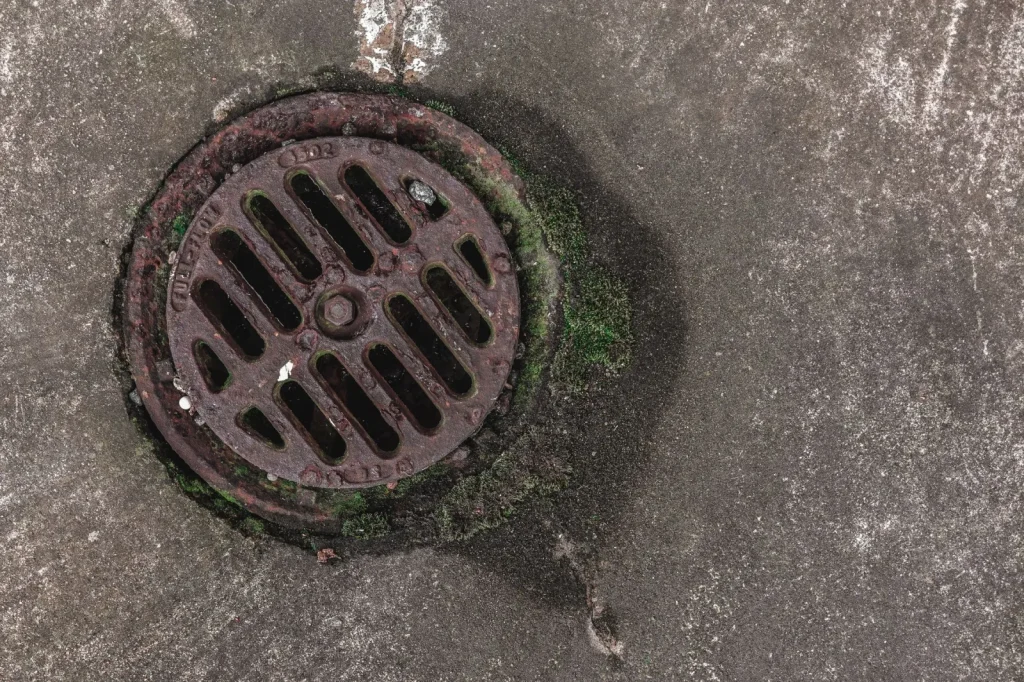
Drainage is a floor-layout decision before it is a feature decision. Look at where the water needs to end up, then work backward.
- Floor drain or sump lower than the unit: gravity hose is your simplest bet.
- Laundry sink or standpipe above floor level: you need a pump.
- No drain anywhere nearby: pump the water to a sink, or accept manual emptying.
- Finished room upstairs, want it invisible: internal pump to a nearby bathroom drain.
- Short-term drying after a leak: manual tank is fine, since you are watching it anyway.
A quick real example. A reader wrote in about a musty finished basement where the only drain was the laundry tub, mounted about 3 feet up on the wall. Gravity was hopeless. A $45 external pump routed to the tub solved it in an afternoon, and the unit has run untouched since.
Setup details that save you a callback
Whichever route you pick, a few small things separate a setup that lasts from one that leaks or clogs.
Check the hose threading before you buy a hose. Most portables use a standard garden-hose thread, but a few use a barbed 5/8-inch fitting that needs a clamp instead.
Secure the hose end at the drain so it cannot creep out of the pit when the floor is wet. A gallon of water arriving on the floor overnight is a bad way to learn this.
For pump setups, run the discharge line up and over before it goes down to the drain. That little high loop stops water from siphoning back into the pump when it is off.
Once a season, run a cup of diluted white vinegar through the drain line or pump reservoir. It clears the slime that slowly narrows the tubing and keeps the float switch moving freely.
What good drainage buys you

The point of getting drainage right is that the machine can finally do its job without you in the loop. Keeping a space near the sweet spot of 45 to 50 percent relative humidity only works if the unit runs continuously, and continuous running means the water has to leave on its own.
The US Environmental Protection Agency recommends keeping indoor humidity below 60 percent to discourage mold, and you can read more on their mold and moisture pages. A dehumidifier that shuts off every twelve hours because a tank is full cannot hold that line. Hands off drainage is what lets it.
So before you compare pint ratings or read another feature list, stand where the unit will live and find the drain. Measure whether it sits below the outlet. If it does, buy a hose. If it does not, buy a pump. That one check, done first, saves more grief than any spec on the box.
Frequently asked questions
Can I leave a dehumidifier draining through a hose all the time?
Yes, and that is the main reason to use a hose. As long as the outlet sits above your drain and the hose slopes downhill with no dips, water flows out continuously and the tank never fills. Check the hose connection every few weeks for slipping or slime buildup, but otherwise it can run unattended for the whole damp season.
Do I need a pump if my basement already has a floor drain?
Usually not. If the floor drain sits lower than the dehumidifier's drain outlet, plain gravity does the work for free. You only need a pump when the drain is higher than the unit, such as a wall-mounted laundry sink, or when the nearest drain is across the room and gravity cannot carry the water that far.
How often do I have to empty the tank if I drain manually?
It depends on how damp the space is and the tank size. In a wet basement, a 50-pint unit can fill a 12-pint tank in 8 to 12 hours, so twice a day. In a drier room it might be once every day or two. If you find yourself emptying it more than once daily, that is your sign to set up hose or pump draining instead.
Will gravity draining work if the drain is on a wall above the floor?
No. Gravity only moves water downhill, and a portable dehumidifier's outlet is only 6 to 12 inches off the floor. A wall drain or laundry sink mounted higher than that outlet needs a pump to lift the water up to it. Trying to force gravity uphill just backs water into the tank.
Is a built in pump worth the extra cost over an external one?
A built in pump is tidier since it is one sealed unit with no extra reservoir on the floor, and it is convenient if you know you will always need to lift water. An external pump costs about $30 to $60 and lets you add pumping to a unit you already own. Both handle similar lift heights, so the choice is mostly about whether you are buying new or upgrading.

Dharm Solanki
Dharm Solanki spends a lot of time thinking about the air inside people's homes, usually when no one else is. He writes about humidity, ventilation, and dehumidifiers, along with the small fixes that turn a stuffy or damp room into one that feels comfortable again. He would rather explain why a recommendation works than just point at a product, so his guides tend to answer the question you were about to ask next. And if something looks great on paper but struggles in a normal house, he says so.