
On this page
Crack open a can of fresh paint and that sharp smell hits you right away. That is not just “paint smell.” You are breathing in volatile organic compounds, and they are coming off far more than the paint can.
I spent years walking into homes with a meter clipped to my belt, and the readings that surprised people most were rarely from anything dramatic. A new couch, a stack of dry-cleaned shirts, the cleaner under the kitchen sink. All quiet, all off-gassing.
Let me walk you through what these compounds actually are, where they hide, and the handful of moves that make the biggest difference.
What VOCs Actually Are
VOCs, or volatile organic compounds, are carbon-based chemicals that evaporate easily at normal room temperature. “Volatile” is the key word: they turn from liquid or solid into gas without much prompting, which is why you can smell many of them.
This is a huge family, not a single substance. Benzene, toluene, xylene, acetone, limonene, and hundreds of others all fall under the label. Some smell strong, some smell pleasant, and plenty have no odor at all.
That last point matters. People assume that if a room does not smell of chemicals, the air is clean. Smell is a poor gauge here, because your nose adapts within minutes and many VOCs are odorless to begin with.
If a product is liquid, evaporates, or has a noticeable scent, it almost certainly releases VOCs. That includes “natural” and citrus-scented products, which give off their own plant-based compounds.
How they differ from formaldehyde
Formaldehyde is itself a VOC, one of the most studied. But it gets its own attention because it off-gasses slowly from pressed-wood furniture and building materials for months or years. Most other VOCs I cover here spike fast during an activity, then fade. Different behavior, same broad chemical family.
Where VOCs Come From in a Typical House

The sources are so ordinary that most people never think of them. Here is a snapshot of the common ones and how long they tend to release.
| Source | Example VOCs | Release pattern |
|---|---|---|
| Wet paint and finishes | Toluene, xylene, glycol ethers | Heavy while wet, tapers over days |
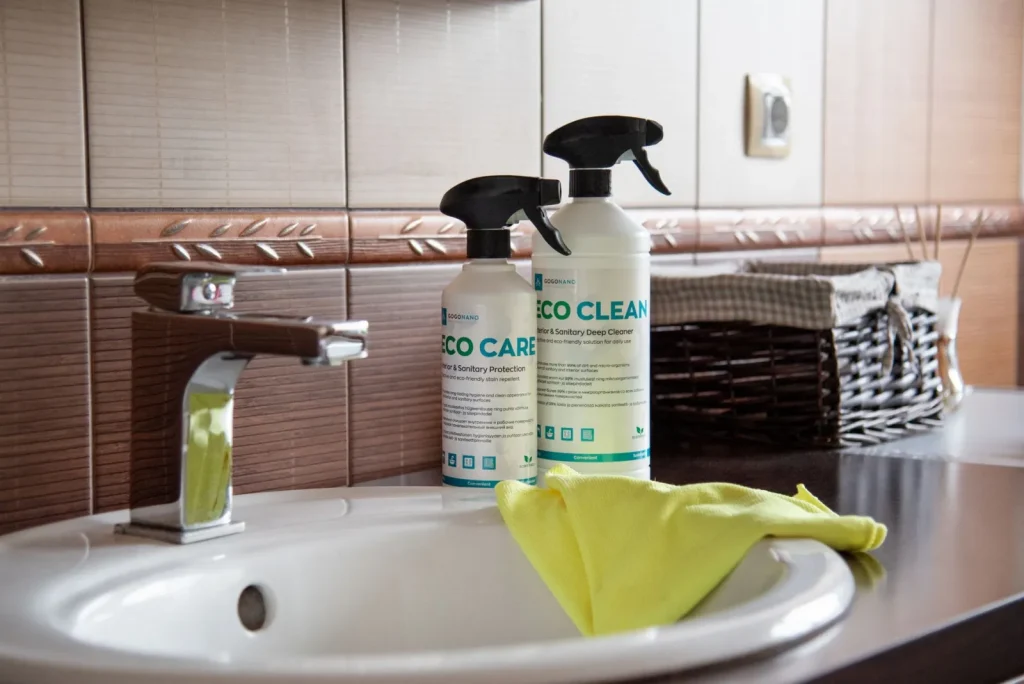
| Cleaning products | Ammonia compounds, limonene, alcohols | Spikes during use |
| New furniture and carpet | Formaldehyde, styrene | Weeks to months |
| Air fresheners and candles | Terpenes, benzene | Ongoing while used |
| Adhesives and caulk | Acetone, various solvents | Days after application |
| Stored gasoline, solvents, paint cans | Benzene, mineral spirits | Constant slow leak |
Attached garages deserve a special mention. Gasoline, running engines, and stored chemicals push benzene and other compounds straight into the house through shared walls and doors.
Cooking adds to the picture too, though the bigger concern there is fine particles. If you want the full rundown on those, our piece on How to Reduce PM2.5 From Cooking covers it well.
The highest reading I ever logged in a home was not near a factory or a busy road. It was three feet from a can of paint stripper someone had left open in a closed spare room.
Why Indoor Levels Get So High
Here is the part that catches people off guard. The EPA has found that indoor concentrations of many VOCs run 2 to 5 times higher than outdoor levels, and during activities like painting they can jump to a thousand times higher.
The reason is simple. Modern homes are built tight to save energy, which is great for your heating bill and bad for anything you release inside. The air just sits there, and the compounds build up with nowhere to go.
You can read more on how agencies frame this on the EPA indoor air quality pages, which put VOCs among the pollutants most worth managing at home.
What VOCs Do to Your Health
Effects depend heavily on which compound, how much, and for how long. That said, some patterns show up again and again.
Short-term exposure at moderate levels commonly brings on headaches, dizziness, watery or burning eyes, a scratchy throat, and nausea. If you have ever felt foggy after a day of painting a closed room, you have felt this firsthand.
Longer-term exposure to certain VOCs is a more serious matter. Benzene and formaldehyde, for example, are known human carcinogens. Others are linked to liver, kidney, and nervous system effects with heavy repeated exposure.
People with asthma, young children, and older adults tend to react at lower levels. If someone in the house gets headaches or throat irritation during cleaning or painting, treat that as a signal, not a coincidence.
The Environmental Protection Agency and the CDC both stress that the goal is not zero VOCs, which is impossible, but keeping everyday exposure low and avoiding the big spikes.
How to Lower VOCs at Home
Good news: the fixes are mostly cheap and low-tech. You do not need lab equipment, just a few habits and smart purchases.
Ventilate, especially during and after messy jobs
Fresh air is the single most effective move. Open windows on two sides of the room to create a cross breeze, and run bathroom or kitchen exhaust fans to pull stale air out.
When you paint, refinish, or use strong solvents, keep the ventilation going during the work and for a day or two afterward. The compounds keep releasing well after the surface feels dry.
Choose low-VOC products
Paint aisles now carry clearly labeled low-VOC and zero-VOC options, often for only a few dollars more per gallon. Look for the same on adhesives, sealants, and finishes.
Filter what you cannot ventilate away
This is where filter choice matters. A HEPA filter is excellent for particles but does almost nothing for gases like VOCs. To capture those, you need activated carbon, which adsorbs the compounds onto its surface.
Many purifiers combine a HEPA stage with a carbon stage. If VOCs are your main concern, check that the carbon layer is substantial, not a thin token mat, since a light coating saturates quickly and stops working.
A low-cost indoor air quality monitor that tracks total VOCs (labeled TVOC) is a useful reality check. Watch how the number climbs when you spray cleaner or light a candle, then drops after you open a window. Seeing it makes the habits stick.
A Realistic Way to Think About VOCs
You are never going to hit zero, and you should not lose sleep chasing it. Your body handles small, brief exposures fine.
What actually moves the needle is avoiding the big spikes and the constant low-level sources you can easily remove. Ventilate hard when you paint or clean, get the gas cans out of the house, pick low-VOC products when you shop, and add a carbon filter if odors linger.
Do those four things and you have handled the large majority of what a meter would ever flag. Start with the one that fits this weekend, and let the rest follow.
Frequently asked questions
Can I smell VOCs, and does no smell mean the air is safe?
You can smell many VOCs, like fresh paint or strong cleaners, but not all of them. Several common ones are odorless, and your nose stops noticing scents within minutes as it adapts. So no smell does not guarantee clean air. If you want a real reading, a monitor that tracks total VOCs gives you numbers your nose cannot.
Do air purifiers remove VOCs from the air?
Only if they use activated carbon. A standard HEPA filter traps particles but lets gases like VOCs pass right through. Purifiers with a real carbon stage adsorb many VOCs, though the carbon saturates over time and needs replacing. For VOCs specifically, ventilation usually does more than any purifier, so open windows first.
How long do VOCs off-gas from new furniture or paint?
It varies by product. Wet paint releases heavily for a few days as it cures, then tapers off. New furniture, carpet, and mattresses can off-gas formaldehyde and other compounds for weeks or even months. Airing new items out in a garage or spare room before bringing them into bedrooms cuts your exposure noticeably.
Are natural or citrus-scented cleaners free of VOCs?
No. Citrus and pine scents come from terpenes, which are plant-based VOCs. They can also react with ozone in the air to form other compounds. Natural does not mean VOC-free. These products may be gentler in some ways, but you should still use them with a window open, just as you would with conventional cleaners.
What VOC level should I worry about on a home monitor?
Consumer TVOC readings are rough, so treat them as trends rather than precise measurements. A brief spike while cleaning or cooking is normal and drops fast with ventilation. What matters more is a reading that stays elevated for hours or days, which points to an ongoing source like stored solvents or new furnishings you should track down and address.

Dharm Solanki
Dharm Solanki spends a lot of time thinking about the air inside people's homes, usually when no one else is. He writes about humidity, ventilation, and dehumidifiers, along with the small fixes that turn a stuffy or damp room into one that feels comfortable again. He would rather explain why a recommendation works than just point at a product, so his guides tend to answer the question you were about to ask next. And if something looks great on paper but struggles in a normal house, he says so.