On this page
The first air purifier I ever opened up on a service call had a proud sticker on the front: “99 percent HEPA-type filtration.” Sounded great. But the filter inside was a loose, floppy sheet of polyester that you could almost see through when you held it to a window. That gap between the label and the actual media is where a lot of people lose money.
So let’s sort out what the term really means, what the media traps, and how to read a box without getting fooled.
What “true HEPA” actually stands for
HEPA stands for High Efficiency Particulate Air. It is not a brand or a vague quality claim. It is a defined performance standard.
To be true HEPA, a filter must capture at least 99.97 percent of particles that are 0.3 microns in diameter. A micron is one millionth of a meter. For scale, a human hair is roughly 50 to 70 microns across, so 0.3 micron is more than a hundred times thinner.
That specific size, 0.3 microns, is not random. It is the hardest particle size for a filter to catch. Engineers call it the Most Penetrating Particle Size (MPPS).
If a filter grabs 99.97 percent of the toughest-to-catch particles, it does even better on everything larger and smaller. HEPA is rated at its weakest point, which is why the number is trustworthy.
Why 0.3 microns is the worst case
You would think smaller is always harder to trap. It is not. Very large particles slam straight into fibers and stick. Very small particles bounce around so wildly (a motion called diffusion) that they smack into fibers constantly and get caught.
Particles around 0.3 microns sit in an unlucky middle. They are too small to reliably crash into a fiber and too big to bounce hard enough to guarantee contact. That is the valley where filters struggle, so that is where the standard sets the bar.
How HEPA media actually traps particles
A common mistake is picturing HEPA like a window screen with holes so tiny that only small things pass. That is not how it works at all. If it were a simple sieve, it would clog in a day.
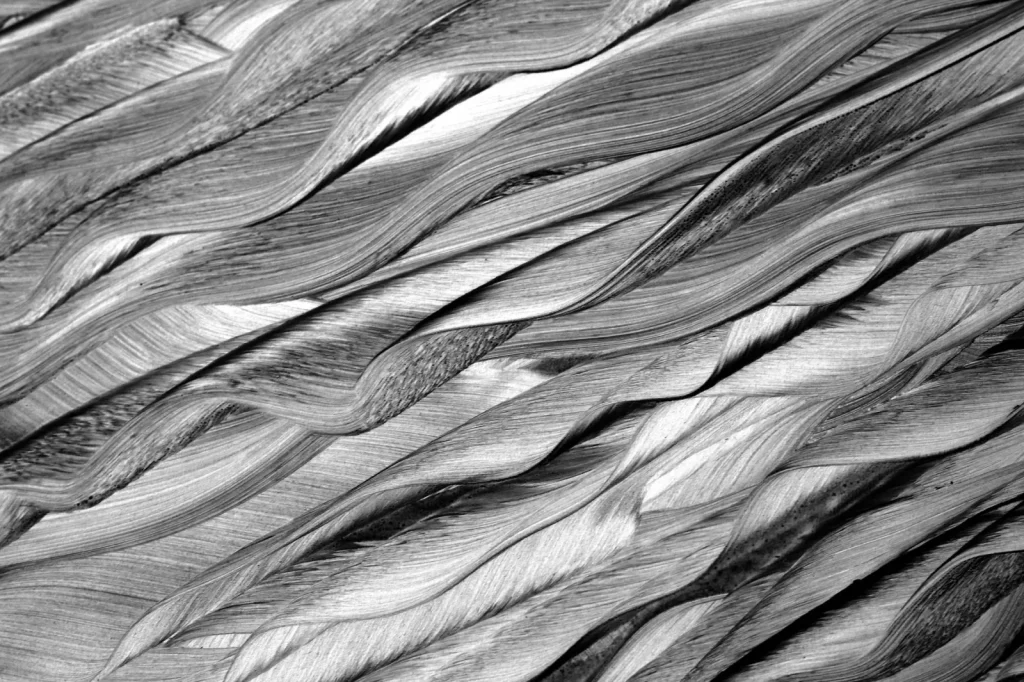
True HEPA is a dense, tangled mat of glass fibers, thinner than a thread and pressed into a paper-like sheet, then pleated to pack in surface area. Air weaves through the maze. Particles get caught by four separate mechanisms working at once.
| Mechanism | How it catches the particle | Best on |
|---|---|---|
| Interception | Particle follows the airflow but grazes a fiber and sticks | Mid-size particles |
| Impaction | Particle is too heavy to turn with the air and slams into a fiber | Larger, heavier particles |
| Diffusion | Tiny particles zigzag randomly and collide with fibers | Very small particles |
| Sieving | Particle is simply too big to fit between fibers | Large particles like some pollen |
Because several mechanisms overlap, the media stays effective across a huge range of particle sizes. That is the quiet genius of it. It is not one trick, it is four.
HEPA does not filter air by having smaller holes. It filters air by giving particles a thousand chances to run into something sticky on the way through.
True HEPA versus HEPA-type and other soft labels
Here is where the shopping gets tricky. “HEPA” as a word is not tightly policed on consumer packaging in the United States, so marketers stretch it.
Watch for these hedge words: HEPA-type, HEPA-like, HEPA-style, 99 percent HEPA, and “contains HEPA material.” None of those are held to the 99.97 percent at 0.3 micron test. A HEPA-type filter might only catch 85 to 90 percent, and often only at larger particle sizes where the job is easier anyway.
If the box says HEPA-type or does not state the 99.97 percent figure at 0.3 microns anywhere, assume it is not true HEPA. The vague phrasing is usually deliberate.
How to confirm you are getting the real thing
- The spec sheet states 99.97 percent (or higher) efficiency at 0.3 microns
- It uses the words “True HEPA” or references a standard, not just “HEPA-type”
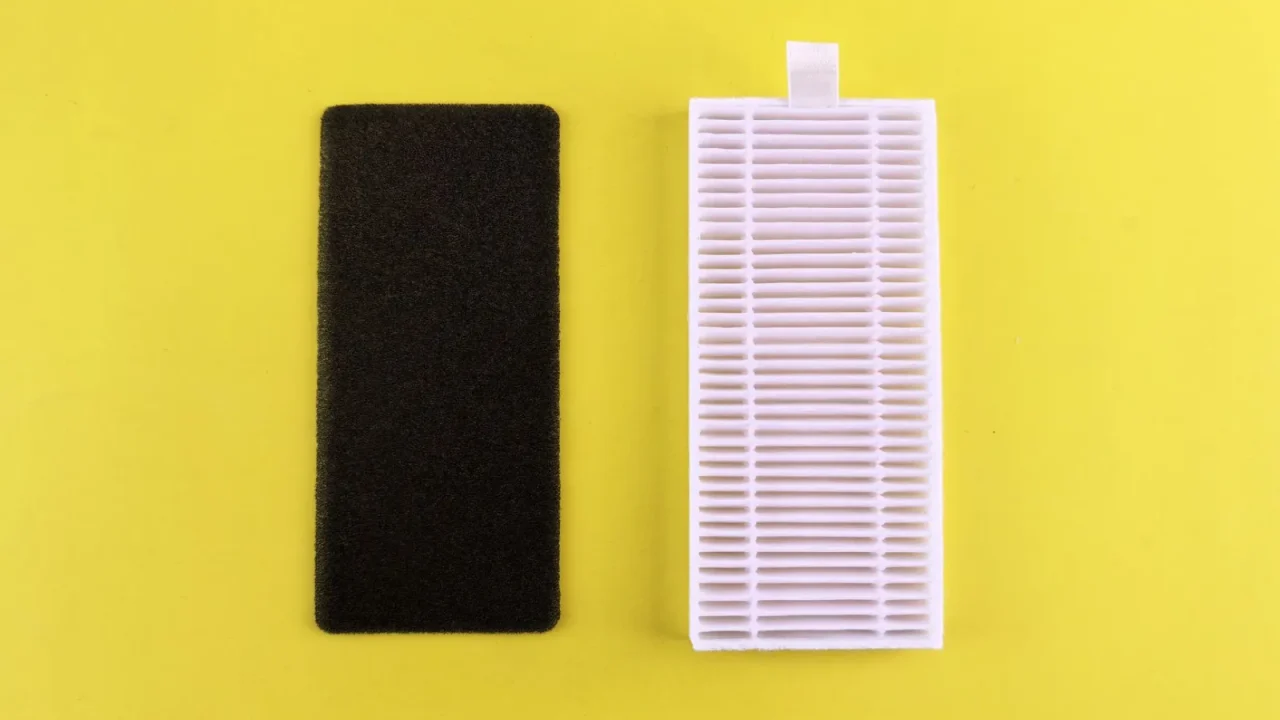
- The filter feels dense and stiff, not thin and floppy
- Replacement filters are sold and the maker publishes a change interval
Some premium units go further with H13 or H14 medical-grade HEPA, which push past 99.95 and 99.995 percent under European EN 1822 testing. For a home, standard true HEPA is plenty. You do not need surgical-suite filtration to handle dust and dander.
What HEPA catches, and what it ignores completely
True HEPA is excellent at solid and liquid particles floating in the air. That covers most of what people worry about at home.
It reliably handles dust, pollen, pet dander, mold spores, dust mite debris, and a large share of fine cooking and combustion particles. That last group matters if you fry or sear often, and it overlaps with what people ask about when they look into reducing PM2.5 from cooking.
But HEPA has a hard limit. It does nothing for gases.
Smells, chemical fumes, and volatile organic compounds are individual molecules, thousands of times smaller than 0.3 microns. They sail right through the glass fibers untouched. If your concern is paint fumes, new-furniture off-gassing, or cooking odor, HEPA alone will not fix it.
For odors and VOCs, look for a purifier that pairs HEPA with a real activated carbon stage measured in pounds, not a thin carbon-dusted mesh. HEPA handles the particles, carbon handles the gases. They are different jobs.
This is the same reason HEPA and MERV ratings are not interchangeable. MERV describes how a flat furnace filter performs in your HVAC system, on a different scale, under different airflow. Both catch particles, but they are rated by separate methods.
Getting real-world results, not just a good filter
A true HEPA filter is only half the equation. The other half is airflow. A perfect filter does nothing for particles it never sees.
The purifier’s fan has to pull enough room air through the media, often enough, to actually lower the particle count you breathe. That is what CADR (Clean Air Delivery Rate) measures, and it is why sizing an air purifier by CADR matters as much as the filter grade. A tiny true-HEPA unit in a big living room will read great on the box and do little in practice.
Two other things quietly wreck performance. First, gaps. If room air can sneak around the filter instead of through it, efficiency drops fast, so a snug housing seal matters. Second, a clogged filter. HEPA loads up over time, airflow falls, and a dirty filter starves the fan.
Never wash or vacuum a true HEPA filter to “save money.” The fibers are delicate, and scrubbing tears microscopic holes that let particles pass. Once it is loaded, replace it. Most home HEPA filters last 6 to 12 months.
Reading the box without getting burned
You do not need to memorize the physics to shop well. You need three checks.
Confirm it says true HEPA with the 99.97 percent at 0.3 micron figure. Confirm the CADR fits your room. And if odors matter to you, confirm there is a genuine carbon stage, because HEPA will not touch them.
That floppy HEPA-type unit from my first service call was not a scam exactly, it was just honest about a lower bar in language most buyers do not decode. Now you can decode it. Next time you are standing in the aisle, flip the box over and find the number. If 99.97 and 0.3 microns are printed together, you are holding the real thing.
Frequently asked questions
Is a HEPA filter enough to clean the air in my whole house?
One portable HEPA purifier cleans the room it sits in, not the whole house. Air does not flow freely enough between rooms for a single unit to keep up. For whole-home coverage you either need a purifier sized for each main room or a high-efficiency filter built into your HVAC system, which is rated on the MERV scale instead.
Can I wash or reuse a true HEPA filter?
No, not a standard true HEPA filter. The glass fibers are fragile, and washing or vacuuming tears tiny holes that let particles slip through, which defeats the whole point. A few purifiers advertise washable filters, but those are almost always lower-grade HEPA-type media. When a true HEPA filter is loaded, replace it, usually every 6 to 12 months.
Does HEPA remove viruses and smoke?
It helps with both, with limits. Many viruses ride on larger droplets or particles that HEPA catches well, and the four trapping mechanisms handle particles even smaller than 0.3 microns. For smoke, HEPA captures the solid particle part but not the gases and odor molecules, so wildfire or cooking smoke needs HEPA plus activated carbon to address the smell.
What is the difference between HEPA and MERV ratings?
They measure particle filtration on different scales for different jobs. MERV rates flat filters in your furnace or HVAC system, from about 1 to 16, under that system's airflow. HEPA is a separate, stricter standard for the dense media in portable purifiers, set at 99.97 percent at 0.3 microns. A high MERV filter is good, but it is not the same test as true HEPA.
Why is 0.3 microns the size HEPA is tested at?
Because 0.3 microns is the hardest particle size to catch, known as the Most Penetrating Particle Size. Larger particles crash into fibers, and much smaller ones bounce around and hit fibers by diffusion. Particles near 0.3 microns fall in an unlucky middle where both effects are weak. Testing at the worst case means real performance on other sizes is even better.

Dharm Solanki
Dharm Solanki spends a lot of time thinking about the air inside people's homes, usually when no one else is. He writes about humidity, ventilation, and dehumidifiers, along with the small fixes that turn a stuffy or damp room into one that feels comfortable again. He would rather explain why a recommendation works than just point at a product, so his guides tend to answer the question you were about to ask next. And if something looks great on paper but struggles in a normal house, he says so.