On this page
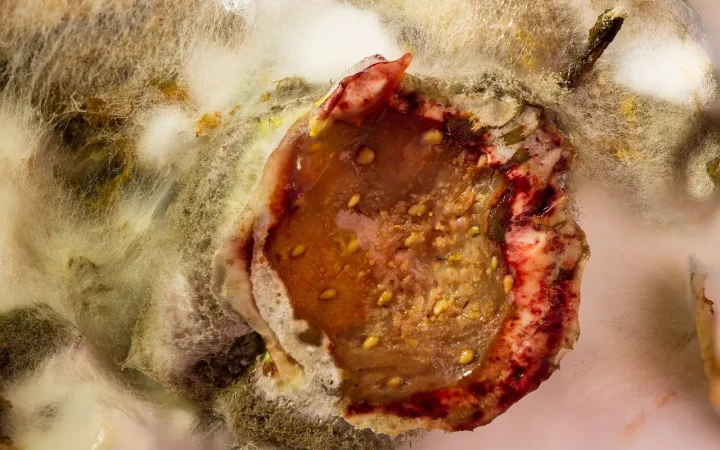
The first sign is usually a smell. You walk past the humidifier you have been running all winter, and there is a faint musty note in the air that was not there in October. Then you look inside the tank and see it: a slick pink or gray film clinging to the plastic.
That film is biofilm, a mix of bacteria and mineral scale, and a humidifier is basically a perfect little greenhouse for it. Warm-ish water, still air, and a surface to grab onto.
The good news is that cleaning one is not hard. It just has to be regular, and it has to cover the whole unit, not only the filter that everyone remembers and nothing else.
A dirty humidifier does not just smell bad. It can aerosolize bacteria and mold spores straight into the air you breathe. The EPA specifically warns that unclean units can push microorganisms into a room, which matters most for anyone with asthma or allergies.
Before you start: three things to gather
You do not need special products. Most of what works is already under your sink.
- Plain white distilled vinegar (a gallon is about $3-4 and lasts months)
- A soft brush: an old toothbrush, plus a bottle brush for narrow tanks
- Either household bleach or 3% hydrogen peroxide for disinfecting
Always unplug the unit first and take it apart as far as the manual allows. Tank off the base, filter or wick out, mist cap or nozzle removed. You are cleaning three separate zones: the tank, the base or reservoir where the water actually sits, and the filter or wick.
Vinegar dissolves mineral scale. It does not reliably kill germs. Bleach or peroxide disinfects but does nothing for scale. You need both jobs done, in that order, and never at the same time.
Step 1: The daily reset (60 seconds)
This is the step that does the most work and gets skipped the most. Every day, pour out any leftover water. Do not top off yesterday’s water with a fresh splash.
Rinse the tank and the base with clean water, wipe the inside with a dry cloth or paper towel, and refill only when you are ready to run it. Letting a unit sit full and idle for hours is what feeds the pink film.
A mistake I saw constantly on service calls: people ran the machine 24/7 for a week, never emptied it, then wondered why the bedroom smelled like a locker room. Empty water is boring insurance.
Step 2: The weekly vinegar cleaning
Once a week, give the unit a real cleaning. This is where the vinegar earns its keep.
Descaling the tank and base
Fill the tank about one third full with undiluted white vinegar, or a 50/50 mix of vinegar and water for lighter buildup. Swirl it so it coats the walls. For the base, pour vinegar into the reservoir until the scaled areas are submerged.
Let both soak for 20-30 minutes. On a heavily scaled unit, give it a full hour. The vinegar softens the crusty white mineral deposits so they wipe off instead of needing to be scraped.
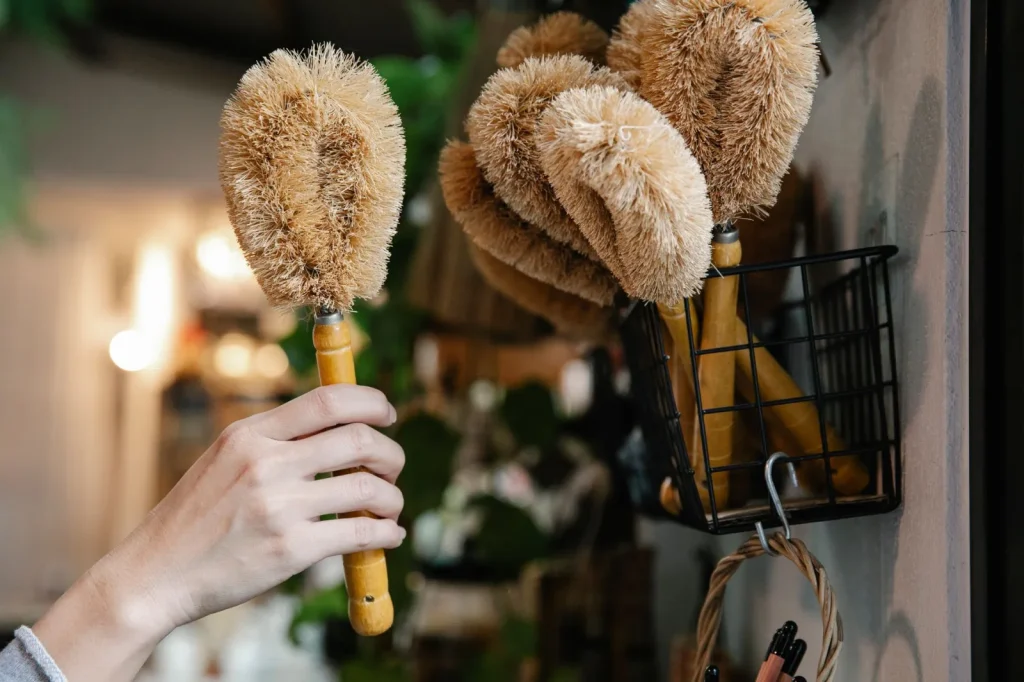
After the soak, use your toothbrush and bottle brush to scrub the corners, the threads around the cap, and any nook where water pools. Those seams are where biofilm hides.
If you can only do one thing beyond the daily rinse, make it the weekly vinegar soak of the base. That is where scale and slime actually collect.
The transducer and mist parts
If you have an ultrasonic model, there is a small shiny metal or ceramic disc in the base called the transducer. Scale builds up on it fast, and a scaled transducer is the number one reason a unit suddenly puts out less mist.
Dip a cotton swab in vinegar and gently clean the disc. Do not scrape it with anything metal or hard; that disc is delicate and scratching it can wreck the unit. The difference between evaporative and ultrasonic humidifiers matters here, because evaporative models have a wick to swap instead of a disc to protect.
Step 3: Disinfecting (separately from the vinegar)
Descaling and disinfecting are two different jobs. After you have rinsed all the vinegar out completely, you can disinfect.
Mix one teaspoon of household bleach per gallon of water, or use 3% hydrogen peroxide straight. Fill the tank, swish it so the solution touches every surface, and let it sit for about 10 minutes.
Never mix bleach and vinegar, and never leave both in the unit at once. Combined, they release chlorine gas, which is genuinely dangerous in a small room. Rinse the vinegar out fully before any bleach or peroxide touches the tank.
Then rinse. Then rinse again. Bleach residue that dries in a tank will get blown into your air the next time you run the unit, so keep rinsing until you cannot smell any chlorine at all. Let every part air-dry completely before you reassemble.
Step 4: The filter or wick
What you do here depends on the type. An evaporative humidifier uses a paper or fiber wick that pulls water up to be evaporated. Those wicks are usually not truly washable, and they trap minerals over time.
Rinse a wick gently under cool running water, but do not wring or scrub it, and never soak it in bleach. Once it feels stiff, crusty, or stays discolored after rinsing, replace it. Most wicks last one to three months and cost $8-20.
| Part | Cleaning method | How often |
|---|---|---|
| Tank | Rinse daily; vinegar soak weekly | Daily / weekly |
| Base and reservoir | Vinegar soak, brush seams | Weekly |
| Transducer (ultrasonic) | Vinegar on a cotton swab, gentle | Weekly |
| Wick or filter | Rinse gently; replace when crusty | Rinse weekly, replace 1-3 mo |
| Whole unit disinfect | Diluted bleach or peroxide, then rinse well | Weekly to biweekly |
How to keep it cleaner in the first place
Cleaning is easier when there is less to clean. The single biggest change you can make is your water.
Tap water carries dissolved minerals, and those minerals are exactly what becomes scale on your parts and white dust on your furniture. Switching to distilled water cuts both problems dramatically. A gallon runs about $1-2, and for a small bedroom unit that is pennies per night.
Empty and dry the unit fully whenever you will not use it for more than a day. And at the end of the season, do a full vinegar-and-disinfect cycle, dry everything, and store it dry. A humidifier put away wet comes out of the closet in fall smelling like a swamp.
The U.S. Environmental Protection Agency and the Consumer Product Safety Commission both recommend cleaning portable humidifiers regularly and refilling with fresh water rather than topping off. You can read the EPA’s guidance on indoor air quality and the CDC’s notes on mold and moisture for the health reasoning behind it.
Your simple maintenance rhythm
Boil it down to a rhythm and it stops feeling like a chore. Empty and rinse every day. Vinegar-descale and disinfect once a week. Replace the wick when it stiffens, and store the unit bone dry between seasons.
Do that, and the pink film never gets a foothold, the mist stays strong, and the air in the room actually smells like nothing at all. Which, for a humidifier, is exactly the goal.
Frequently asked questions
Can I use apple cider vinegar instead of white vinegar?
Stick with plain white distilled vinegar. Apple cider vinegar has sugars and residues that can leave a faint smell and even feed the bacteria you are trying to remove. White vinegar is cheaper, clearer, and does the descaling job without leaving anything behind. Rinse thoroughly afterward either way so no vinegar smell carries into your mist.
How often should I really clean my humidifier?
Rinse and empty it every day, and do a full vinegar cleaning plus disinfecting once a week. If anyone in the home has asthma or allergies, lean toward twice a week. The daily rinse is the part that prevents most problems, since standing water is what grows the pink and gray biofilm in the first place.
Is it safe to mix vinegar and bleach to clean faster?
No, never do this. Vinegar and bleach react to release chlorine gas, which is dangerous to breathe in an enclosed room. Use vinegar first to remove scale, rinse it out completely, and only then disinfect with diluted bleach or hydrogen peroxide. Keep the two jobs fully separate with a good rinse in between.
Why does my humidifier leave white dust on the furniture?
That dust is dissolved minerals from your tap water that get carried out with the mist and settle as they dry. Ultrasonic models do this most. Switching to distilled water removes almost all of it, since distilled water has the minerals already taken out. Regular descaling helps too, but the water swap is the real fix.
Do I have to replace the filter, or can I just clean it?
Evaporative wick filters can be rinsed gently under cool water, but they are not meant to be scrubbed, wrung, or bleached. Minerals build up inside them over time, so once a wick feels stiff or stays discolored after rinsing, replace it. Most last one to three months and cost about $8-20 depending on the model.

Dharm Solanki
Dharm Solanki spends a lot of time thinking about the air inside people's homes, usually when no one else is. He writes about humidity, ventilation, and dehumidifiers, along with the small fixes that turn a stuffy or damp room into one that feels comfortable again. He would rather explain why a recommendation works than just point at a product, so his guides tend to answer the question you were about to ask next. And if something looks great on paper but struggles in a normal house, he says so.