
On this page
- Before you start: two numbers and a target
- Step 1: Measure the room, not the house
- Step 2: Separate tank size from output
- Step 3: Match output and coverage to the room
- Step 4: Confirm with a hygrometer, not the dial
- Step 5: Account for the things a chart can't see
- When one room stops being the right question
The first oversized humidifier I ever tested left a puddle on a nightstand and a ring of black mold on the window trim inside three weeks. The owner had bought a 6-gallon-per-day tower for a 120-square-foot bedroom because bigger felt safer. It wasn’t. Sizing a humidifier is less about buying the biggest tank on the shelf and more about matching output to the actual air volume you’re trying to treat.
Get the humidifier size for a room right and the unit sips water, holds a steady 40 percent, and mostly disappears into the background. Get it wrong in either direction and you either chase a dry throat all winter or wipe condensation off the glass every morning.
Here is the method I use, step by step, plus a chart you can size against in about two minutes.
Before you start: two numbers and a target
You need three things before you shop. Your room’s square footage, its ceiling height, and the humidity level you’re aiming for. The first two set the air volume. The third sets how hard the machine has to work.
Most guidance, including the humidity range the EPA’s indoor air quality pages point to, lands between 30 and 50 percent relative humidity. In winter I aim for the lower half of that, around 35 to 40 percent, to keep window condensation down.
Standard humidifier coverage ratings assume an 8-foot ceiling. If yours is taller, treat the room as bigger by the ratio of your ceiling height to 8 feet.
Step 1: Measure the room, not the house
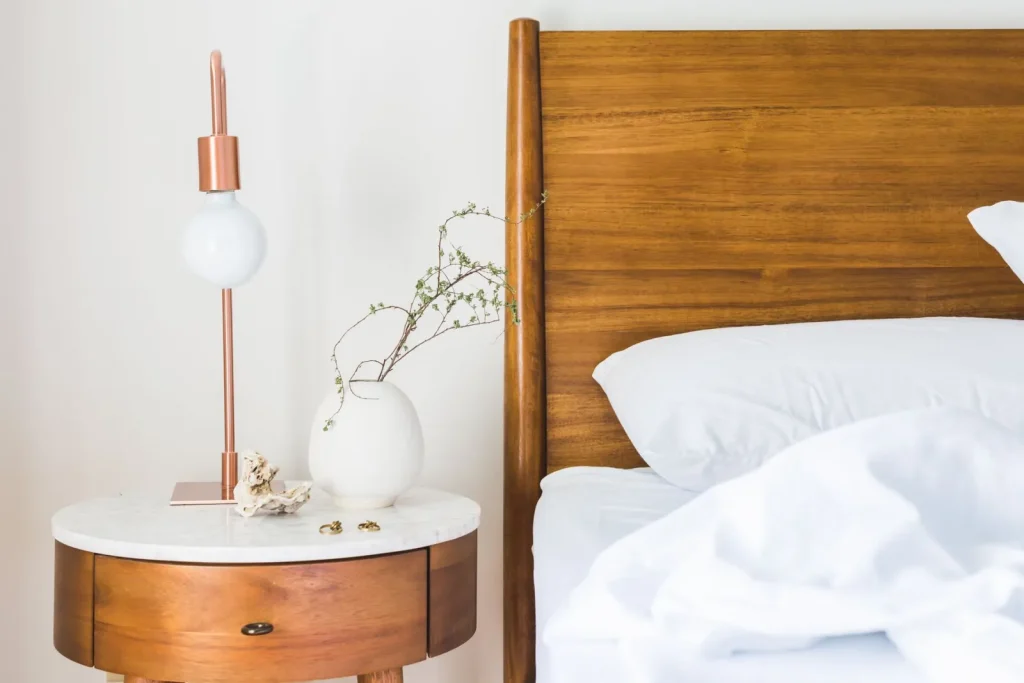
Multiply length by width for square footage. A 12 by 14 bedroom is 168 square feet. That’s your baseline number, and it’s the one printed on humidifier boxes as a coverage rating.
A mistake I see constantly is people sizing for the whole floor when the bedroom door stays shut all night. Mist does not travel through closed doors. Size for the room the unit actually sits in.
Adjust for ceiling height
Coverage ratings assume roughly 8-foot ceilings. If you have 10-foot ceilings, you have 25 percent more air to humidify, so multiply your square footage by 1.25 before you match it to a chart. That 168-square-foot room with 10-foot ceilings behaves like a 210-square-foot room.
Step 2: Separate tank size from output
This is where most buyers get tripped up. Tank size and output are two different specs, and they answer two different questions.
Tank size, measured in gallons or liters, tells you how long the unit runs between refills. Output, usually printed as gallons per day (GPD) or sometimes as a mist rate, tells you how fast it can raise and hold humidity in a given volume.
A big tank on a weak output just means you refill a slow machine less often. It does not treat a bigger room.
A 1.5-gallon tank with a 2-gallon-per-day output will run dry in under a day at full blast. A 6-gallon tank with the same output simply goes longer between fills. If your room needs more moisture, you want more output, not just more water storage.
Step 3: Match output and coverage to the room
Here is the chart I hand people. These are practical ranges for portable units, sized for an 8-foot ceiling and a target near 40 percent in an average, reasonably sealed room.
| Room size (8 ft ceiling) | Suggested output (GPD) | Typical tank | Example spaces |
|---|---|---|---|
| Up to 150 sq ft | 0.5 – 1.5 | 0.5 – 1 gal | Small bedroom, office, nursery |
| 150 – 300 sq ft | 1.5 – 2.5 | 1 – 1.5 gal | Master bedroom, den |
| 300 – 500 sq ft | 2.5 – 3.5 | 1.5 – 3 gal | Living room, studio apartment |
| 500 – 800 sq ft | 3.5 – 6 | 3 – 6 gal | Open kitchen/living, large basement |
| 800+ sq ft | 6+ or whole-house | Console or bypass | Whole floor, open plan |
Find your adjusted square footage in the left column, then pick a unit whose rated coverage and output land in that row. If your number sits on a boundary, size up one row rather than down. A slightly larger unit run at a lower setting is quieter and lasts longer than a small one pinned at maximum.
Check the humidifier’s stated coverage in square feet against your adjusted number. If a unit claims 500 square feet but only lists a 1-gallon-per-day output, be skeptical. Coverage claims are marketing; output is physics.
Step 4: Confirm with a hygrometer, not the dial
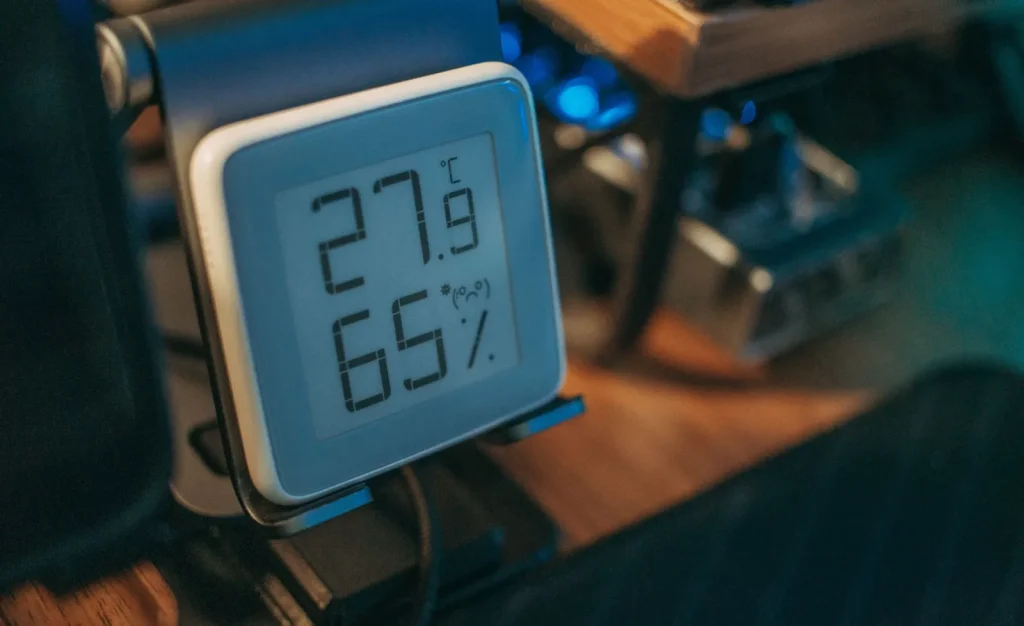
Built-in humidistats are often off by 5 to 10 percentage points, and many cheap units don’t have one at all. Buy a separate digital hygrometer for $10 to $15 and set it across the room from the humidifier, not next to it.
Run the unit for a few hours, then read the actual relative humidity. If you can’t get past 30 percent in a room the unit is supposedly rated for, it’s undersized or the room is leakier than average. If you blow past 50 percent and see fog on the windows, it’s oversized or set too high.
An oversized humidifier in a small, closed room is the fast track to condensation, damp drywall, and mold on cold surfaces like windows and exterior walls. Bigger is not a safety margin here. It’s a liability.
Step 5: Account for the things a chart can’t see
Two rooms with identical square footage can need very different output. A drafty older house with single-pane windows loses moisture fast and pushes you toward the higher end of a row. A tight, newer, well-insulated room holds humidity and lets you size down.
Cold climates in deep winter also demand more, because the incoming air is bone dry. The Department of Energy’s Energy Saver resources are a good reminder that a leaky building envelope changes every comfort calculation, humidity included.
- Measured length x width for the actual room
- Multiplied by the ceiling-height factor if over 8 feet
- Matched both coverage and output (GPD) to the chart row
- Sized up, not down, at any boundary
- Bought a separate hygrometer to verify
- Considered draftiness and climate before finalizing
When one room stops being the right question
If you find yourself wanting to humidify three rooms, a hallway, and an open stairwell, a portable unit is the wrong tool no matter how big the tank. That’s the point where a whole-house humidifier tied into your ductwork earns its keep, a decision worth weighing in a whole house vs portable humidifier comparison before you spend.
For a single room, though, the math is friendly. Measure it, adjust for the ceiling, match output and coverage to the chart, and verify with a cheap meter. Do that and you’ll skip both the dry-winter misery and the mold-on-the-window surprise. If placement or runtime is your next question, where to place a humidifier in a room and how long to run a humidifier each day are the natural follow-ups once your unit is correctly sized.
Frequently asked questions
What size humidifier do I need for a 200 square foot bedroom?
For a 200-square-foot room with a standard 8-foot ceiling, look for a unit rated around 1.5 to 2.5 gallons per day of output with a 1 to 1.5 gallon tank. That combination reaches a target near 40 percent without running flat out. If your ceiling is 10 feet, treat the room as roughly 250 square feet and size up slightly.
Is it bad to use an oversized humidifier in a small room?
Yes. An oversized unit pushes humidity past the healthy 30 to 50 percent range quickly, and the excess moisture condenses on cold windows, walls, and trim. Over weeks that leads to mold and damp drywall. In a small closed room, a smaller unit run at a moderate setting is safer and easier to control than a large one throttled way down.
Does tank size determine how big a room a humidifier can handle?
No. Tank size only sets how long the unit runs between refills. The spec that matters for room size is output, usually printed as gallons per day. A large tank paired with low output just means fewer refills of a slow machine. Match output and the stated square-foot coverage to your room, and treat tank size as a convenience factor.
How does ceiling height change humidifier sizing?
Coverage ratings assume an 8-foot ceiling. Taller ceilings mean more air volume to humidify. For a 10-foot ceiling, multiply your square footage by about 1.25 before matching it to a chart. A vaulted or cathedral ceiling can push that factor higher. Skipping this step is a common reason a correctly rated unit still fails to reach target humidity.
What humidity level should I aim for in a room?
Aim for 30 to 50 percent relative humidity. In winter, the lower half, roughly 35 to 40 percent, keeps window condensation down while still easing dry skin and static. Use a separate digital hygrometer placed across the room from the humidifier to confirm the real level, since built-in dials are often off by several percentage points.

Dharm Solanki
Dharm Solanki spends a lot of time thinking about the air inside people's homes, usually when no one else is. He writes about humidity, ventilation, and dehumidifiers, along with the small fixes that turn a stuffy or damp room into one that feels comfortable again. He would rather explain why a recommendation works than just point at a product, so his guides tend to answer the question you were about to ask next. And if something looks great on paper but struggles in a normal house, he says so.