
On this page
The first mold call I ever ran was a finished basement where the homeowner swore there had never been a leak. He was right. No pipe had burst, no water had come in. The air itself was sitting at 68 percent relative humidity all summer, and that was enough to grow a gray fuzz across the back of a leather couch.
That job taught me the thing most people miss: mold rarely needs a flood. It needs moisture in the air, held long enough, against a cool surface. Control the humidity and you starve it out.
The number that matters: 30 to 50 percent
The target indoor humidity level to prevent mold is a relative humidity (RH) between 30 and 50 percent. That is the range the EPA and most indoor air experts point to, and it lines up with what I have measured in homes that stay clean year after year.
If I had to pick one everyday number, I would say aim for the mid 40s. It gives you a comfortable cushion below the danger zone without drying the air so much that your throat and wood floors complain.
Keep it between 30 and 50 percent RH. Never let sustained indoor humidity sit above 60 percent, which is roughly where mold, dust mites, and that musty smell all start to thrive.
The EPA covers this well on its mold and moisture pages, and the general guidance is consistent: fix the water, control the humidity, and mold has nothing to work with.
Why 60 percent is the line in the sand
Mold spores are already floating in every home. They are harmless until they land somewhere with enough moisture to germinate. Above about 60 percent RH, the thin film of water that surfaces pull from the air becomes enough for spores to root.
Give that damp 24 to 48 hours and you can get visible growth. This is why a weekend of high humidity after a shower is not a crisis, but a basement that reads 65 percent all July is a problem waiting to bloom.
Relative humidity, surface temperature, and the cold-wall trap
Here is the part that trips people up. Relative humidity is relative to air temperature. The same amount of moisture in the air reads as a higher RH when the air is cold.
Air holds less water when it cools, so it “fills up” faster. That is why a basement corner or the inside of a north-facing wall can be damp enough for mold even when your thermostat area feels fine.
The room can read 48 percent while the cold wall six feet away is quietly sitting at 70. Mold grows on the wall, not the thermostat.
This is the same physics behind condensation on windows and condensation on interior walls. When warm, moist air touches a cold surface, the local humidity right at that surface spikes, and water either beads up or just soaks in.
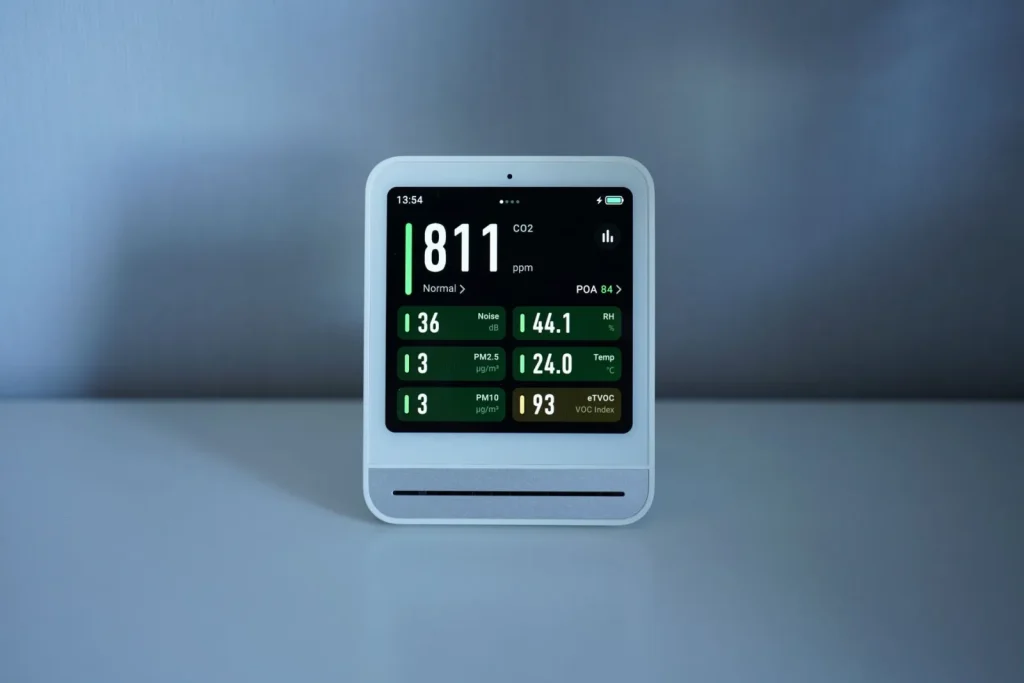
Measure near the trouble spot, not just in the middle of the room. Set a hygrometer on the floor of the damp basement corner or a few inches from that chilly wall to see what the mold actually experiences.
How to measure: the hygrometer
You cannot manage what you do not measure, and humidity is invisible. A digital hygrometer is the cheapest fix in this whole category, usually $12 to $25 for a decent one, and it removes all the guessing.
Buy at least two. Put one in the living space and one wherever you suspect dampness, most often a basement, a bathroom, or a closet on an exterior wall.
- Place hygrometers at the height and location that matters, not on top of a warm fridge or in direct sun.
- Give a new unit an hour to settle before you trust the reading.
- Check readings at different times of day; humidity often peaks overnight and after showers or cooking.
- Log the highs, not just the moment you happen to look. A cheap unit with a min and max memory is worth the extra couple of dollars.
A mistake I see all the time is someone reading 45 percent at 2 p.m. and declaring victory, when the same room hits 63 percent at 6 a.m. The overnight high is what feeds mold, so that is the number to chase down.
How to hold the number: dehumidifier settings
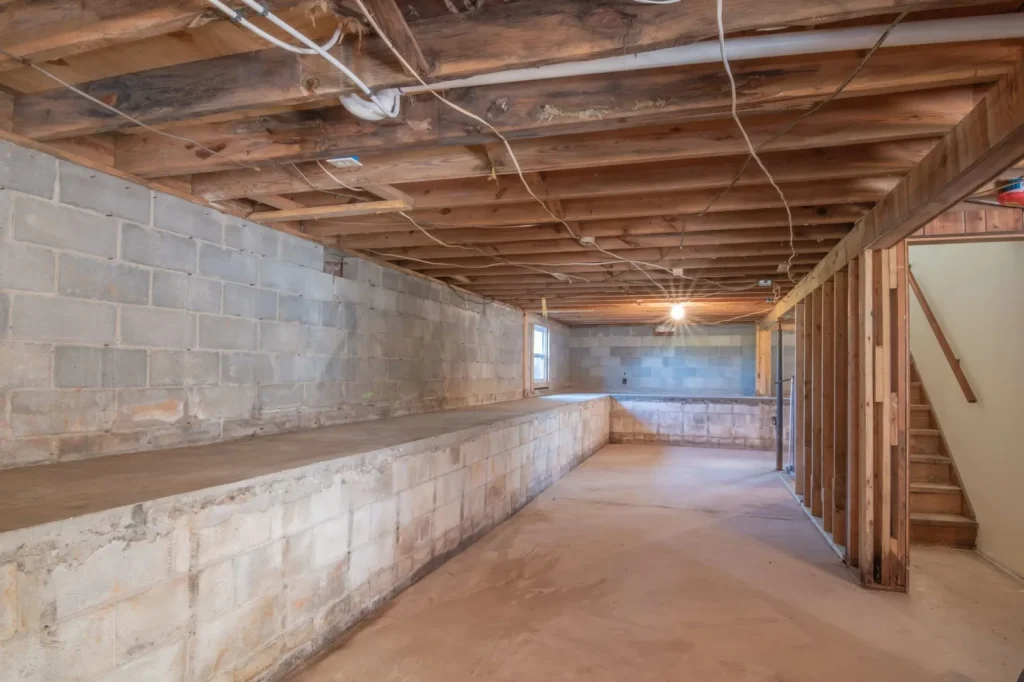
Once you know your readings, a dehumidifier is how you pull the range back into line. Modern units have a built-in humidistat, so you set a target percentage and the machine cycles itself on and off to hold it.
Set it to somewhere around 45 percent for general use. In a stubborn basement I will drop it to 40 to build in more margin, especially through a humid stretch of summer.
Do not run a dehumidifier wide open at 30 percent or on a permanent “continuous” setting unless you truly need it. You will run up the electric bill, over-dry the air, and wear the compressor out faster. Let the humidistat do its job.
| Space | Target RH setting | Why |
|---|---|---|
| Main living areas | 45% | Comfortable, safe, not over-dry |
| Damp basement | 40-45% | Extra margin against cold walls |
| Crawl space | 50-55% | Prevent mold without fighting the ground endlessly |
| Winter (heated home) | 30-40% | Lower to avoid window condensation in cold weather |
Notice the winter row. When it is very cold outside, your window and wall surfaces get cold too, so you often have to run a lower indoor RH just to keep water from forming on the glass. That is normal, not a sign anything is broken.
Sizing matters more than the setting
A dehumidifier that is too small will run nonstop and never reach your target. Capacity is rated in pints of water removed per day, and matching pints to the size and dampness of the space is what actually gets you to 45 percent. If your unit runs 24/7 and the number will not drop, it is probably undersized, not broken.
Fix the water first
A dehumidifier manages humidity, but it does not fix a source of water. If you have a grading problem pushing rain toward the foundation, a leaking gutter, or a slow plumbing drip, the machine just runs harder forever.
Walk the perimeter after a heavy rain. Check that downspouts carry water several feet away, that the ground slopes away from the house, and that no plumbing is weeping under a sink. The Department of Energy’s Energy Saver pages have solid, plain guidance on sealing and moisture control if you want to go deeper.
A simple routine that keeps mold out
You do not need a lab. You need a target, a way to measure, and a way to hold it.
Put a hygrometer where dampness hides, watch the overnight high, and keep that reading under 50 percent, ideally in the mid 40s. Set your dehumidifier to match, size it correctly, and chase down any actual water at its source.
Do that, and the fuzzy gray surprise on the back of the couch never gets its chance to start. If you want to go further on picking and sizing equipment, that is where topics like How to Size a Dehumidifier by Pints and Portable vs Whole House Dehumidifier come in handy.
Frequently asked questions
What is the ideal humidity level to prevent mold?
Keep indoor relative humidity between 30 and 50 percent, with the mid 40s as a good everyday target. That range is dry enough that mold spores cannot get the moisture they need to root, while staying comfortable for people and easy on wood and paint. The key rule is to never let sustained humidity climb above 60 percent.
How long does it take for mold to grow in high humidity?
Given the right conditions, mold can begin germinating and showing visible growth in about 24 to 48 hours. That is why a short spike after a hot shower is usually harmless, but a space that stays above 60 percent for days at a time is a real risk. Sustained dampness is what feeds it, not brief peaks.
Do I really need a hygrometer, or can I just feel it?
You need a hygrometer. Humidity is invisible, and your body is a poor judge of the difference between 50 and 65 percent, which is exactly the range that matters most. A digital unit costs about $12 to $25, and one with a min and max memory shows you the overnight highs you would otherwise miss entirely.
What should I set my dehumidifier to?
Set the humidistat to around 45 percent for living areas and 40 to 45 percent for a damp basement. Let the built-in control cycle the unit on and off rather than running it continuously. In cold winter weather you may need to drop the setting to 30 to 40 percent to keep condensation off cold windows and walls.
Why is my basement humid even though the upstairs feels fine?
Cool surfaces raise relative humidity right at the surface. Basement walls and floors sit against cool ground, so the same air that reads 45 percent upstairs can read 65 percent down in a cold corner. That is why you should measure near the damp spot itself, not just in the main living space.
Can lowering humidity kill mold that is already there?
Drying the air stops active mold from spreading and keeps new growth from starting, but it does not remove what is already established. Existing mold still needs to be cleaned off hard surfaces or, for porous materials, removed. After cleanup, holding humidity under 50 percent is what prevents it from coming back.

Dharm Solanki
Dharm Solanki spends a lot of time thinking about the air inside people's homes, usually when no one else is. He writes about humidity, ventilation, and dehumidifiers, along with the small fixes that turn a stuffy or damp room into one that feels comfortable again. He would rather explain why a recommendation works than just point at a product, so his guides tend to answer the question you were about to ask next. And if something looks great on paper but struggles in a normal house, he says so.