
On this page
The first time I brought an air quality monitor into my own kitchen, I expected a boring flat line. Then I seared a steak, and the PM2.5 reading jumped past 300 in under two minutes. My house looked spotless. The air told a different story.
That gap between how a room looks and what is actually floating in it is the whole point of this catalog. Below are the pollutants that turn up in ordinary homes, grouped by type, with where each one tends to come from.
This stays at the survey level. Each of these deserves its own deep write-up, and several have one, but the goal here is to help you recognize the whole cast of characters.
Particles you can see and the ones you can’t
Particulate matter is the catch-all term for tiny solids and liquid droplets hanging in the air. The ones that matter most indoors are sorted by size.
PM2.5 and fine particles
These are particles 2.5 microns and smaller, roughly 30 times thinner than a human hair. They come from combustion, and your home is full of little fires: gas burners, candles, incense, the fireplace, cigarettes, and yes, that steak.
Fine particles matter because they slip past your body’s defenses and reach deep into the lungs. The EPA has good background on why size drives the health risk here. Cooking is the single biggest indoor source in most homes, which is why reducing PM2.5 from cooking gets its own attention.
PM10 and coarse particles
Bigger particles in the 2.5 to 10 micron range include dust, pollen tracked in from outside, and bits of textile fiber. They irritate eyes and airways but mostly stay in the upper respiratory tract.
A range hood that actually vents outside removes cooking particles far better than one that just recirculates through a mesh filter. If yours dumps the air back into the kitchen, run it anyway, but crack a window too.
Gases from combustion

Anything that burns fuel indoors produces gases along with particles. Two of these are genuinely dangerous, and neither announces itself.
Carbon monoxide
Carbon monoxide is colorless, odorless, and produced by any incomplete combustion: a gas furnace, water heater, stove, fireplace, or a car idling in an attached garage. At high levels it kills, and at low chronic levels it causes headaches and fatigue that people often blame on stress.
You cannot smell, see, or taste carbon monoxide. A working CO detector on each level of your home is not optional. Replace the units every 5 to 7 years, since the sensors wear out even if the alarm still chirps.
Nitrogen dioxide
Gas stoves are the main indoor source of nitrogen dioxide. It irritates the airways and can worsen asthma, especially in kids. A back burner running under a vented hood produces far less exposure than a front burner with no ventilation.
Chemical vapors from everyday stuff
Not every pollutant comes from fire. A huge share drifts out of the products and materials already sitting in your rooms.
Volatile organic compounds
VOCs are carbon-based chemicals that evaporate at room temperature. Fresh paint, new furniture, vinyl flooring, air fresheners, cleaning sprays, and even scented candles release them. That “new” smell is largely VOCs off-gassing.
Formaldehyde is one of the most common and is found in pressed-wood furniture and some insulation. Levels are highest when a product is new and taper off over months. If you want the fuller picture, the topic of what VOCs are in the home and why they matter covers the specific compounds worth watching.
The safest way to lower VOCs is not a fancy filter. It is choosing low-emission products and opening a window while things off-gas.
Pesticides and cleaning residue
Sprays used indoors, and residues tracked in from lawn treatments, linger in dust and settle on surfaces. Store these outside the living space when you can, and wipe down after any indoor application.
Biological pollutants that grow and shed
This group is alive, or was. It thrives on moisture, which is why humidity control does double duty as air quality control.
| Source | Where it comes from | What helps |
|---|---|---|
| Mold and mildew | Damp basements, bathrooms, window condensation, past leaks | Keep indoor humidity 30-50%, fix leaks fast |
| Dust mites | Bedding, upholstery, carpet in humid rooms | Lower humidity, wash bedding hot |
| Pet dander | Cats, dogs, any furry animal | HEPA filtration, regular vacuuming |
| Pollen | Tracked in on clothes, pets, open windows | Filter intake air, wipe surfaces |
A mistake I see constantly: people scrub visible mold with bleach and call it done, without ever fixing the moisture that fed it. The colony comes back in weeks. Find the water source first.
If your home sits above 55% relative humidity for long stretches, you are running a greenhouse for mold and dust mites. A hygrometer costs about $10 to $15 and tells you where you stand.
The invisible gas from the ground
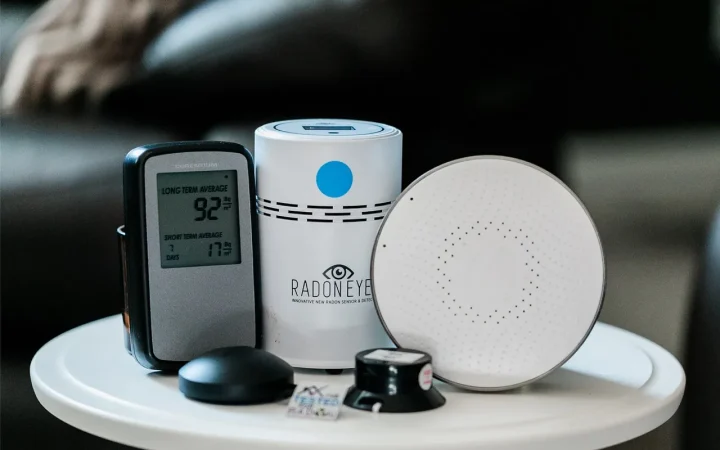
Radon is a naturally occurring radioactive gas that seeps up from soil and rock through foundation cracks, sump pits, and gaps around pipes. It is the second leading cause of lung cancer in the United States after smoking, and it has no smell or color.
The only way to know your level is to test. Short-term test kits run $15 to $30, and the EPA offers clear guidance on radon and what levels warrant action. Homes in the same neighborhood can have wildly different readings, so a neighbor’s clean test does not clear you.
Putting the whole catalog together
Here is the full list in one place, sorted by how much day-to-day attention each one usually needs.
- Carbon monoxide: detector on every level, no exceptions
- Radon: test once, then again after any foundation work
- PM2.5 from cooking and burning: ventilate and filter
- VOCs and formaldehyde: buy low-emission, air out new items
- Mold and dust mites: control humidity below 50%
- Pet dander and pollen: HEPA filtration and cleaning
- Nitrogen dioxide: use a vented range hood with gas stoves
You do not need to chase every item at once. A carbon monoxide alarm, a radon test, decent ventilation while you cook, and humidity you keep in check will handle the majority of what shows up in a typical house.
If you want to actually see what is happening in your rooms, a simple monitor turns all of this from guesswork into numbers. That is the same tool that caught my steak red-handed, and it changed how I cook and ventilate for good. Start with the two pollutants you cannot sense, then let a monitor guide the rest.
Frequently asked questions
What are the most common indoor air pollutants in a typical home?
The usual list includes fine particles from cooking and burning, carbon monoxide and nitrogen dioxide from gas appliances, VOCs and formaldehyde from products and furniture, radon from the soil, and biological sources like mold, dust mites, pet dander, and pollen. Most homes have some level of all of these, driven mainly by daily activities and humidity.
Which indoor air pollutants are actually dangerous versus just annoying?
Carbon monoxide and radon are the two that can cause serious harm silently, since you cannot smell or see either one. Fine particles and nitrogen dioxide carry real respiratory risk, especially for people with asthma. Dust, pollen, and mild odors are more of an irritant and comfort issue, though mold can become a genuine health problem if it spreads.
Can I smell indoor air pollution?
Sometimes, but the smell is unreliable. VOCs, cooking smoke, and mold often have an odor you can detect. Carbon monoxide, radon, and fine particles from a clean-burning flame have no smell at all. That is exactly why detectors and a basic air quality monitor matter more than trusting your nose.
Does opening windows really reduce indoor pollutants?
Yes, for most of them. Fresh air dilutes VOCs, cooking particles, and gases from combustion, and it lowers indoor humidity that feeds mold. The exceptions are days with high outdoor pollen or wildfire smoke, when opening up can bring problems in. On those days, rely on filtration instead and ventilate when the outdoor air improves.
How do I figure out which pollutants my home actually has?
Start with the ones you cannot sense: install carbon monoxide alarms and run a radon test kit. Then add an indoor air quality monitor to track particles, humidity, and VOCs over a normal week. Watching how the readings move while you cook, clean, and sleep tells you far more than a single snapshot ever could.

Dharm Solanki
Dharm Solanki spends a lot of time thinking about the air inside people's homes, usually when no one else is. He writes about humidity, ventilation, and dehumidifiers, along with the small fixes that turn a stuffy or damp room into one that feels comfortable again. He would rather explain why a recommendation works than just point at a product, so his guides tend to answer the question you were about to ask next. And if something looks great on paper but struggles in a normal house, he says so.