On this page
Here is a test you can run tonight. Fry fish or bacon, then walk into the room an hour later. If your air purifier has a real HEPA filter but the smell is still hanging there, that is not a broken machine. HEPA was never designed to catch odor in the first place.
Smells, fumes, and off-gassing are made of individual gas molecules, and they are hundreds of times smaller than the smoke or dust particles a particle filter grabs. Catching them takes a completely different tool. That tool is activated carbon, and it works by chemistry rather than by sieving.
How activated carbon actually grabs a smell
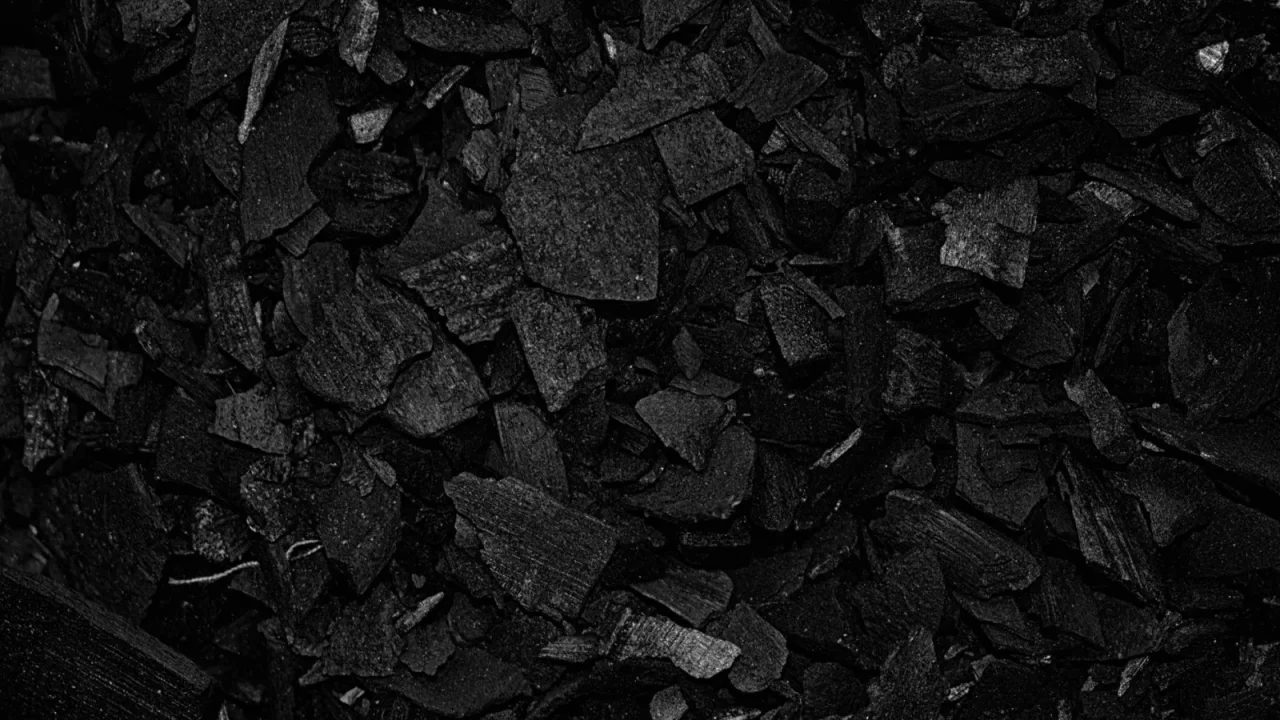
Regular charcoal becomes “activated” when it is heated to very high temperatures with steam or certain gases. That process blasts open a huge internal network of microscopic pores.
The numbers are hard to believe. A single gram of activated carbon can hold somewhere around 500 to 1,500 square meters of internal surface area. One teaspoon of the stuff has more surface than a tennis court.
Gas molecules that drift into those pores get held there by weak molecular attraction. This is adsorption, with a d, meaning the molecules stick to a surface. It is not absorption, where something soaks in like a sponge. The distinction matters because it explains why carbon eventually stops working.
Think of the carbon bed as a parking garage for odor molecules. It works great until every spot is taken, and then cars just drive past.
What carbon is good at, and what it ignores
Carbon shines on gases and volatile compounds: cooking odors, pet smells, cigarette and wildfire smoke odor, paint fumes, and many of the VOCs that off-gas from new furniture, flooring, and cleaning products. If you have read our piece on What Are VOCs in the Home and Why They Matter, carbon is the main hardware answer to that problem.
What it largely ignores is fine particles. Carbon does almost nothing for dust, pollen, or PM2.5 on its own. It also struggles with a few small, light gases like formaldehyde and carbon monoxide unless the carbon is specially treated, or “impregnated,” with an added chemical.
An activated carbon filter is not a carbon monoxide safety device. It will not protect you from CO poisoning. You still need a dedicated carbon monoxide alarm, no exceptions.
Carbon versus the particle filters you already know
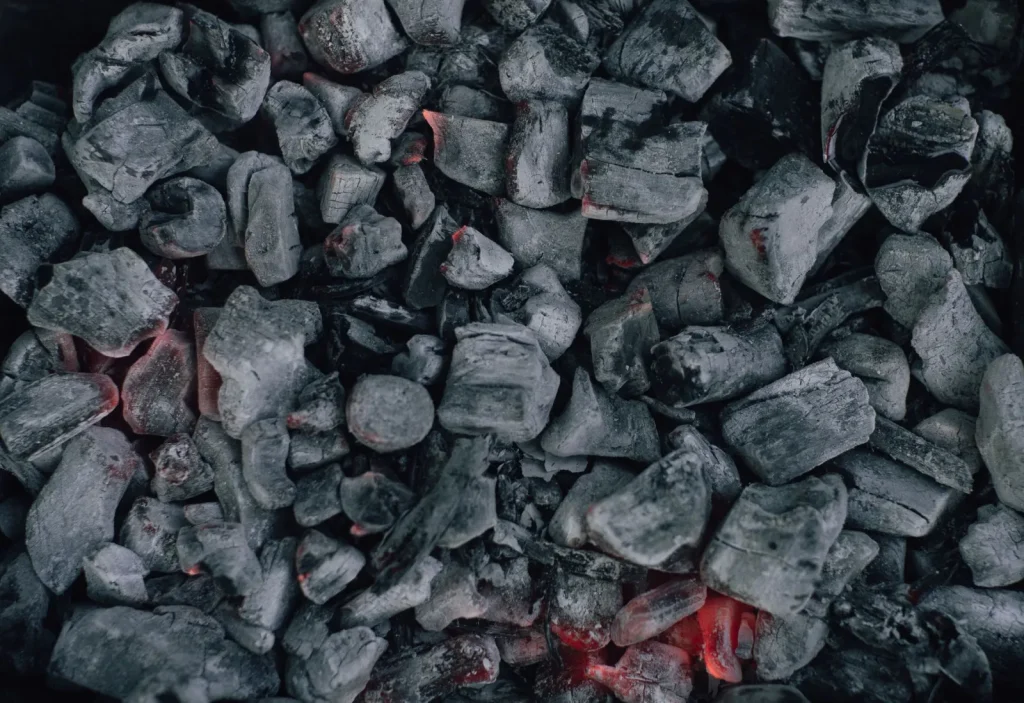
The single most common mix-up I see is people expecting one filter to do everything. HEPA and MERV filters strain particles out of moving air. Carbon adsorbs gases. They are not competitors, they are teammates.
| Job | Activated carbon | HEPA / high MERV |
|---|---|---|
| Cooking and pet odors | Yes, its main job | No |
| Smoke odor (the smell) | Yes | No |
| Smoke particles (the haze) | No | Yes |
| VOCs and paint fumes | Yes | No |
| Dust, pollen, PM2.5 | No | Yes |
| Mold spores, dander | No | Yes |
This is why a good air purifier stacks them. Air passes through a carbon stage for gases, then a HEPA stage for particles. Our articles HEPA Filters Explained: What They Trap and MERV Filter Ratings Explained for Homeowners cover the particle side in depth.
If the problem is something you can smell, think carbon. If the problem is something you can see or that makes you sneeze, think HEPA or MERV. Most homes want both.
The catch nobody mentions: carbon saturates
Because adsorption fills a fixed surface, carbon has a hard limit. Once the pores are full, the filter is done, and here is the unpleasant part. A saturated carbon filter can start releasing captured odors back into the room, especially when the air gets warm or humid.
That funky smell that shows up months into using a purifier is often the carbon itself giving up.
Carbon does not run on a calendar. It saturates based on how much gas load it processes, so two identical filters can have wildly different lifespans depending on the home.
| Household situation | Rough carbon life |
|---|---|
| Light use, low odor, no smokers | 6-12 months |
| Average home with pets and cooking | 3-6 months |
| Heavy odor, smoke, or new renovation off-gassing | 1-3 months |
How much carbon are you actually buying
The amount of carbon is everything, and it varies enormously between products. A thin fabric mat with carbon dust bonded to it might hold a few grams. It will knock down light odors for a few weeks, then quit.
A serious unit uses loose granular or pelletized carbon measured in pounds. Some standalone gas-phase filters carry 5 to 15 pounds of it. That is the difference between a filter that lasts a month and one that runs most of a year.
A mistake I watched a client make: he bought a cheap purifier with a “carbon-infused” pre-filter and expected it to clear paint fumes from a freshly redone nursery. A few grams of bonded carbon never stood a chance against a whole room of off-gassing. The fix was a unit with an actual carbon bed, plus open windows.
When comparing purifiers, hunt for the carbon weight in the specs, listed in pounds or grams. If a company hides that number, the honest read is that there is very little carbon inside.
When choosing carbon is the right call

Carbon earns its keep in specific situations. If none of these describe your home, you may not need a dedicated carbon stage at all.
- Persistent cooking odors, especially from frying or strong spices
- Pet smells that linger in carpet and upholstery
- Nearby wildfire smoke or a smoker in the household
- Recent renovation, new flooring, fresh paint, or new furniture off-gassing
- A hobby with fumes, such as painting, resin, or soldering
- General chemical sensitivity where “clean” air still needs to smell like nothing
For the wider picture of what you are actually fighting, our guides Common Indoor Air Pollutants Found at Home and Indoor Air Quality at Home: A Practical Guide put carbon in context alongside ventilation and source control.
Carbon is a helper, not a substitute for fresh air
No filter replaces getting bad air out and good air in. The U.S. Environmental Protection Agency ranks source control and ventilation above air cleaning for a reason. You can read their overview on the EPA indoor air quality pages, and the Department of Energy Energy Saver site covers ventilation strategy.
Carbon handles the odors and gases that ventilation alone leaves behind. It is the polish, not the whole system.
Getting the most from a carbon filter
A few habits stretch your carbon and keep it honest. First, slow air moving through a thicker bed adsorbs better than fast air whipping past a thin sheet, so running a purifier one speed lower can improve odor removal.
Second, protect the carbon with a pre-filter. Dust that clogs the surface steals pore space from the gas molecules you actually care about.
Third, trust your nose over the calendar. If odors that used to disappear start lingering, or the unit itself smells musty, the carbon is saturated. Swap it even if the “recommended” date is still weeks out.
If you own an air quality monitor, note that most consumer VOC sensors are rough and drift over time, so treat a rising reading as a nudge to check the filter rather than a lab result. Our explainer How Indoor Air Quality Monitors Work gets into why those numbers wander.
Start simple. Match the filter to the actual problem, buy enough carbon to last, and let your nose tell you when to replace it. A right-sized carbon stage, refreshed on time, quietly earns its place in a home that fries fish and welcomes it.
Frequently asked questions
Do activated carbon filters remove particles like dust and pollen?
Not really. Carbon is built to adsorb gases and odors, not to strain solid particles out of the air. Dust, pollen, and PM2.5 need a HEPA or high-MERV particle filter instead. Many purifiers include both a carbon stage and a HEPA stage precisely because each handles a different job and neither one covers for the other.
How often should I replace an activated carbon filter?
It depends on your odor load, not a fixed schedule. Light-use homes might get 6-12 months, average homes with pets and cooking get 3-6 months, and heavy smoke or renovation off-gassing can exhaust carbon in 1-3 months. The honest test is your nose. When odors start lingering again or the filter smells musty, it is saturated and due for a swap.
Can I wash or reactivate a used carbon filter at home?
No, not effectively. Truly reactivating carbon requires industrial heat and steam that you cannot reproduce in an oven or microwave, and home attempts usually just spread captured gunk around. Sunlight or a bake might drive off a little moisture, but it will not restore the adsorption capacity. Once carbon is saturated, replacement is the reliable answer.
Will an activated carbon filter protect me from carbon monoxide?
No. Standard activated carbon does very little for carbon monoxide, and no air filter should ever be treated as a safety device for it. Carbon monoxide is odorless and deadly, so you need a dedicated CO alarm mounted per the manufacturer instructions. Keep the filter for odors and VOCs, and keep the alarm for your safety.
Why does my air purifier suddenly smell bad?
A saturated carbon filter is a common cause. Once its pores are full, warm or humid air can push previously captured odors back out, which reads as a musty or sour smell coming from the unit. That is your signal the carbon is spent. Replace the carbon stage, and if a musty smell persists, check for trapped moisture or mold on other components.

Dharm Solanki
Dharm Solanki spends a lot of time thinking about the air inside people's homes, usually when no one else is. He writes about humidity, ventilation, and dehumidifiers, along with the small fixes that turn a stuffy or damp room into one that feels comfortable again. He would rather explain why a recommendation works than just point at a product, so his guides tend to answer the question you were about to ask next. And if something looks great on paper but struggles in a normal house, he says so.