
On this page
The first time I checked a nursery with a meter, the parents swore the room felt “perfectly fine.” The hygrometer read 28 percent. Their newborn had a crusty little nose and woke up fussy every few hours, and everyone assumed it was just newborn stuff.
It wasn’t. It was dry winter air, and it was an easy fix.
Getting baby nursery humidity right is one of the cheapest comfort upgrades you can make, and it matters more for an infant than it does for you. Babies breathe faster, have thinner skin, and can’t tell you when their throat feels like sandpaper. Here is how to set the room up and keep it safe.
The target range for a nursery
Aim for 40 to 60 percent relative humidity, and try to live in the middle of that band, around 45 to 50 percent, for most of the year. That range keeps nasal passages moist and skin from cracking without inviting mold or dust mites.
This is the same broad comfort window the EPA recommends for indoor spaces, and it lines up with our general advice in Ideal Indoor Humidity: A Complete Comfort Guide. The difference for a nursery is that you want to hold it steadier and check it more often.
Below 40 percent, dry noses and skin show up first. Above 60 percent, mold and dust mites get comfortable. Split the difference and you protect the baby on both ends.
Why not just match your bedroom? Adult sleep advice, like what we cover in Best Bedroom Humidity for Sleep, tolerates a wider swing because your body handles dryness better. An infant’s airways are smaller, so the same 30 percent room that only annoys you can genuinely disrupt a baby’s breathing and sleep.
What too dry looks like
Dry air shows up as a stuffy or crusty nose, flaky cheeks, and more night waking. You may also notice more static and a scratchy feeling in your own throat, which is a decent early warning. We get into the skin side of this in Humidity and Dry Skin Explained.
What too damp looks like
Damp rooms feel heavy and smell slightly musty. Watch for condensation on the window in the morning, which is your first clue the room is running wet and drifting toward mold territory.
Step 1: Measure before you add anything
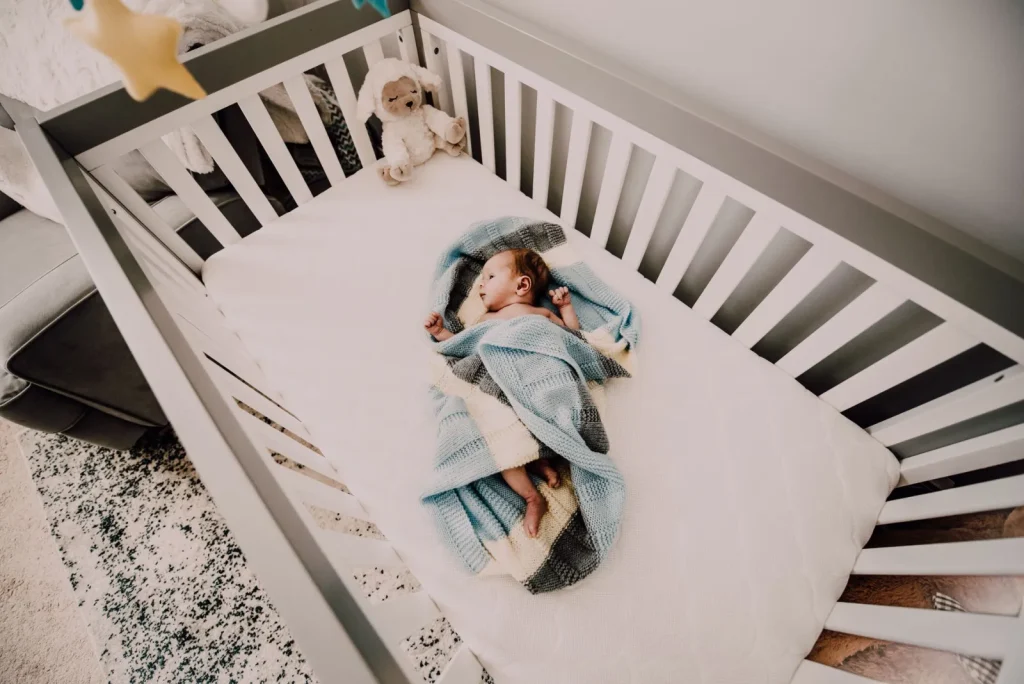
Do not buy a humidifier until you know your actual numbers. Put a small digital hygrometer in the nursery, near the crib but not touching it, and let it read for a full day.
A decent one costs $10 to $20. Cheap meters can drift, so if you want confidence, buy two and compare them side by side for a night.
Winter and summer behave very differently. Heated homes in January often sit at 25 to 35 percent, while a humid August afternoon can push a closed nursery past 60. Our seasonal pieces, Ideal Indoor Humidity in Winter and Ideal Indoor Humidity in Summer, explain why the same room needs opposite fixes six months apart.
Check the meter at the baby’s level, not on a tall dresser. Warm, moist air rises, so a reading up high can run several points off from the air the baby actually breathes.
Step 2: Pick and place the humidifier safely
If the room reads under 40 percent, add moisture with a cool-mist humidifier. Skip warm-mist and steam units in a nursery. They hold hot water and produce hot vapor, and a curious toddler plus a boiling tank is a burn risk you do not need.
Placement is where most parents go wrong. The mistake I see all the time is a humidifier parked right against the crib rail, blasting mist straight at the mattress.
Never aim mist directly at the crib or let it settle on the sheets. Damp bedding is a fast track to mold and gives a baby a cold, clammy sleep surface. Point the output toward open floor space instead.
Follow these placement rules:
- Keep the unit at least 3 feet from the crib.
- Set it up off the floor on a stable shelf or dresser, on a waterproof tray.
- Aim the mist away from the crib, the wall, and any outlet.
- Keep the cord out of reach and not draped over the crib.
- Leave a hand’s width of air around the unit so it doesn’t drip onto wood or drywall.
Match the humidifier size to the room. A small nursery of 100 to 200 square feet only needs a tabletop unit with a 0.5 to 1 gallon tank. Oversizing a small room is how people accidentally push past 60 percent and grow mold trying to help.
Step 3: Clean it so you are not seeding mold
A dirty humidifier does not just fail to help. It sprays mold spores and mineral dust into the exact air your baby breathes all night. This is the part people skip, and it quietly undoes everything else.
A humidifier is a small warm tank of standing water three feet from your baby’s face. Treat it like the food-contact surface it basically is.
Here is a cleaning rhythm that actually gets followed because it is simple:
| How often | What to do |
|---|---|
| Every day | Dump leftover water, wipe the tank dry, refill with fresh water at bedtime. |
| Every 1-3 days | Scrub the tank and base with a brush and white vinegar, then rinse well. |
| Weekly | Disinfect with a diluted bleach or vinegar solution per the manual, then air dry. |
| As needed | Replace filters and wicks on the maker’s schedule. |
Two habits do most of the work. Use distilled or demineralized water to cut down on the white mineral dust that coats furniture and irritates little lungs, and never let water sit stagnant in the tank during the day.
Empty the tank every morning even if it still has water in it. Standing water that sat warm all day is where the funk starts. Fresh water each night is the single best mold-prevention move you can make.
Step 4: Adjust with the seasons and the room
Once the meter and the humidifier are in place, your job is small tweaks, not constant fiddling. In dry winter months you will run the humidifier most nights. In a muggy summer you may switch it off entirely, or even run a small dehumidifier if the room creeps past 60 percent.
Ventilation matters too. Cracking the door or running a quiet fan for a bit keeps air moving so moisture doesn’t pool in a corner. Stale, sealed rooms trend damp even without a humidifier.
If your baby is congested from a cold, it is fine to nudge toward the upper end of the range for a few nights. The CDC and pediatric guidance both note that added moisture can ease breathing during minor respiratory bugs, but keep it under 60 percent so you are not trading one problem for mold. For the general health backdrop, the EPA indoor air quality pages are a solid, non-alarmist reference.
Putting it into practice this week
Start with the $15 hygrometer, not the humidifier. Learn what the room actually does across a normal day and night before you spend more.
If the reading sits under 40, add a small cool-mist unit, place it three feet from the crib and up off the floor, and set a phone reminder to dump and refill it every morning. If it sits over 60, you have a ventilation or dehumidifier problem, not a dry-air one.
Do those few things and you will have handled the parts that matter: steady moisture for easy breathing, a safe distance from the crib, and a clean tank that helps instead of harms. A calmer, better-sleeping baby is usually the proof.
Frequently asked questions
What humidity is best for a baby nursery?
Keep the nursery between 40 and 60 percent relative humidity, and aim for around 45 to 50 percent most of the year. That range keeps a baby's nose and skin from drying out while staying dry enough to discourage mold and dust mites. Use a small hygrometer near the crib so you are adjusting to real readings rather than guessing by how the room feels.
Is a humidifier safe to use near a crib?
Yes, if you use a cool-mist model and place it correctly. Keep it at least 3 feet from the crib, up off the floor on a stable surface, with the mist aimed away from the baby and bedding. Avoid warm-mist and steam units in a nursery because the hot water and vapor create a burn risk. Keep the cord out of reach at all times.
How often should I clean a nursery humidifier?
Empty and refill it daily, scrub the tank and base with vinegar every one to three days, and disinfect weekly following the manual. Standing water grows mold and bacteria fast, and a dirty tank sprays that straight into the air your baby breathes. Using distilled water also cuts down on the white mineral dust that can settle on furniture and irritate small lungs.
Can a nursery be too humid?
It can. Above 60 percent relative humidity, mold and dust mites thrive, and you may see morning condensation on the windows. A damp, musty room is as much of a problem as a dry one. If your meter reads over 60, turn the humidifier off, improve ventilation, or run a small dehumidifier until the room settles back into the 40 to 60 percent band.
Why does my baby's nursery humidity matter more than my own bedroom?
Infants breathe faster and have thinner, more sensitive skin than adults, so the same dry room that only mildly bothers you can genuinely disrupt a baby's breathing and sleep. Adult sleep advice tolerates a wider humidity swing. A nursery should be held steadier and checked more often, staying closer to the middle of the 40 to 60 percent range.

Dharm Solanki
Dharm Solanki spends a lot of time thinking about the air inside people's homes, usually when no one else is. He writes about humidity, ventilation, and dehumidifiers, along with the small fixes that turn a stuffy or damp room into one that feels comfortable again. He would rather explain why a recommendation works than just point at a product, so his guides tend to answer the question you were about to ask next. And if something looks great on paper but struggles in a normal house, he says so.