On this page
The first HRV quote I ever saw as a homeowner made me laugh, then wince. It was $2,200. The one next to it, same house, same brand of unit, was $5,900. Neither installer was trying to rob anyone. They were just quoting two completely different amounts of work.
That gap is the whole story of HRV installation cost. The heat recovery ventilator itself is a fairly known quantity. Everything wrapped around it, the ducting, the labor, the electrical, the controls, is where the number moves.
Let me break down where the money actually goes.
What an HRV install costs, start to finish
For a typical single-family home retrofit, plan on $1,500 to $6,500 installed. Most jobs land in the $3,000 to $4,500 window once you account for real ductwork and a licensed crew.
New construction is usually cheaper per foot because the walls are open and the duct runs are planned around the unit. A retrofit into a finished house is where costs climb, since someone has to find a path for the ducts through joists and closets.
| Cost component | Typical range (USD) | Notes |
|---|---|---|
| HRV unit | $500 – $1,800 | Higher CFM and better cores cost more |
| Ductwork and fittings | $400 – $2,500 | Biggest swing factor in most jobs |
| Labor | $600 – $2,000 | 8 to 20 hours for a crew of two |
| Electrical and drain | $150 – $600 | New circuit or condensate line if needed |
| Controls and sensors | $40 – $500 | From a basic timer to a humidity panel |
Add those up and you can see how two honest quotes end up thousands apart.
The unit itself is the small part
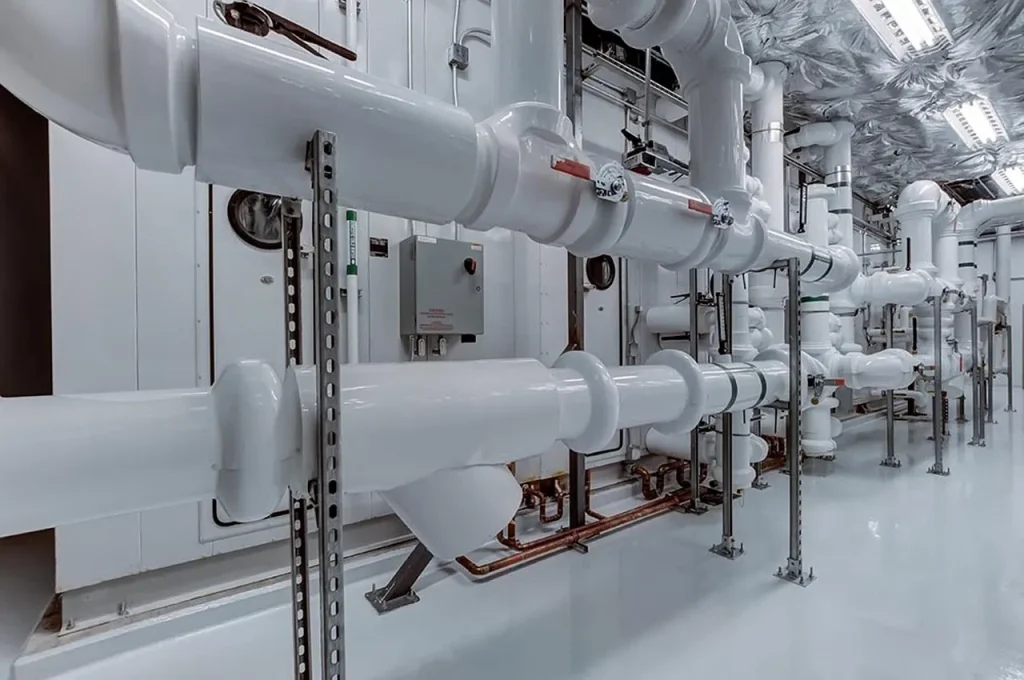
A residential HRV rated for roughly 100 to 200 CFM runs $500 to $1,800 for the box alone. A good mid-tier unit for an average 1,800 square foot home sits around $900 to $1,200.
What pushes the unit price up is capacity, core efficiency, and features like a defrost cycle for cold climates. If you live somewhere with hard winters, a model with a proper defrost strategy is worth the extra $150 or so.
Match the unit to your home’s size and airtightness, not to the biggest number on the shelf. An oversized HRV cycles poorly and costs more to run. The HRV and ERV Buying Guide for Homeowners covers sizing in more detail.
Ductwork is where the range lives
Here is the part people skip past when they compare prices. An HRV needs air in and air out, and how you route those ducts changes everything.
Fully ducted versus simplified
A fully ducted HRV pulls stale air from bathrooms and the kitchen and delivers fresh air to bedrooms and living spaces through its own dedicated ducts. This is the best-performing setup and the most expensive, because it can mean 60 to 120 feet of new duct plus grilles and boots.
A simplified or partially ducted install ties the HRV into your existing forced-air furnace ductwork. It is cheaper, often by $1,000 to $2,000, since you reuse ducts you already have.
The cheapest duct plan on paper is not always the one that actually ventilates the rooms where you sleep.
The tradeoff: a furnace-tied system only distributes fresh air well when the furnace blower is running, and it can short-circuit if the connection points are too close together. For many homes it is a fine compromise. For a tight, modern build, dedicated ducting earns its cost.
If an installer quotes a rock-bottom price, ask exactly how the fresh air reaches the bedrooms. A “duct” that just dumps supply air next to the return in the basement technically works but ventilates the living space poorly.
Labor: the hours you cannot see
Labor typically runs $600 to $2,000, or roughly 8 to 20 hours for a two-person crew. Retrofit labor is higher because cutting duct paths through a finished home is slow, careful work.
A few things quietly add hours. A mechanical room far from the exterior walls means longer intake and exhaust runs to the outside hoods. A finished basement ceiling that has to be opened and patched adds drywall time. Difficult attic access in July, when it is 130 degrees up there, slows any crew down.
Regional labor rates matter too. The same install in a high-cost metro can run 40 to 60 percent more than in a rural area, purely on hourly rates.
Controls and extras that sneak onto the bill
Controls are easy to underestimate. At the low end, a simple wall-mounted timer or a percentage speed switch runs $40 to $100. Step up to a humidity-sensing control that ramps ventilation when the house gets damp and you are looking at $150 to $500 depending on the panel.
Other line items that show up:
- Exterior intake and exhaust hoods with bird screens, $30 to $120
- Insulated duct for the cold-side runs to prevent condensation, $2 to $6 per foot
- A dedicated electrical circuit if the mechanical room lacks a spare, $150 to $400
- Condensate drain line and trap, $50 to $200
- A permit and inspection where required, $50 to $300
None of these are huge on their own. Together they can add $400 to $900 to a quote that looked lean at first.
What drives your number up or down
The more your HRV shares with existing ductwork and the closer the unit sits to an exterior wall, the lower your install cost. Dedicated ducts and long runs to the outdoors push it up.
Cost goes up with dedicated full ducting, a cold climate needing defrost and insulated runs, a mechanical room buried in the center of the house, finished spaces that must be opened and patched, and premium humidity-based controls.
Cost goes down with a furnace-tied simplified install, new construction or an unfinished basement, a unit mounted near an exterior wall, and a basic timer control.
Where you can honestly save
Sizing right is the first saving. Buying more CFM than your home needs means a pricier unit and worse performance, a double loss. The same right-sizing logic applies across equipment, from a Whole House Humidifier Buying Guide to an HRV.
Getting two or three quotes is the second. Ask each installer to spell out the duct scope in writing. If one is $2,000 cheaper, it is almost always because the ducting is simplified, not because the crew is generous.
A handy comparison: proper ducting is to an HRV what proper drainage is to a bathroom fan. You can find that in How to Install a Bathroom Exhaust Fan. Cut the corner on the venting path and the whole thing underperforms no matter how good the unit is.
For rebates, check your utility and the guidance on efficient home ventilation from the US Department of Energy energy saver pages. Some regions offer $100 to $500 back on qualifying HRV or ERV equipment. Balanced ventilation also ties directly into indoor air quality, which the EPA indoor air quality pages explain in plain terms.
A realistic mid-range example
An 1,800 square foot home, unfinished basement, unit mounted near an exterior wall, furnace-tied with two dedicated stale-air pickups and a humidity control: roughly $1,100 unit, $1,300 ducting and fittings, $1,200 labor, $250 electrical and drain, $250 control. That is about $4,100 all in, right in the meaty part of the range.
Your next step
Before you call anyone, walk your basement or mechanical room and note where the unit could sit and how far it is to the nearest exterior wall. That one observation tells an installer, and you, most of what will drive the price.
Then get your quotes and read the duct scope line by line. A well-installed HRV should quietly run for 15 to 20 years, so the few hundred dollars you spend on doing the ducting right is spread across a long, comfortable stretch of clean, tempered air.
Frequently asked questions
How much does it cost to install an HRV?
For most single-family homes, expect $1,500 to $6,500 installed, with $3,000 to $4,500 being the common range for a retrofit. The unit itself is only $500 to $1,800 of that. Ductwork, labor, electrical, and controls make up the rest, and the amount of new ducting needed is usually the biggest reason two quotes differ so much.
Why is HRV ductwork so expensive?
A fully ducted HRV needs its own dedicated runs to pull stale air from bathrooms and deliver fresh air to bedrooms, which can mean 60 to 120 feet of duct plus grilles, boots, and insulated cold-side sections. In a finished home, someone has to route all of that through joists and closets, which is slow, careful work. Reusing furnace ducts is cheaper but ventilates less evenly.
Is a furnace-tied HRV install worth the savings?
It often is, especially in an older forced-air home. Tying the HRV into existing furnace ductwork can save $1,000 to $2,000. The catch is that fresh air distributes well mainly when the furnace blower runs, and poorly placed connections can short-circuit the airflow. For a tight, modern build, dedicated ducting usually performs better and is worth the extra cost.
Do I need a permit to install an HRV?
In many areas, yes, particularly if new electrical or structural cutting is involved. A permit and inspection typically add $50 to $300 to the job. A licensed installer will usually handle the permit for you and roll it into the quote. Skipping a required permit can cause problems later at resale, so it is not worth cutting.
How much do HRV controls add to the cost?
A basic wall timer or speed switch runs $40 to $100. A humidity-sensing control that ramps ventilation when the house gets damp costs $150 to $500 depending on the panel. Controls are easy to underestimate when comparing quotes, so ask which control is included. A smart humidity-based control often pays for itself in comfort and more efficient runtime.

Dharm Solanki
Dharm Solanki spends a lot of time thinking about the air inside people's homes, usually when no one else is. He writes about humidity, ventilation, and dehumidifiers, along with the small fixes that turn a stuffy or damp room into one that feels comfortable again. He would rather explain why a recommendation works than just point at a product, so his guides tend to answer the question you were about to ask next. And if something looks great on paper but struggles in a normal house, he says so.