
On this page
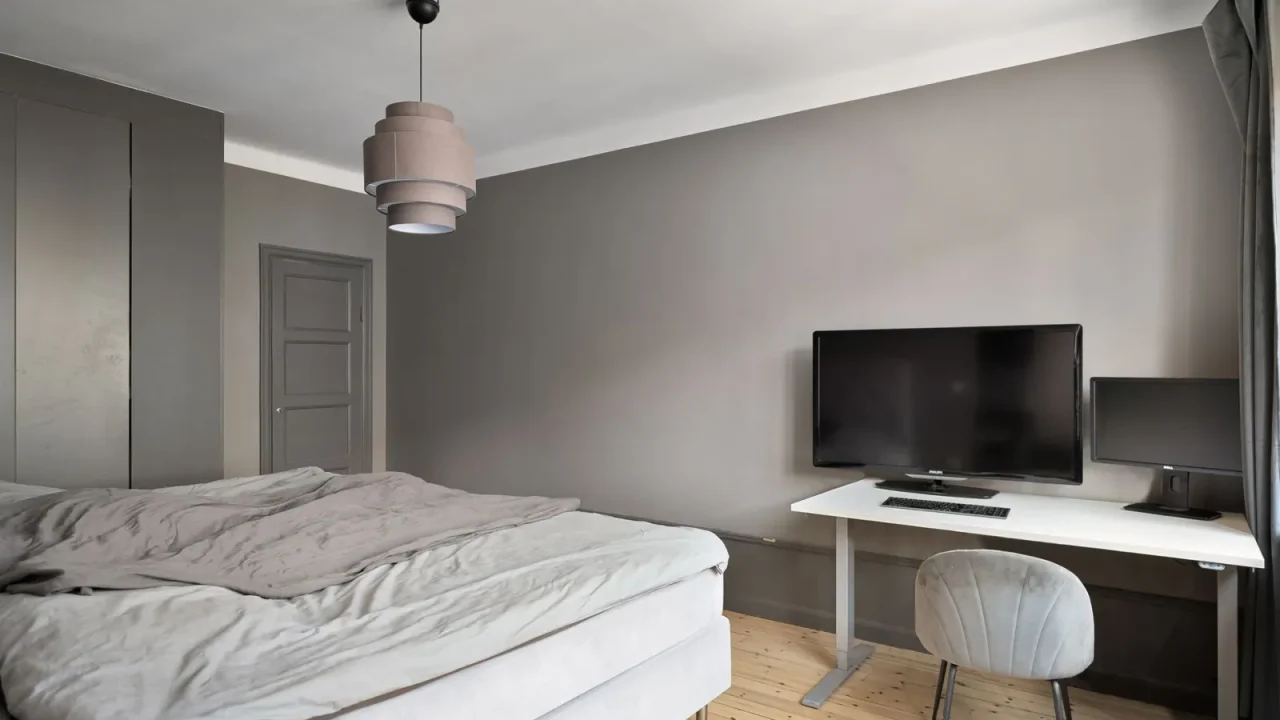
I once put a CO2 meter on the nightstand in a friend’s guest room, mostly out of habit. By morning it read 2,750 ppm. Two adults, a closed door, a tight modern window, and eight hours of breathing had turned a comfortable room into a sealed box. Nobody was in danger, but that number explained why they always woke up groggy and reached for the window at 3 a.m. without knowing why.
Carbon dioxide is the quietest thing your air does. You cannot smell it or see it, and at the levels found in homes it will not hurt you. What it will do is tell you, more honestly than almost any other single reading, whether a room is getting enough fresh air.
Why CO2 climbs indoors in the first place
Every person in a room is a small, steady CO2 source. A resting adult exhales roughly 0.5 to 1 pound of carbon dioxide a day, and it goes straight into the air around them.
Outdoors, that gets diluted into the whole atmosphere. Outdoor air today sits around 420 ppm (parts per million), and that is your floor: no indoor space breathed by people gets cleaner than the air coming in from outside.
Indoors, the math changes. Put people in a room, close the door, and shut the windows, and the CO2 they exhale has nowhere to go. Concentration rises until the rate of fresh air coming in matches the rate people are adding CO2. In a leaky old farmhouse that balance point is low. In a tight, well-sealed new build, it can be surprisingly high.
Take your indoor CO2 reading and subtract the outdoor baseline of about 420 ppm. Whatever is left is air that has already been through someone’s lungs. At 1,400 ppm indoors, nearly 1,000 ppm of what you are breathing is recycled.
Combustion adds to the pile
People are not the only source. A gas stove, a gas range, a wood fire, or an unvented space heater all produce CO2 as they burn. A single gas burner running on the stovetop can push a kitchen’s reading up by several hundred ppm in minutes.
That is worth remembering because combustion also throws off other things you care about more, like fine particles and nitrogen dioxide. When CO2 spikes during cooking, treat it as a nudge to turn on the range hood.
What the ppm numbers actually mean
You do not need to memorize a chart, but a rough map helps you act on a reading instead of just staring at it.
| CO2 level (ppm) | What it usually means | What to do |
|---|---|---|
| 400-600 | Fresh, close to outdoor air | Nothing; ventilation is working |
| 600-800 | Good, comfortable occupied space | Nothing needed |
| 800-1,000 | Acceptable but trending stuffy | Watch it; add air if it keeps climbing |
| 1,000-1,400 | Noticeably stale, weak ventilation | Open a window or run a fan |
| 1,500-2,500 | Poorly ventilated, air feels heavy | Get fresh air in now |
| 2,500+ | Very stuffy; common in sealed bedrooms overnight | Ventilate; rethink the room’s air supply |
The widely cited comfort target comes from ASHRAE, which historically tied acceptable ventilation to keeping indoor CO2 within about 700 ppm of outdoor levels. That lands most occupied rooms comfortably under 1,100 ppm when ventilation is doing its job.
Research on cognition is where it gets interesting. Studies have found measurable dips in decision-making and concentration once levels pass roughly 1,000 to 1,500 ppm, which is exactly the range a closed home office reaches after a couple of hours on video calls.
CO2 is not the villain. It is the smoke detector for stale air, going off before the things you truly want to avoid have a chance to pile up.
CO2 as a fresh-air proxy
Here is the idea that makes CO2 monitoring genuinely useful. Because people are a predictable source and outdoor air is a predictable dilutant, the CO2 level in an occupied room is a direct readout of how much fresh air is flowing through it.
Low CO2 means air is being exchanged fast enough to keep up with the people in the room. High CO2 means it is not. That same weak airflow tends to let other indoor pollutants accumulate too: VOCs from furniture and cleaners, moisture, odors, and particles.
So a high CO2 reading rarely means “the CO2 is a problem.” It means “this room is under-ventilated, and other things are probably building up alongside it.” That is why it pairs so naturally with the broader question of what a good indoor air quality reading looks like. CO2 is one dial on the dashboard, and often the first one to move.
Test ventilation the honest way. Sit in a closed room for an hour and watch the CO2 trend. If it climbs steadily past 1,200 ppm with just one or two people, that room does not exchange air well, no matter how clean it looks.
Where a CO2 monitor helps most
Bedrooms are the classic case, because doors close and people stay put for hours. Home offices come next, then any small room where a group gathers, like a den during a movie night. Most consumer indoor air quality monitors that report CO2 use an NDIR sensor, which is the type worth paying for; cheaper “eCO2” estimates from VOC sensors are guesses, not real measurements.
What to do when the number climbs

The fix for high CO2 is almost boringly simple: dilute it with outside air. A filter will not touch it. Plants will not meaningfully move it. Only air exchange brings it down.
- Crack a window, even an inch, in the room you actually occupy
- Open the bedroom door at night if privacy allows; it is the single biggest overnight change you can make
- Run a bathroom or kitchen exhaust fan to pull stale air out and draw fresh air in
- If you have a mechanical ventilation system or an ERV, make sure it is running and its filter is clean
- During cooking, turn on the range hood before the first burner, not after
Do not confuse carbon dioxide (CO2) with carbon monoxide (CO). CO2 at home is a comfort and ventilation marker. Carbon monoxide is a deadly, odorless gas from faulty combustion, and it needs a dedicated CO alarm, not an air quality monitor. Every home with fuel-burning appliances needs one.
In tight, energy-efficient homes, the trade-off is real. The same sealing that lowers heating bills also traps the air you breathe. That is the whole reason mechanical ventilation, like a heat or energy recovery ventilator, exists: to bring in fresh air without throwing away the heat. If your CO2 sits high all winter, that is the conversation to have.
Putting a CO2 reading to work
Start by learning your rooms. Spend a week glancing at a CO2 monitor in your bedroom and your main workspace, and you will quickly see which spaces breathe and which ones suffocate. The numbers turn a vague feeling of stuffiness into something you can act on.
Then set a personal line. For most people, keeping occupied rooms under 1,000 ppm feels noticeably better, and staying under 800 is excellent. When you cross those lines, add air first and reach for gadgets second.
The night I saw 2,750 ppm in that guest room, the fix cost nothing. We propped the door open two inches. The next morning the meter read 900, and my friend slept through the night for the first time in months. That is CO2 monitoring at its best: a cheap number that points straight at a free fix.
Frequently asked questions
What is a safe CO2 level indoors?
At home, CO2 is about comfort and ventilation, not toxicity. Levels under 800 ppm are excellent, and under 1,000 ppm feels fresh for most people. Between 1,000 and 1,500 ppm a room reads as stuffy and cognition can dip slightly. You would need levels many times higher than any normal home reaches before CO2 itself became a health hazard.
Is 1,000 ppm of CO2 bad?
It is a fair line to watch, not a danger. Around 1,000 ppm a room is starting to feel stale and ventilation is getting weak. You will not be harmed, but some studies show mild drops in focus and decision-making once you pass roughly 1,000 to 1,500 ppm. Treat it as a signal to open a window or run a fan.
How do I lower CO2 in my house?
Dilute it with outside air, because that is the only thing that works. Crack a window in the room you occupy, open bedroom doors at night, and run kitchen or bathroom exhaust fans. If you have an ERV or HRV, keep it running with a clean filter. Air filters and houseplants do not meaningfully reduce CO2.
Does a CO2 monitor detect carbon monoxide?
No, and this matters a lot. A CO2 monitor measures carbon dioxide, a ventilation marker that is harmless at home levels. Carbon monoxide (CO) is a separate, deadly gas from faulty combustion, and it requires a dedicated CO alarm. If your home burns gas, oil, wood, or propane, you need a real carbon monoxide detector regardless of any air quality monitor.
Why is CO2 called a proxy for fresh air?
Because people exhale it at a steady, predictable rate and outdoor air dilutes it to a known baseline near 420 ppm. So the CO2 level in an occupied room tells you directly how fast fresh air is flowing through. High CO2 means weak ventilation, which usually means other pollutants are accumulating too. That is why one CO2 number reveals so much.

Dharm Solanki
Dharm Solanki spends a lot of time thinking about the air inside people's homes, usually when no one else is. He writes about humidity, ventilation, and dehumidifiers, along with the small fixes that turn a stuffy or damp room into one that feels comfortable again. He would rather explain why a recommendation works than just point at a product, so his guides tend to answer the question you were about to ask next. And if something looks great on paper but struggles in a normal house, he says so.