On this page
- Before you start: two quick prep steps
- Step 1: Build a real barrier at every entry
- Step 2: Tame the textiles, room by room
- Step 3: Vacuum so dust leaves the house
- Step 4: Dust surfaces the right way
- Step 5: Keep your filters ahead of the dust
- Step 6: Cut the clutter that holds dust
- Putting it on a simple schedule
Run a finger along the top of a door frame in a room you cleaned last week. The gray film you find is not a sign you did a bad job. It is the normal rhythm of a house that has people, pets, fabric, and an open door to the outside world.
Household dust is mostly boring stuff: shed skin, textile fibers, tracked-in soil, and tiny flakes of everything your home is made of. The goal is not a dust-free house, which does not exist. The goal is less of it settling on surfaces and less of it floating where you breathe.
Here is how I work through a house, room by room, using tactics that actually move the needle.
Roughly a third of indoor dust comes in from outside on shoes and clothing. Stop it at the door and you have already won a big share of the battle before you clean anything.
Before you start: two quick prep steps
First, check your humidity. A cheap hygrometer will tell you if you are sitting below 40 percent relative humidity, which is when dust goes light and stays airborne longer. Keeping a home between 40 and 50 percent RH helps particles settle so you can capture them instead of chasing them.
Second, gather the right tools: a vacuum with a sealed HEPA system, a few microfiber cloths, and a spray bottle of plain water. Feather dusters and dry rags stay in the drawer. They relocate dust; they do not remove it.
Step 1: Build a real barrier at every entry
The front door does the heaviest lifting. A single decorative mat is not enough.
Use a two-mat system: a coarse scraper mat outside to knock grit off soles, and an absorbent mat inside to catch fine dust and moisture. Aim for at least four to six feet of walking surface across both so shoes get several full steps on them.
A shoes-off rule is the single cheapest dust reducer there is. In one home I tested, adding a bench and a shoe rack by the door cut visible floor dust noticeably within two weeks, no new equipment required.
Wash or shake out entry mats weekly. A saturated mat stops working and starts shedding what it already holds.
Step 2: Tame the textiles, room by room
Soft surfaces are dust factories and dust reservoirs at the same time. Every time you sit on a couch or make a bed, fibers and trapped particles puff back into the air.
Bedrooms
This is where skin cells pile up. Wash sheets and pillowcases weekly in hot water, and launder or air out blankets and comforters every few weeks. Swap heavy dust-catching bed skirts and layered throw pillows for pieces you can actually toss in the machine.
Living areas
Choose washable slipcovers where you can. For curtains, either pick machine-washable panels or run a vacuum upholstery tool over them monthly. Heavy drapes hold a surprising amount of dust and quietly release it every time the air moves.
If a textile cannot be washed, vacuumed, or shaken out easily, it is going to be a permanent dust source. Pick fabrics you can clean.
Step 3: Vacuum so dust leaves the house

A weak or leaky vacuum is worse than no vacuum, because it stirs fine particles into the air and blows a share of them right back out the exhaust. The fix is a sealed machine with genuine HEPA filtration.
A true HEPA filter captures 99.97 percent of particles at 0.3 microns, which covers the fine dust that hangs in the air longest. If you want the deeper explanation of what those filters trap, our piece on HEPA Filters Explained walks through it.
| Surface | How often | Why |
|---|---|---|
| High-traffic floors | 2-3 times per week | Where tracked-in soil and fibers concentrate |
| Rugs and carpet | Weekly, slow passes | Deep reservoir; needs time to lift dust |
| Upholstery | Monthly | Releases dust with every use |
| Under beds and furniture | Monthly | Still air lets dust build undisturbed |
Go slow. One deliberate pass pulls up far more than three quick swipes. And empty the bin or bag outdoors when it hits about two-thirds full, since an overfull vacuum loses suction and starts leaking dust.
Step 4: Dust surfaces the right way
Work from high to low, always. Start with ceiling fan blades, shelf tops, and door frames, then move down to tables and finally the floor. Dust falls, so cleaning low first just means redoing it.
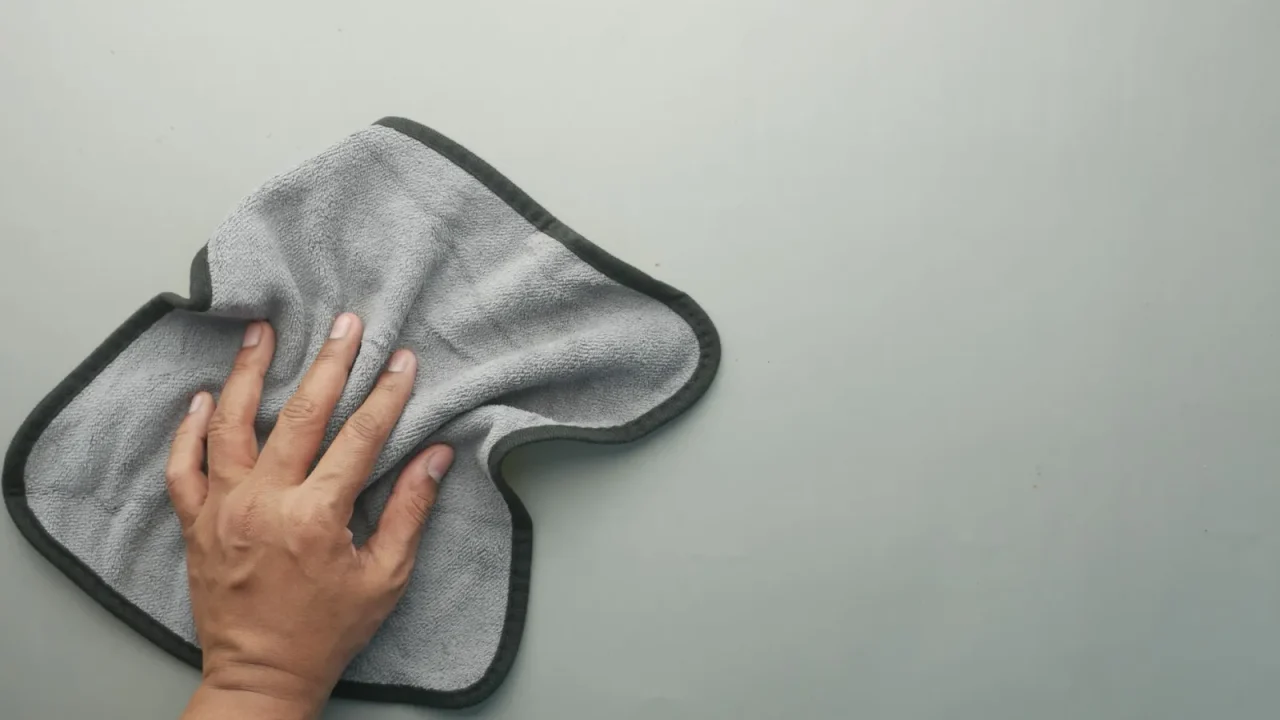
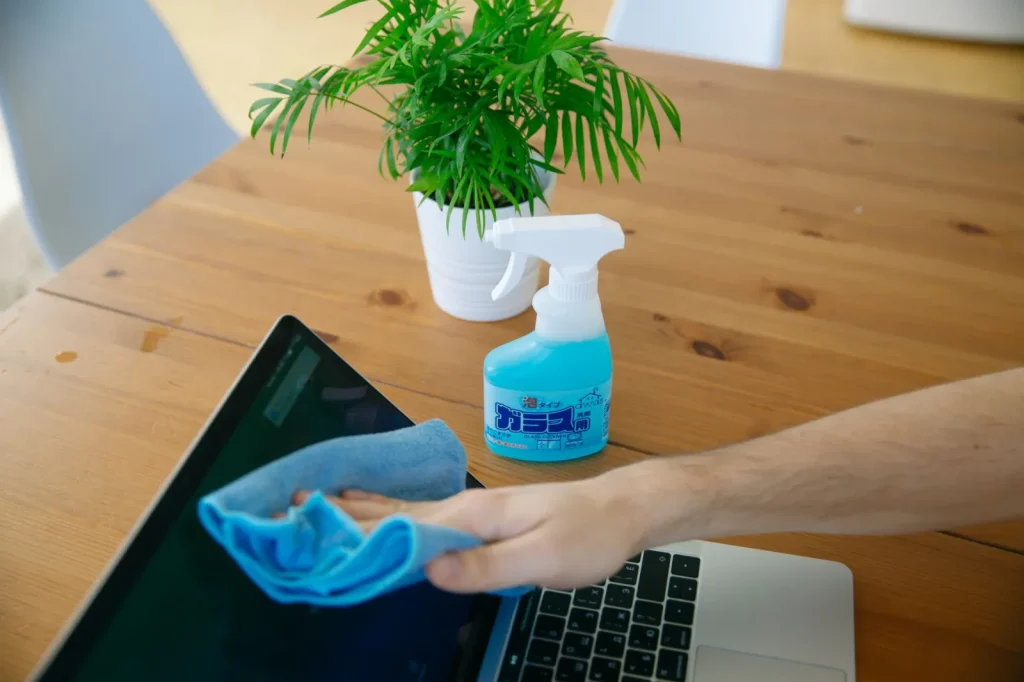
Use a damp microfiber cloth, not a dry one. Slightly damp fabric grabs and holds particles instead of flinging them into the air. Rinse the cloth often, or the dust just smears.
Dry feather dusters and dry rags are the most common mistake I see. They aerosolize the very dust you are trying to remove, and it resettles within an hour or two. If a tool sends visible motes into a sunbeam, it is making your air worse.
Do not forget the hidden collectors: the tops of picture frames, the backs of electronics, blinds, baseboards, and the grilles on your return-air vents.
Step 5: Keep your filters ahead of the dust
Your HVAC system is a whole-house dust mover. Every time it runs, it pulls air through a filter, and a clogged or cheap filter lets fine dust ride right back into every room.
For most homes, a MERV 11 to 13 filter is the sweet spot: it captures fine dust without choking airflow the way a denser filter can on some systems. If you are unsure what those numbers mean, MERV Filter Ratings Explained lays it out plainly.
- Write the install date on the filter frame in marker
- Check flat 1-inch filters every 30 days; replace by day 90 at the latest
- Replace thicker 4-5 inch media filters every 6-12 months
- Vacuum return-air grilles monthly so they do not shed collected dust
- Run the fan on “circulate” a few times a day to keep pushing air through the filter
A portable air purifier with a HEPA filter helps in a bedroom or a room without ductwork. Size it to the room and run it on a low, steady setting rather than blasting it only when the space already looks dusty.
Step 6: Cut the clutter that holds dust
Every open shelf of knickknacks is a landscape of tiny surfaces that collect dust and are tedious to clean. You do not need a bare, minimalist home, but a little editing pays off.
Put books behind glass, store rarely used decor in bins, and keep frequently touched surfaces clear. Fewer objects means faster cleaning and fewer places for dust to hide and rebuild.
The EPA’s indoor air quality pages are a solid reference if you want to understand how source control and ventilation work together, and the American Lung Association has practical guidance on keeping indoor air cleaner.
Putting it on a simple schedule
You do not have to do all of this every week. Spread it out so it stays manageable.
Weekly: vacuum high-traffic floors, wash bedding, shake out entry mats. Monthly: vacuum upholstery and under furniture, wipe vents and blinds, check the HVAC filter. Seasonally: wash curtains, deep-clean rugs, and swap the furnace filter if it is due.
Start with the door and the bedroom, since those two rooms drive most of the dust you notice. Get those habits steady for a month, then layer in the rest. Cleaner air does not come from one heroic scrub. It comes from a house set up so dust has fewer places to land and an easier path out the door.
Frequently asked questions
What is house dust actually made of?
Most household dust is a blend of shed human skin, textile and paper fibers, soil tracked in from outside, and tiny fragments of the materials in your home. In homes with pets, dander adds to it. The exact mix varies by household, but the outdoor soil and indoor fibers are usually the largest shares, which is why entry mats and washable fabrics matter so much.
Does a HEPA vacuum really reduce dust more than a regular one?
Yes, if it has a truly sealed body. A HEPA filter captures fine particles down to 0.3 microns, but if the vacuum housing leaks, dusty air escapes around the filter and back into the room. Look for a model described as sealed or airtight HEPA, not just one with a HEPA filter dropped inside. That distinction is what keeps fine dust in the machine.
How often should I change my HVAC filter to control dust?
For a standard 1-inch pleated filter rated MERV 11 to 13, check it every 30 days and replace it by 90 days at the latest. Homes with more foot traffic, cooking, or activity clog filters faster. Thicker 4-5 inch media filters last longer, usually 6 to 12 months. Writing the install date on the frame is the easiest way to stay on schedule.
Why does dust come back so quickly after I clean?
Two common reasons. First, dry dusting tools launch particles into the air instead of removing them, so they resettle within an hour or two. Switch to a damp microfiber cloth. Second, if you clean low surfaces before high ones, dust falls from above onto what you just wiped. Always work from high to low, and the results last much longer.
Does humidity affect how much dust floats in my home?
It does. Very dry air, below about 40 percent relative humidity, lets fine dust stay light and airborne longer, so it drifts and resettles instead of dropping where you can capture it. Keeping your home between 40 and 50 percent relative humidity helps particles settle and reduces static that makes dust cling to surfaces. A small hygrometer tells you where you stand.

Dharm Solanki
Dharm Solanki spends a lot of time thinking about the air inside people's homes, usually when no one else is. He writes about humidity, ventilation, and dehumidifiers, along with the small fixes that turn a stuffy or damp room into one that feels comfortable again. He would rather explain why a recommendation works than just point at a product, so his guides tend to answer the question you were about to ask next. And if something looks great on paper but struggles in a normal house, he says so.