On this page
Here is a number that surprised me the first time I saw a dust sample under a lab microscope: a used mattress can hold hundreds of thousands of dust mites, and the average pillow gains measurable weight over the years partly from mite debris and dead skin. You sleep on that surface for roughly a third of your life, with your face inches away.
That is why the bedroom is the room where allergy proofing actually moves the needle. You can run an air purifier in the living room all day, but if your bedding is a mite colony, your morning congestion is not going anywhere.
This is a room-specific checklist. Work through it in order, because the early steps do the heavy lifting.
Start with the bed itself
The mattress and pillows are ground zero for dust mite allergens, which are actually proteins in mite waste and shed body fragments. You cannot vacuum these away for good. You have to seal them in.
Encase the mattress, box spring, and pillows
An allergen-barrier encasement is a zippered cover with a pore size small enough to block mite allergens, usually described as a fabric with pores under 6 microns. This is the most effective single move in the whole room.
Look for a full zip-around encasement, not a fitted-sheet-style cover that leaves the underside open. Expect to spend $30 to $70 for a decent mattress encasement and $15 to $25 per pillow cover. The Asthma and Allergy Foundation of America runs a certification program worth looking for on the label.
Encase the box spring too, not just the mattress. It is a mite reservoir people forget, and box spring covers are cheap. Once zipped, leave them on and just wash your regular sheets over the top.
Set a real wash routine
Washing bedding matters, but only if the water is hot enough. Dust mites survive a lukewarm cycle and simply ride the fabric back to your bed.
- Wash sheets and pillowcases weekly in water at 130 degrees F (54 C) or hotter.
- Wash blankets, duvet covers, and mattress protectors every 2 weeks.
- If your water heater is capped at 120 F for safety, run bedding through a hot dryer cycle for 15 minutes after washing, or use the sanitize setting.
- Freeze small items you cannot hot-wash, like a child’s stuffed animal, in a bag for 24 hours to kill mites.
Cold-water “allergen” detergents can loosen debris, but they do not reliably kill mites. Temperature is what does the work. If in doubt, check your washer’s actual water temperature with a kitchen thermometer during a hot cycle; many run cooler than the dial claims.
Control humidity so mites cannot thrive
Dust mites do not drink water. They absorb moisture from the air, which means they collapse in a dry room. Below about 50 percent relative humidity, their populations drop sharply.
Aim to keep your bedroom between 40 and 50 percent RH. A small hygrometer costs under $15 and takes the guesswork out of it.
Humidity in the 40s (percent RH) is the sweet spot: dry enough to suppress dust mites and mold, but not so dry that your sinuses and skin feel raw. If your reading sits above 55 percent, a dehumidifier in the bedroom is a smart buy.
The EPA indoor air quality pages recommend keeping indoor humidity in this general range to limit both mites and mold. If you are already tracking your room with a sensor, this is exactly the kind of thing How Indoor Air Quality Monitors Work covers in more depth.
Cut the surfaces that collect allergens
Every soft, fuzzy, horizontal surface in a bedroom is a landing pad for dust and mite allergen. The fewer of them you have, the less there is to clean.
Rethink flooring and fabric
Wall-to-wall carpet is the biggest allergen trap in most bedrooms. It holds many times more dust than a hard floor and is nearly impossible to fully clean.
- If you can, replace carpet with hardwood, laminate, tile, or vinyl plank, then use a small washable throw rug you can launder hot.
- Swap heavy fabric drapes for washable curtains or simple blinds you can wipe down.
- Clear clutter off nightstands, dressers, and open shelves; each knickknack is a dust shelf.
- Keep pets off the bed, and ideally out of the bedroom, if you have any animal sensitivity.
The cleanest bedroom I ever tested belonged to a severe asthmatic. It had a hard floor, no drapes, sealed bedding, and almost nothing on the surfaces. It looked sparse. She could finally breathe at night.
Clean smarter, not just harder
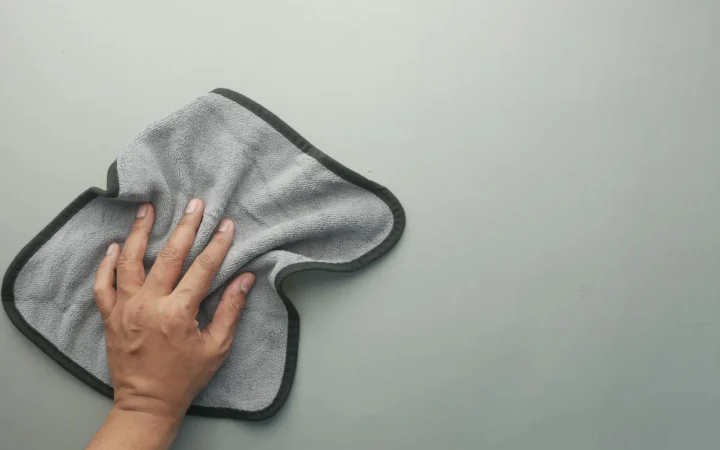
Dust with a damp or microfiber cloth so you trap particles instead of flinging them into the air. Dry feather dusters just relocate the problem.
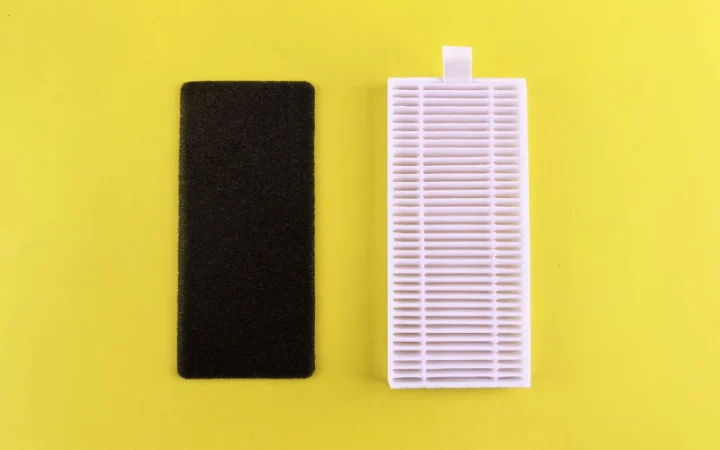
Vacuum weekly with a machine that has a sealed HEPA filtration system, so the fine allergen you pull up does not blow straight out the exhaust. If you are weighing filter options for your home, HEPA Filters Explained: What They Trap is a useful companion here.
Place an air purifier where it actually helps
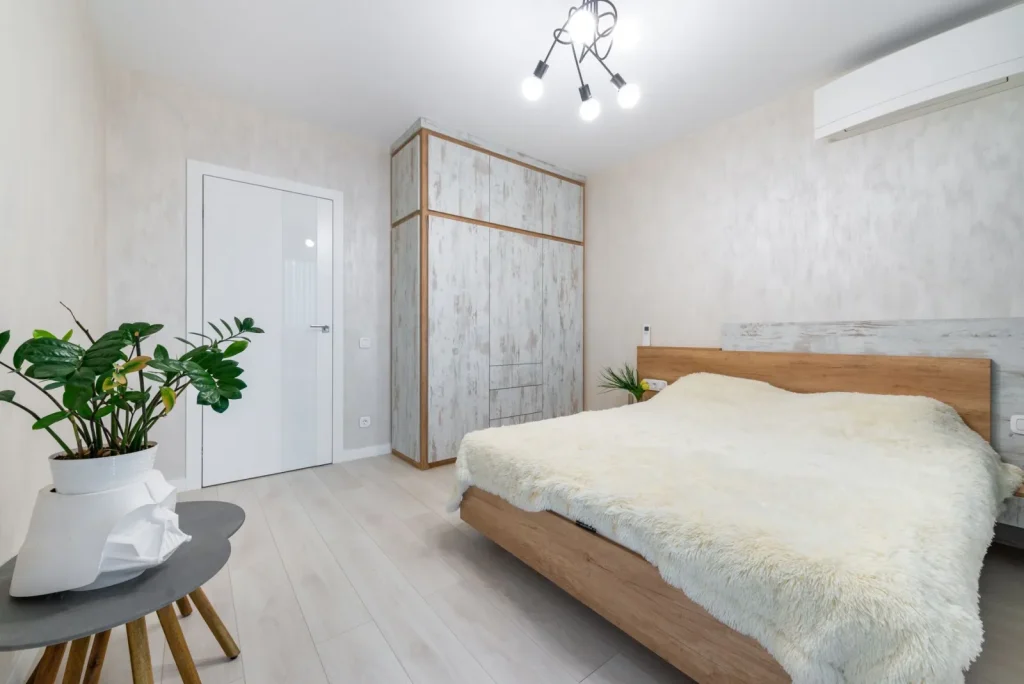
A purifier is worth it in a bedroom, but placement decides whether it does anything. A mistake I see constantly is a good unit shoved into a corner behind an armchair, choking off its own airflow.
| Placement choice | Why it matters |
|---|---|
| Nightstand or floor near the head of the bed | Puts clean air in your breathing zone while you sleep, which is the whole point |
| At least 6-12 inches from walls and furniture | Lets the intake and exhaust breathe; crowding it kills its rated output |
| Sized to the room’s square footage (check the CADR) | An undersized unit runs full blast and still cannot keep up |
| Run continuously on low or medium | Steady turnover beats occasional bursts on high |
Match the purifier to your room size using its Clean Air Delivery Rate. A rough target is a CADR that turns the room’s air over several times an hour. For a typical 12 by 12 bedroom, look for a dust CADR of at least 150 to 180.
Run the purifier with the bedroom door closed. You want it cleaning one sealed space, not fighting the whole house. Close it an hour before bed so the air is already clean when you lie down.
Your bedroom allergy proofing checklist
Here is the whole plan in one pass. Do the top items first; they matter most.
- Zip the mattress, box spring, and pillows into certified allergen-barrier encasements.
- Wash sheets and pillowcases weekly at 130 F or hotter (or hot-dry after).
- Keep humidity at 40 to 50 percent RH, verified with a hygrometer.
- Replace carpet with hard flooring plus a washable throw rug.
- Swap heavy drapes for washable curtains or wipeable blinds.
- Clear clutter off flat surfaces and keep pets off the bed.
- Dust with damp microfiber; vacuum weekly with sealed HEPA filtration.
- Place a right-sized HEPA purifier near the bed, away from walls, running continuously.
Where to start this weekend
You do not have to do all of this at once, and you should not try to. If you buy one thing, buy the encasements, because sealing the bed cuts your exposure faster than anything else on the list.
Then set a weekly hot-wash reminder on your phone and pick up a $15 hygrometer to see where your humidity really sits. Those two habits cost almost nothing and hold the gains you just made. Everything else, the flooring and the purifier, you can layer in over the next month or two as budget allows.
Frequently asked questions
Do allergen mattress encasements actually work, or are they a gimmick?
They work, and they are one of the few allergy products with solid backing. A full zippered encasement physically seals dust mite allergen inside the mattress so it cannot reach you. The key is a certified cover with a tight pore size and a complete zip-around design. A loose fitted cover that leaves the bottom open does not do the job.
How often should I wash my bedding to control dust mites?
Wash sheets and pillowcases weekly, and blankets or duvet covers every two weeks. Water temperature matters more than frequency. You need 130 degrees F or hotter to kill mites, so if your water heater runs cooler, add a hot dryer cycle or use a sanitize setting to finish the job.
What humidity level keeps dust mites away in a bedroom?
Keep the room between 40 and 50 percent relative humidity. Dust mites pull moisture straight from the air, so a drier room starves them and their numbers fall. Below 50 percent they struggle badly. Use an inexpensive hygrometer to check, and add a small dehumidifier if your readings sit above 55 percent.
Where should I put an air purifier in the bedroom?
Place it on a nightstand or the floor near the head of the bed, so it cleans the air you breathe while sleeping. Give it 6 to 12 inches of clearance from walls and furniture so airflow is not blocked. Match the unit's Clean Air Delivery Rate to your room size, close the door, and run it continuously on low or medium.
Is carpet really a problem for bedroom allergies?
Yes. Wall-to-wall carpet traps far more dust and mite allergen than hard flooring and is nearly impossible to clean thoroughly. If replacing it is not an option right now, vacuum weekly with a sealed HEPA machine and add a washable throw rug you can launder in hot water. Hard flooring with a small washable rug is the lower-allergen setup.

Dharm Solanki
Dharm Solanki spends a lot of time thinking about the air inside people's homes, usually when no one else is. He writes about humidity, ventilation, and dehumidifiers, along with the small fixes that turn a stuffy or damp room into one that feels comfortable again. He would rather explain why a recommendation works than just point at a product, so his guides tend to answer the question you were about to ask next. And if something looks great on paper but struggles in a normal house, he says so.