On this page
The first time a homeowner showed me their power bill and blamed the new dehumidifier, we did the math together at the kitchen table. Her 50-pint unit was running flat out, 24 hours a day, in a basement with a cracked-open window. It was costing her about $30 a month, and roughly a third of that was pure waste.
That is the thing about a dehumidifier. It is not an expensive appliance to run, but small habits can double or halve the bill.
So let’s put real numbers on it, from the hour up to the month, and then look at where the savings actually hide.
How a dehumidifier’s cost is actually calculated
Every running cost comes down to three things: how many watts the unit pulls, how many hours it runs, and what you pay per kilowatt-hour (kWh).
The formula is simple. Watts divided by 1,000 gives you kilowatts. Multiply that by hours run, then by your electricity price.
(Watts / 1,000) x hours x price per kWh = cost. A 500-watt unit running 10 hours at 16 cents per kWh costs 0.5 x 10 x 0.16, which is 80 cents that day.
The US average residential electricity price sits around 16-17 cents per kWh as of 2026, though it ranges from about 11 cents in some states to over 30 cents in others. You can find your exact rate on your utility bill, listed as the supply or energy charge. Check the U.S. Energy Information Administration for state averages if your bill is confusing.
Finding your unit’s wattage
Look at the label on the back or in the manual. Portable home dehumidifiers usually draw between 300 and 700 watts when the compressor is running.
A small 20-pint unit might pull 300 watts. A large 50-pint unit closer to 600-700 watts. Desiccant models run higher, often 400-600 watts even for modest capacity, which is worth remembering if you are weighing desiccant vs compressor dehumidifier options for a cold room.
Cost per hour, day, and month
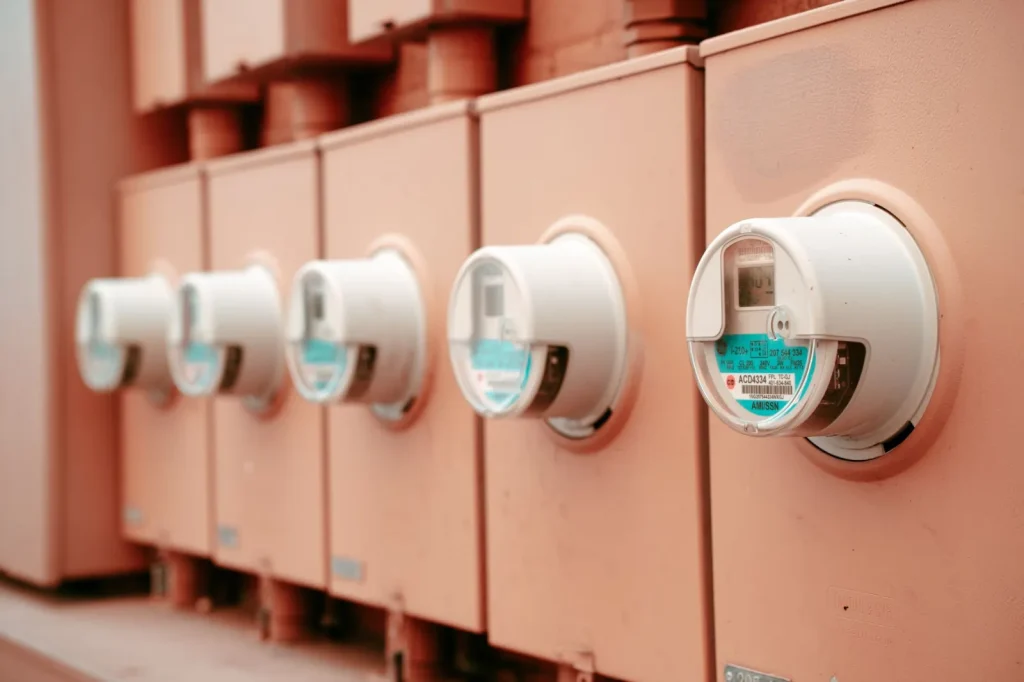
Here is where it gets useful. The table below assumes 16 cents per kWh, which is close to the national average. Adjust up or down for your own rate.
| Unit size | Wattage | Per hour | Per day (12 hrs) | Per month (12 hrs/day) |
|---|---|---|---|---|
| 20-pint | 300 W | ~4.8 cents | ~58 cents | ~$17 |
| 30-pint | 450 W | ~7.2 cents | ~86 cents | ~$26 |
| 50-pint | 600 W | ~9.6 cents | ~$1.15 | ~$35 |
Notice that word “assumes.” Almost nobody runs a dehumidifier at full power for 12 straight hours. The compressor cycles off once the target humidity is reached, so real bills are usually lower than the table suggests.
A well-set 50-pint unit in a moderately damp basement might only run its compressor 4-6 hours out of every 12. That drops the monthly cost to something like $12-$18 rather than $35.
The rated wattage tells you the ceiling. The humidistat decides how close you ever get to it.
What drives the price up or down
Two identical rooms can produce wildly different bills. Here is what separates them.
How wet the space is. A basement with a real moisture problem forces the compressor to run almost constantly. Fixing the source, a leaking gutter, poor grading, an unsealed floor, does more for your bill than any setting. If you are chasing damp basement causes and fixes, start there before you blame the appliance.
Your target humidity. Every 10 percent lower you ask for means more runtime. Pulling a room from 60 percent down to 35 percent costs far more than holding it at a healthy 50 percent.
Room temperature. Compressor units lose efficiency in cold rooms and may run longer or ice up. In a 50-degree garage, a desiccant model can actually cost less overall despite higher wattage.
Unit efficiency. Look for the ENERGY STAR label and the “integrated energy factor,” measured in liters per kWh. A higher number means more water removed per unit of electricity. The ENERGY STAR dehumidifier page lists certified models.
A $120 bargain dehumidifier that runs constantly can cost you more in a single damp season than a $250 efficient model that cycles off. Cheap to buy is not the same as cheap to own.
Simple ways to cut the running cost
None of these require buying anything. They are settings and habits.
Use the humidistat, not the on switch
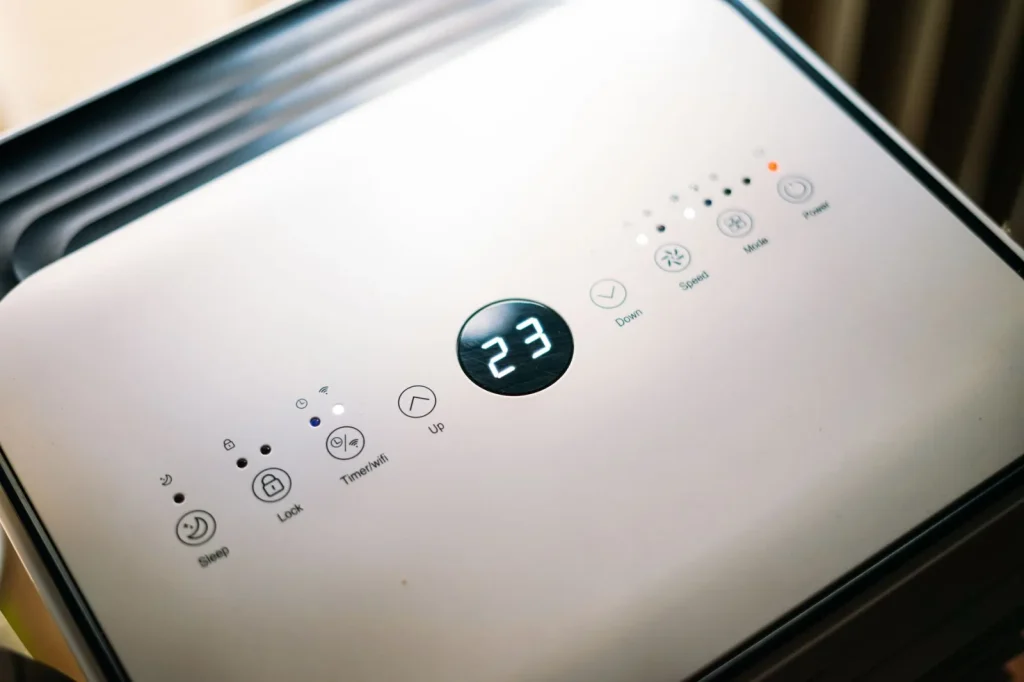
This is the big one. Most units let you set a target humidity. Set it to 50 percent and let the machine cycle itself off when it gets there. Running to a fixed humidity instead of running nonstop is the difference I saw on that kitchen-table bill.
Fifty percent is also the sweet spot for the best humidity level to prevent mold, so you are not trading money for a musty room.
Run it during cooler, cheaper hours
If your utility charges time-of-use rates, run the dehumidifier off-peak, often overnight. Even on a flat rate, cooler evening air holds less moisture, so the unit works less to hit its target.
Set a timer for the space’s real needs
A finished basement that only gets damp after heavy rain does not need round-the-clock dehumidifying. A built-in timer, or a $15 plug-in timer, running it 6-8 hours a day may be plenty.
Empty the tank or check the drain hose regularly. A full tank shuts the unit off, but a kinked continuous-drain hose can make it run and refreeze without removing water, burning power for nothing.
Seal the room first
Close windows and doors while the unit runs. That homeowner’s cracked window was pulling in humid outdoor air, so her machine was, in effect, trying to dehumidify the whole neighborhood.
- Set the humidistat to 50 percent RH
- Confirm your actual per-kWh rate from the bill
- Check wattage on the unit’s label
- Close windows and doors in the treated space
- Clear the drain hose or empty the tank weekly
- Fix the moisture source, not just the symptom
A realistic monthly estimate for your home
Put it together and most homes land in a comfortable range. A single mid-size unit, set to 50 percent and cycling normally, typically adds $10-$25 a month during a damp season, and much less in dry months.
Whole-house systems draw more but treat far more space per dollar, which matters if you are weighing portable vs whole house dehumidifier choices. For one problem room, a portable is almost always the cheaper path.
Run your own numbers once, using the formula above and your real rate. It takes two minutes and usually shows the appliance is not the villain the power bill made it out to be. The window, the setting, or the unsealed basement wall almost always is.
Start with the humidistat this week. It is free, it takes ten seconds, and on a hard-working unit it is the closest thing to a guaranteed saving you will find.
Frequently asked questions
How much does it cost to run a dehumidifier per hour?
For most home units, expect about 4 to 9 cents per hour when the compressor is running. That assumes 300 to 700 watts and an electricity price near 16 cents per kWh. Smaller 20-pint units sit at the low end, larger 50-pint units at the high end. Your real cost is often lower because the unit cycles off once it hits the target humidity.
Is it cheaper to run a dehumidifier all day or in short bursts?
Neither, if you use the humidistat. Set a target humidity like 50 percent and let the unit decide when to run. That beats both nonstop operation and random short bursts. In a mildly damp room, a timer running 6 to 8 hours a day can work. In a very wet space, the humidistat will keep it running until the problem is fixed at the source.
Does a dehumidifier use as much power as an air conditioner?
No, not usually. A window air conditioner often pulls 900 to 1,400 watts, while most home dehumidifiers draw 300 to 700 watts. So a dehumidifier typically costs roughly half as much per hour to run. That said, a large whole-house dehumidifier or a hard-running desiccant model narrows the gap.
Why is my dehumidifier making my electricity bill so high?
The most common cause is nonstop running because of an unaddressed moisture source or an open window feeding in humid air. A humidistat set too low, like 35 percent, also forces long runtimes. Check that windows are shut, set the target to 50 percent, and fix leaks or drainage issues. A cheap, inefficient unit that never cycles off is another frequent culprit.
How do I calculate my own dehumidifier running cost?
Take the wattage from the unit's label and divide by 1,000 to get kilowatts. Multiply that by the hours you run it, then by your price per kWh from your bill. For example, 500 watts is 0.5 kW; run it 8 hours at 16 cents and you get 0.5 x 8 x 0.16, which is 64 cents that day, or roughly 19 dollars a month.

Dharm Solanki
Dharm Solanki spends a lot of time thinking about the air inside people's homes, usually when no one else is. He writes about humidity, ventilation, and dehumidifiers, along with the small fixes that turn a stuffy or damp room into one that feels comfortable again. He would rather explain why a recommendation works than just point at a product, so his guides tend to answer the question you were about to ask next. And if something looks great on paper but struggles in a normal house, he says so.