
On this page
- Why moisture eases a stuffy nose
- Step 1: Measure before you moisturize
- Step 2: Pick the right mist for your household
- Step 3: Size and place it for the room
- Step 4: Run it on a schedule, not around the clock
- Step 5: Keep it clean or it backfires
- When a humidifier is not the answer
- Getting real relief tonight
The first winter I lived in a house with forced-air heat, I woke up almost every morning with a nose so blocked I had to breathe through my mouth. I blamed a cold that never quite arrived. The real culprit was the air itself, which my hygrometer eventually pegged at 22% relative humidity, drier than a lot of deserts.
Dry air does two unpleasant things to your sinuses. It pulls moisture out of the thin lining inside your nose, and it lets that lining crack, swell, and clog. A humidifier for sinus congestion works by putting some of that moisture back so mucus stays thin and moves the way it should.
Here is how to set one up so it actually helps your breathing instead of quietly growing mold in the corner.
Why moisture eases a stuffy nose
Your nasal passages are lined with a layer of mucus and tiny hairs called cilia that sweep debris and germs toward the back of your throat. When the air is bone dry, that mucus thickens and the cilia stall out.
Thick mucus is sticky mucus. It plugs the narrow openings between your sinuses and your nose, which is the pressure and stuffiness you feel across your cheeks and forehead.
Adding humidity keeps the mucus loose so it drains. The EPA’s indoor air quality pages note that very dry air is a common irritant for the respiratory tract, and reasonable moisture is part of keeping that tract comfortable.
A humidifier does not cure a cold or a sinus infection. It makes the symptoms far more bearable while your body does the healing.
Step 1: Measure before you moisturize

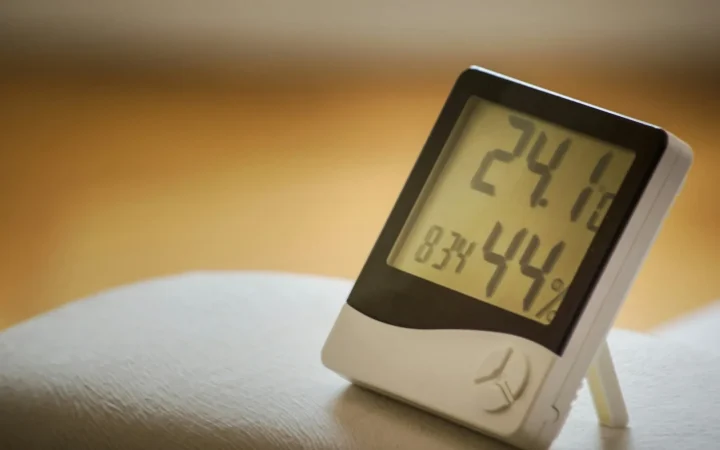
Do not guess at your humidity. A small digital hygrometer costs $10 to $15 and tells you exactly where you stand.
The target for respiratory comfort is 40 to 50% relative humidity. Below 30%, your sinuses dry out. Above 55%, you start inviting dust mites and mold, which cause their own congestion.
If your hygrometer reads under 30% in the room where you sleep, a humidifier will almost certainly help your congestion. If it already reads 50% or more, added moisture is not your fix and may make things worse.
Step 2: Pick the right mist for your household
People agonize over warm mist versus cool mist for sinus relief. Here is the honest truth from years of testing both: for loosening congestion, they work about equally well. The moisture is what matters, not its temperature by the time it reaches your nose.
The choice comes down to safety, noise, and comfort.
| Factor | Cool mist | Warm mist |
|---|---|---|
| Safety around kids | Safer, no hot water or heating element | Risk of burns from hot water or steam |
| Bacteria and mold | Needs diligent cleaning | Boiling kills most microbes in the tank |
| Energy use | Low | Higher, it heats water |
| Room feel | Can cool a small room slightly | Adds a touch of warmth |
| Best for | Kids’ rooms, warm climates | Cold bedrooms, adults |
If children or pets share the room, choose cool mist. The American Academy of Pediatrics has long recommended cool mist for exactly the burn-risk reason. In an adult bedroom in a cold climate, warm mist feels cozier and the boiling step gives you a small hygiene advantage.
If you want the full breakdown of how these two families of machines differ, our comparisons on Warm Mist vs Cool Mist Humidifier and Evaporative vs Ultrasonic Humidifiers Compared go deeper than I can here.
A note on ultrasonic units and white dust
Ultrasonic cool mist humidifiers are quiet and popular, but they atomize whatever is in the water. Fill one with hard tap water and you get a fine white mineral dust on your nightstand, and you breathe those particles too.
Use distilled or demineralized water in ultrasonic models. It costs about a dollar a gallon and solves the dust problem entirely.
Step 3: Size and place it for the room

A tiny travel humidifier will not budge the humidity in a full bedroom. Match the unit’s output to your square footage, then place it correctly.
- Put it 3 or more feet from your bed or chair, not right beside your face.
- Keep it off the floor when possible; a dresser or nightstand spreads mist better.
- Leave space around it so mist does not soak one wall or a curtain.
- Aim the mist outlet toward open room, not at an outlet or electronics.
Our guides on How to Size a Humidifier for a Room and Where to Place a Humidifier in a Room walk through the math and the spots to avoid. The short version: an oversized unit that you run on low is safer than an undersized one you run flat out all night.
Step 4: Run it on a schedule, not around the clock
More is not better. Running a humidifier nonstop can push a closed bedroom past 55% and leave damp patches on windows and walls.
For sinus relief, I run mine overnight and during the driest part of the day, then let the room breathe. Most people get real relief from 8 to 12 hours in the room they occupy most.
Buy a unit with a built-in humidistat, or pair a basic model with a plug-in hygrometer. Set it to shut off around 45% so you never overshoot while you sleep.
If you want a fuller schedule, our piece on How Long to Run a Humidifier Each Day covers different climates and seasons.
Step 5: Keep it clean or it backfires
This is the step people skip, and it is the one that can turn a congestion helper into a congestion cause.
A neglected tank grows bacteria and mold within days. The machine then mists those spores straight into the air you are trying to soothe your sinuses with, which can trigger coughing, wheezing, and worse stuffiness.
If your humidifier ever smells musty or you see pink or black film inside the tank, stop using it until it is scrubbed clean. Misting mold into a bedroom is worse for your sinuses than dry air ever was.
The routine is simple and quick. The CDC’s guidance on household mold is a good reminder of why this matters.
- Empty and refill with fresh water daily; do not top off old water.
- Rinse the tank every day and let it air dry when you can.
- Deep clean every 3 days with white vinegar, then a diluted bleach rinse per the manual.
- Replace wicks and filters on the schedule the maker lists, usually every 1-3 months.
- Prefer distilled water to slow mineral buildup and dust.
When a humidifier is not the answer
If your congestion lasts more than 10 days, comes with a fever, or brings green-yellow discharge and facial pain, that points toward a sinus infection or allergies, not dry air. A humidifier can ease the discomfort, but it will not treat the cause.
People with asthma or dust mite allergies should be cautious. Too much humidity feeds mites and mold, so those households should stay firmly in the 40 to 45% band and lean toward warm mist or a well-cleaned evaporative unit.
Getting real relief tonight
Start by measuring the air in your bedroom. If it is under 30%, put a correctly sized, clean humidifier a few feet from the bed, fill it with distilled water, and set it to hold around 45% overnight.
Do that, keep the tank scrupulously clean, and most people notice easier breathing within a night or two. If nothing improves after a week or the symptoms turn nastier, that is your cue to call a doctor rather than buy a bigger machine.
Frequently asked questions
What humidity level is best for sinus congestion?
Aim for 40 to 50% relative humidity in the room where you sleep. Below 30% dries and irritates your nasal lining, which thickens mucus and worsens stuffiness. Above 55% encourages dust mites and mold, which cause their own congestion. A cheap plug-in hygrometer, about $10 to $15, lets you confirm you are hitting that window instead of guessing.
Is cool mist or warm mist better for congestion?
For loosening mucus and easing a stuffy nose, both work about equally well because the moisture is what helps, not its temperature. Choose based on safety and comfort. Pick cool mist if children or pets share the room, since there is no hot water to cause burns. Warm mist suits cold adult bedrooms and boils the water, which kills most tank microbes.
Can a humidifier make sinus congestion worse?
Yes, in two ways. If you overshoot past 55% humidity, you feed dust mites and mold that trigger congestion. And a dirty tank grows bacteria and mold that the machine then mists into your air. Keep humidity in the 40 to 50% range, empty and rinse the tank daily, and deep clean every few days to avoid making things worse.
How long should I run a humidifier for a stuffy nose?
Most people get relief from running it 8 to 12 hours in the room they use most, especially overnight in the bedroom. Running it nonstop in a closed room can push humidity too high and leave damp spots. Use a model with a humidistat, or pair a basic unit with a hygrometer, and let it shut off around 45%.
What kind of water should I put in a humidifier?
Use distilled or demineralized water, which runs about a dollar a gallon. Tap water carries minerals that ultrasonic models atomize into a fine white dust that settles on furniture and gets breathed in. Distilled water eliminates the dust and slows the mineral buildup inside the tank, which also makes cleaning easier and keeps the mist cleaner for your sinuses.
When should I see a doctor instead of using a humidifier?
A humidifier eases symptoms but does not treat infections or allergies. See a doctor if congestion lasts more than 10 days, comes with a fever, or brings facial pain and thick green or yellow discharge. Those signs point toward a sinus infection or an allergy problem that added moisture alone will not fix. Do not keep buying bigger machines hoping to solve a medical issue.

Dharm Solanki
Dharm Solanki spends a lot of time thinking about the air inside people's homes, usually when no one else is. He writes about humidity, ventilation, and dehumidifiers, along with the small fixes that turn a stuffy or damp room into one that feels comfortable again. He would rather explain why a recommendation works than just point at a product, so his guides tend to answer the question you were about to ask next. And if something looks great on paper but struggles in a normal house, he says so.