On this page
A house I inspected years ago sat on a pretty ridge with great airflow, new windows, and a finished basement the owners had just spent $40,000 on. It also had a radon level of 12 picocuries per liter, three times the point where the EPA says to act. Nothing about the house looked wrong. That is the whole problem with radon.
You cannot see it, smell it, or taste it. The only way to know your number is to test, and most people never do.
What radon actually is
Radon is a radioactive gas that forms when uranium in soil and rock breaks down over time. Uranium is everywhere in the ground, in tiny amounts, so radon is being produced under almost every home in the country.
The gas is colorless and odorless. It rises up through soil and finds its way into buildings, where it can build up to levels far higher than what you would breathe outdoors.
Radon is measured in picocuries per liter of air, written as pCi/L. Outdoor air averages around 0.4 pCi/L. Indoor air is where it gets concentrated, and that is what the testing is about.
The EPA action level is 4.0 pCi/L. At or above that number, you should fix the home. But there is no truly safe level, so lower is always better, and many people aim for 2.0 pCi/L.
Why it matters for your health
Radon is the second leading cause of lung cancer in the United States, behind smoking, and the leading cause among people who have never smoked. The EPA radon program estimates it causes about 21,000 lung cancer deaths a year.
The risk works quietly. As radon decays, it releases tiny radioactive particles that get trapped in your lungs when you breathe. Over years, that low-level exposure damages lung tissue.
Smoking and radon together are much worse than either one alone. If someone in the house smokes, a high radon level is far more dangerous than the same level in a nonsmoking home.
Radon is not a dramatic hazard. It is a slow one, which is exactly why it gets ignored for decades.
How radon gets into a home
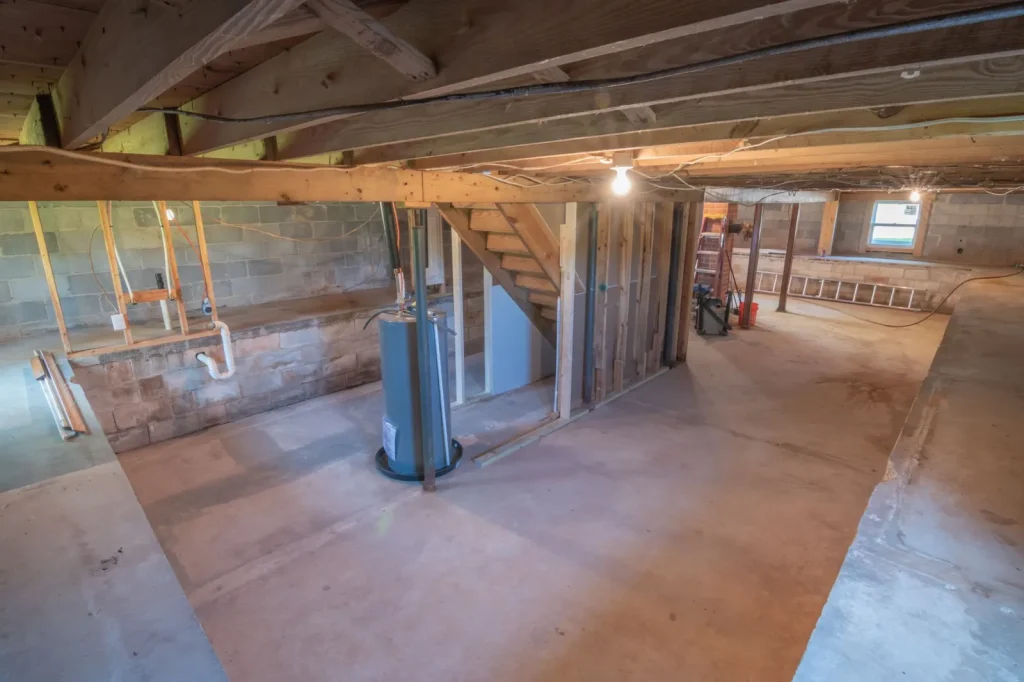
Radon enters through the parts of your house that touch the ground. The gas is under slight pressure in the soil, and your home often acts like a chimney, pulling that soil air upward and inside.
Common entry points
- Cracks in a concrete slab or foundation floor
- Gaps around pipes, sump pits, and floor drains
- Joints where the wall meets the floor
- Crawl space floors that are bare dirt
- Well water, in some regions, which releases radon when you shower or run the tap
Warm air rising and leaving through the upper floors creates a mild vacuum at the bottom of the house. That suction draws soil gas in through any opening it can find. This is why basements and ground floors usually test highest.
A point that surprises people: a tighter, more energy-efficient home can actually hold radon at higher concentrations, because there is less natural air exchange to dilute it. Good insulation and good ventilation are two different jobs.
Testing: the only way to know
Here is the good news after all that. Testing is cheap, simple, and something you can do yourself this week.
Short-term tests
A short-term kit sits in your home for 2 to 7 days, then you mail it to a lab. These cost roughly $15 to $30, and many state radon programs give them away free. They are the fastest way to get a first reading.
Long-term tests
A long-term test stays in place for 90 days or more and gives a better picture of your year-round average, since radon swings with weather and season. If a short-term test comes back borderline, a long-term test is the honest follow-up.
Test in the lowest level you use or might finish later, place the kit away from drafts and exterior walls, and keep windows shut for the closed-house period. Winter is often the highest-reading season, which makes it a good time to test.
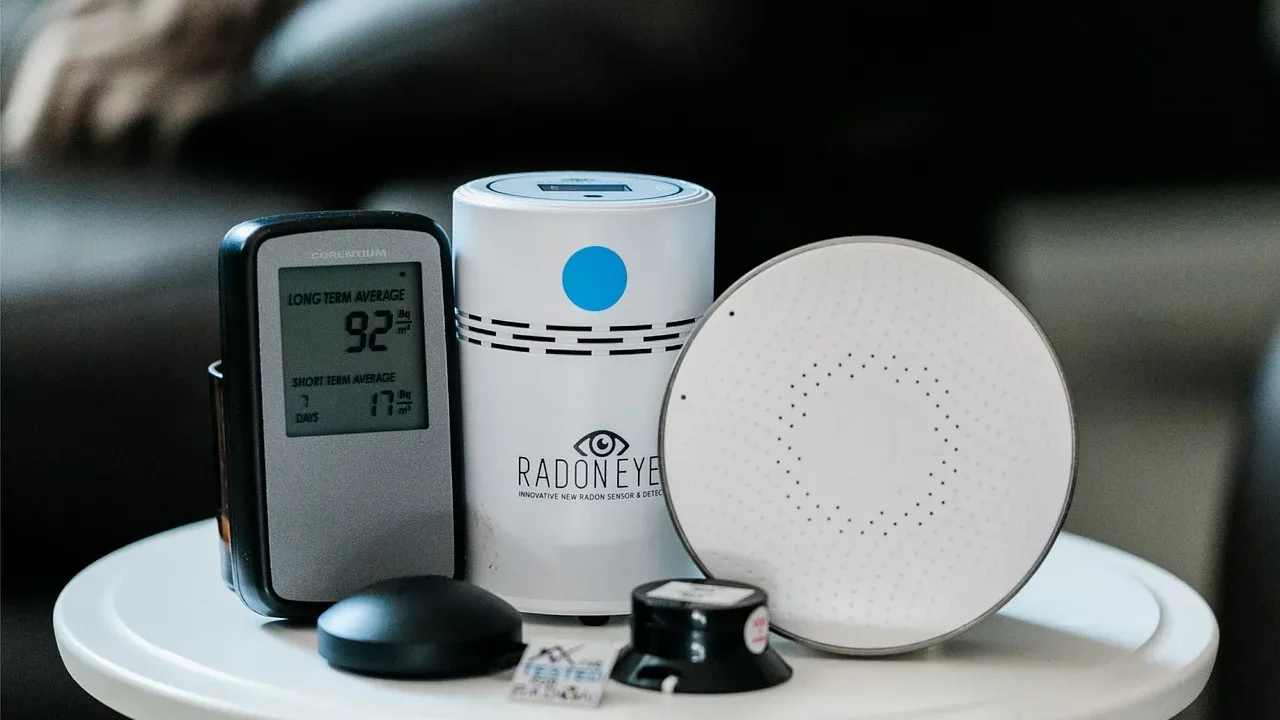
If you own a continuous radon monitor, the same principle behind How Indoor Air Quality Monitors Work applies here, though most consumer air monitors track things like particulates and carbon dioxide rather than radon. Radon needs a dedicated device or a lab kit.
| Your test result | What it means | What to do |
|---|---|---|
| Below 2.0 pCi/L | Low | Retest every few years or after major renovation |
| 2.0 to 3.9 pCi/L | Elevated but under action level | Consider a long-term test; mitigation is reasonable |
| 4.0 pCi/L or higher | Action level | Confirm, then plan mitigation |
| Above 10 pCi/L | High | Retest short-term to confirm, then mitigate promptly |
When and how to mitigate
If your confirmed level is 4.0 pCi/L or higher, it is time to fix it. Between 2.0 and 3.9, mitigation is a judgment call, and I lean toward doing it if someone in the house smokes or spends a lot of time in a basement bedroom.
The standard fix is called sub-slab depressurization. A contractor installs a pipe through the slab into the soil beneath, adds a quiet inline fan, and vents the soil gas up and out above the roofline before it can enter the home.
Most systems cost between $800 and $2,500 installed, depending on your foundation and layout. A good system reliably drops levels below 4.0, often below 2.0, and the fan uses about as much electricity as a low-wattage light bulb.
Sealing cracks alone is not a reliable radon fix. It helps a mitigation system work better, but on its own it rarely brings a high level down enough. Hire a certified radon mitigation professional rather than treating this as a weekend caulking project.
After any system goes in, retest to confirm it worked. A quality installer should include a post-mitigation test, and you should keep testing every couple of years afterward, since fans wear out.
Where radon fits in your bigger air picture
Radon is its own animal. It is not a particle you can filter and not a chemical you smell, so a good air purifier or a high MERV filter does nothing for it. That sets it apart from most of what you read about in Common Indoor Air Pollutants Found at Home.
Think of your indoor air as a few separate problems that each need their own tool. Filters and HEPA handle particles. Ventilation handles carbon dioxide and stale air. Radon needs a test and, if the number is high, a mitigation system. One does not substitute for another.
Your next step this week
You do not need to overhaul anything today. Order a short-term test kit or call your state radon office for a free one, run it for a few days in your lowest living level, and mail it in.
If the number comes back under 2.0, you can relax and retest in a few years. If it comes back higher, you now have a concrete, solvable problem with a known fix and a known price. Either way, you traded a hidden unknown for a real answer, and that is worth about twenty dollars and a week of your time.
Frequently asked questions
Is radon dangerous at low levels?
There is no level considered fully safe, but risk rises with the number and with how long you are exposed. Below 2.0 pCi/L the risk is low, and most people in that range simply retest every few years. The EPA sets 4.0 pCi/L as the point to take action. If a smoker lives in the home, treating even moderate levels seriously makes sense.
How much does a radon test cost?
A short-term do-it-yourself kit runs about $15 to $30, including the lab analysis, and many state radon programs offer free kits. A professional test, often used during a home sale, typically costs $100 to $250. A continuous radon monitor for ongoing readings runs roughly $150 to $250. For a first look at your home, an inexpensive short-term kit is plenty.
Can I remove radon myself, or do I need a pro?
Testing is a solid do-it-yourself job. Mitigation usually is not. Sealing visible cracks can help, but bringing a high level down reliably takes a properly designed sub-slab depressurization system with a vent pipe and fan. A certified radon contractor sizes it correctly and confirms the result with a post-install test, which matters when your lungs are the thing at stake.
Does a house with no basement still get radon?
Yes. Homes on slabs and homes with crawl spaces can have elevated radon just as basement homes can. Radon enters wherever the house meets soil, so a slab with cracks or a crawl space with a bare dirt floor is a common path. The only way to know your specific home is to test it, regardless of foundation type.
How often should I retest for radon?
Retest every two to five years even if your first result was low, since soil conditions, settling, and home changes can shift levels over time. Test again after any major renovation, foundation work, or after you finish a basement. If you have a mitigation system, retest at least every two years, because the fan can fail silently and let levels climb back up.

Dharm Solanki
Dharm Solanki spends a lot of time thinking about the air inside people's homes, usually when no one else is. He writes about humidity, ventilation, and dehumidifiers, along with the small fixes that turn a stuffy or damp room into one that feels comfortable again. He would rather explain why a recommendation works than just point at a product, so his guides tend to answer the question you were about to ask next. And if something looks great on paper but struggles in a normal house, he says so.