On this page
The first time a customer showed me her dying calathea, I did not touch the soil. I looked at the window, where a heating vent was blowing straight up the wall behind the plant, and I looked at the leaf edges, which were the color and texture of a burnt cracker. She had been watering it more, thinking it was thirsty. It was not thirsty. It was gasping in air drier than a Phoenix afternoon.
That is the trap with houseplants. We treat every problem as a watering problem, when a huge share of indoor plant misery is actually about the moisture in the air, not the moisture in the pot.
Getting the humidity for indoor plants right is not complicated once you know what your plants actually come from. Let me walk you through it.
Why air moisture matters as much as watering
Plants breathe through tiny pores on their leaves called stomata. When the surrounding air is very dry, water evaporates out of those pores faster than the roots can replace it, and the leaf tissue at the edges dries and dies first.
Roots can be perfectly wet while the leaves are still losing this battle. That is why watering more often backfires: you drown the roots trying to fix a problem that lives in the air.
Match a plant’s humidity to where its wild ancestors grew. Rainforest floor plants want it damp and steady. Desert plants want it dry. When you fight a plant’s origins, the plant loses.
Home comfort and plant comfort overlap more than most people expect. The 40-50 percent range that keeps your skin and sinuses happy is also a fine middle ground for a mixed collection. If you have read our guide on Ideal Indoor Humidity, you already know the human sweet spot, and your plants mostly agree with you.
Group your plants by moisture need
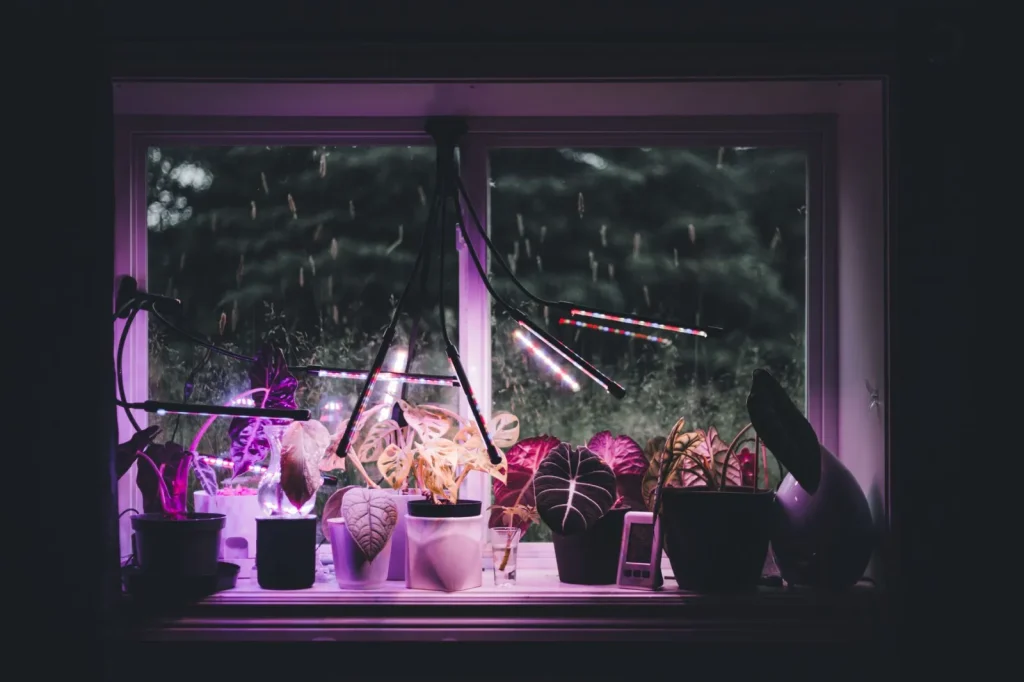
Before you buy a single gadget, sort what you own into three buckets. This one step does more than anything else.
| Group | Target humidity | Common examples |
|---|---|---|
| Tropical, thirsty for humidity | 50-60 percent | Calathea, fern, alocasia, nerve plant, orchid, anthurium |
| Adaptable middle | 40-50 percent | Pothos, philodendron, monstera, peace lily, spider plant, rubber plant |
| Dry-loving | 30-40 percent | Snake plant, ZZ plant, cactus, aloe, jade, most succulents |
The middle group is the reason houseplants are forgiving. A pothos will shrug off a dry apartment that would kill a calathea in a month.
If you are just starting out and your home runs dry, stock the adaptable and dry-loving buckets first. Save the divas for after you own a hygrometer.
The tropical divas
Calatheas, marantas, ferns, and nerve plants are the ones that will humble you. These come from the humid understory of rainforests where the air rarely drops below 60 percent. In a heated winter living room at 25 percent, they curl, crisp, and sulk within weeks.
The desert crowd
Snake plants, cacti, and succulents have the opposite problem. Push their air above 55-60 percent for long stretches and you invite rot, mildew, and soft mushy stems. Dry air is a feature for them, not a flaw.
Read the leaves before you read the meter
Your plants tell you when the air is wrong. Learn to read them and you will catch trouble early.
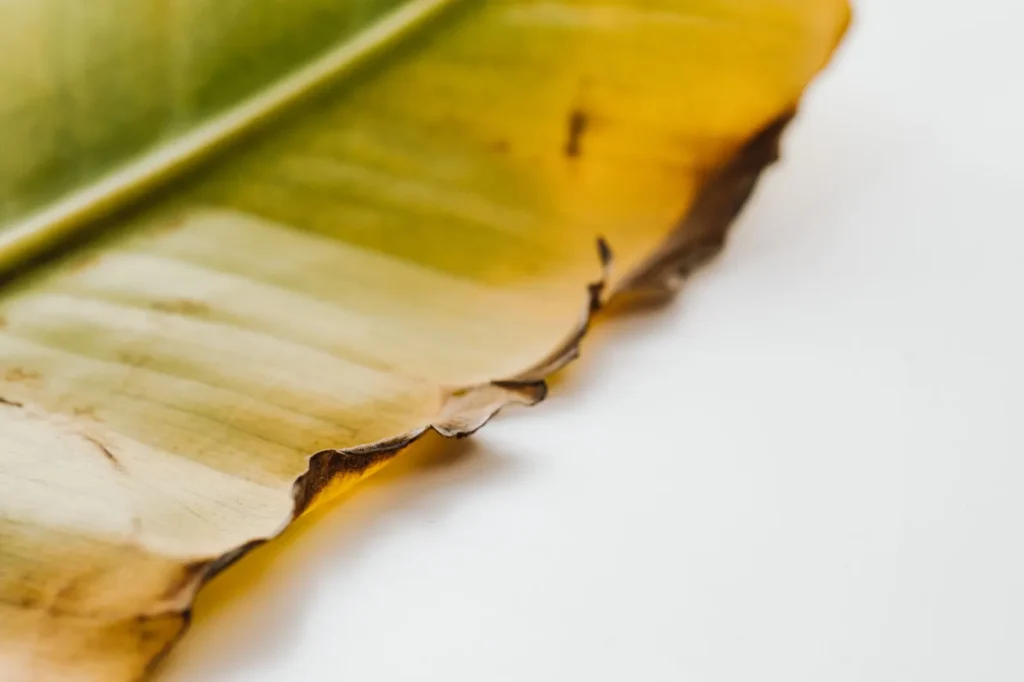
Crispy brown leaf tips and edges, with the very margin dry and papery, almost always mean the air is too dry. Yellowing that starts at the base and spreads, with soft or mushy spots, usually means the opposite: too wet, in the pot or the air.
Here is the quick field guide I use when someone sends me a photo of a struggling plant.
- Brown, crunchy leaf tips and edges: air too dry, most common in winter
- Leaf edges curling inward or downward: dry air, and often heat stress from a nearby vent
- Flower buds dropping before they open (orchids, especially): humidity too low
- Fuzzy gray or white mold on soil or stems: humidity too high, or poor airflow
- New leaves emerging small, crinkled, or deformed: dry air during unfurling
A brown tip is not a death sentence. It is a note. The plant is telling you, in the only language it has, that the air around it is thinner than it wants.
How to raise humidity for tropical plants
Now the practical part. If your hygrometer reads below 40 percent and your tropicals are suffering, here is how to lift the moisture, roughly from cheapest to most effective.
Group plants together
Plants release water vapor through their leaves all day. Cluster five or six pots close together and they raise the humidity of their own little zone by several points, for free. This is the single best no-cost move you can make.
Use a pebble tray, but know its limit
Set the pot on a shallow tray of pebbles with water sitting just below the pebble tops. As it evaporates it lifts humidity right around the plant. Honest truth: the effect is small and local, a few percent at most, so treat it as a helper, not a solution.
Run a small humidifier nearby
This is the reliable fix. A basic cool-mist humidifier, often $30-60, placed a few feet from your plant cluster, holds a group of tropicals in the 50-60 percent range even through a dry winter. Aim the mist near the plants, not directly onto the leaves, and clean the tank weekly so you are not spraying mineral crust or mildew around the room.
Skip daily misting as a humidity strategy. A spray bottle raises the moisture around a leaf for maybe ten minutes, then it is gone, and lingering water sitting in leaf crevices actually invites fungal spots. Mist for fun if you like it, but do not count on it.
Move plants to naturally humid rooms
Bathrooms and kitchens run more humid than the rest of the house thanks to showers and cooking. A fern that struggles in a dry bedroom often thrives on a bright bathroom shelf with no extra effort at all.
A dry-winter walkthrough
Say it is January, your furnace is running nonstop, and your reliable calathea suddenly has three crispy leaves. Here is the sequence I would follow, in order.
- Put a hygrometer next to the plant and read it for a day. If it says 25-35 percent, you found your culprit.
- Move the plant out of any direct blast from a heating vent or radiator. Hot moving air is a leaf-crisping machine.
- Cluster it with your other tropicals and add a pebble tray underneath.
- If the reading still sits below 45 percent, run a cool-mist humidifier a few feet away and recheck in two days.
- Trim the dead crispy edges with clean scissors, following the leaf’s natural shape. They will not turn green again, but new growth will come in healthy once the air is right.
Winter heating is the quiet villain here. The same dry indoor air that causes static shocks and cracked skin is stripping moisture from your tropicals, and the season runs from roughly November through March in most cold climates.
Getting the numbers to stick
Buy a hygrometer before you buy anything else. A $10-15 digital model set right in the plant zone ends the guessing, because ambient room humidity and the humidity in a dense plant cluster can differ by ten points or more.
If you want to understand how outdoor seasons and your heating and cooling swing these numbers, the U.S. EPA keeps a clear overview of indoor air and moisture at their indoor air quality pages, and the Department of Energy covers home moisture control on its Energy Saver site.
Start simple this week. Group your tropicals, get a hygrometer reading, and move anything sitting in a hot vent’s path. Do those three things and most of your crispy-tip troubles fade before you ever spend money on a humidifier.
Frequently asked questions
What is the ideal humidity for most indoor plants?
There is no single number because it depends on the plant. Tropical types like calathea, ferns, and orchids want 50-60 percent relative humidity. Adaptable plants such as pothos and monstera are content at 40-50 percent. Succulents, cacti, and snake plants prefer a dry 30-40 percent. If you keep a mixed collection, aim for around 45-50 percent as a workable middle ground.
Does misting my plants actually raise humidity?
Not in any lasting way. A spray of water evaporates within about ten minutes, so the humidity boost is gone almost as fast as it arrives. Worse, water pooling in leaf crevices can encourage fungal spots. If you want to genuinely raise humidity, group plants together, use a pebble tray, or run a small cool-mist humidifier nearby instead.
How do I know if the air is too dry for my plants?
The clearest sign is crispy brown tips and edges on the leaves, with the very margin dry and papery. You may also see leaves curling inward, flower buds dropping before they open, or new leaves emerging small and crinkled. Put a hygrometer next to the plant to confirm. Readings below 40 percent point to dry air for most tropicals.
Will a humidifier for my plants make my house feel damp?
A small cool-mist humidifier aimed at a plant cluster raises humidity in that immediate zone without soaking the whole house. Keep the room reading below 55-60 percent so you avoid mold on walls and windows. Clean the tank weekly to prevent spraying mineral dust or mildew, and set it a few feet from the plants rather than blasting the leaves directly.
Can indoor humidity be too high for plants?
Yes, especially for desert plants. Push snake plants, cacti, jade, and other succulents above roughly 55-60 percent for long stretches and you invite root rot, soft mushy stems, and fuzzy mold on the soil. Even tropicals need airflow at high humidity to avoid fungal problems. If you see gray or white mold on soil or stems, the air is too wet or too still.
Which houseplants tolerate dry indoor air the best?
If your home runs dry and you do not want to fuss with a humidifier, choose snake plants, ZZ plants, pothos, philodendron, cacti, aloe, and jade. These handle 30-45 percent humidity without complaint. Save the moisture-hungry divas like calathea, maranta, and ferns for after you have a hygrometer and a plan to keep the air above 50 percent.

Dharm Solanki
Dharm Solanki spends a lot of time thinking about the air inside people's homes, usually when no one else is. He writes about humidity, ventilation, and dehumidifiers, along with the small fixes that turn a stuffy or damp room into one that feels comfortable again. He would rather explain why a recommendation works than just point at a product, so his guides tend to answer the question you were about to ask next. And if something looks great on paper but struggles in a normal house, he says so.