On this page
The first air purifier I ever bought for my own bedroom was a beautiful failure. It looked great on the nightstand, the box promised it was “perfect for large rooms,” and it did almost nothing for the pollen that kept me up every April. The problem was not the machine. It was that I never checked the one number that actually predicts performance.
That number is CADR, and once you know how to read it against your room, buying a purifier stops being a guessing game.
What CADR actually tells you
CADR stands for Clean Air Delivery Rate. It is measured in cubic feet per minute (CFM) and tells you how much genuinely filtered air a unit pushes out per minute. A single purifier carries three CADR numbers: one for smoke, one for dust, and one for pollen.
The smoke number is the one I use for sizing. Smoke particles are the smallest of the three, so a machine that handles smoke well handles nearly everything above it in size.
Use the smoke CADR for your math. If a unit lists a smoke CADR of 200 CFM, that is your working number, even if the pollen number looks more impressive on the box.
One caution before we go further. A high CADR does not fix a room full of ongoing pollution. If you are frying food nightly or have a mold source, sizing is only half the job. This article is about the math of matching a machine to a space, not about whether a purifier solves every air problem.
The two-thirds rule, explained with real numbers
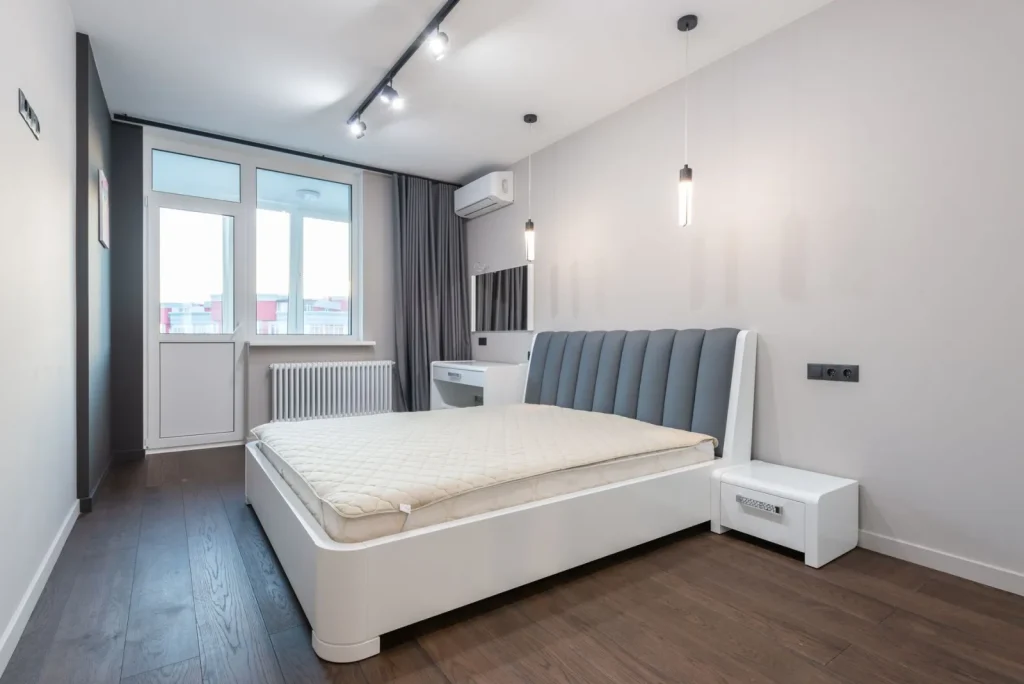
The classic shortcut, backed by the Association of Home Appliance Manufacturers, is simple. Your purifier’s smoke CADR should be at least two-thirds of your room’s square footage, assuming a standard 8-foot ceiling.
So a 150-square-foot bedroom needs a smoke CADR of at least 100 CFM. A 300-square-foot living room needs at least 200 CFM.
| Room size (8-ft ceiling) | Minimum smoke CADR | Typical space |
|---|---|---|
| 150 sq ft | 100 CFM | Small bedroom |
| 250 sq ft | 165 CFM | Home office |
| 350 sq ft | 230 CFM | Living room |
| 500 sq ft | 330 CFM | Open kitchen and dining |
The two-thirds rule is designed to give you roughly five air changes per hour, which is the target for anyone with allergies or asthma. That is the real goal hiding behind the shortcut.
Why air changes per hour beats square footage
Square footage is a stand-in for what you actually care about: how many times per hour the machine can process all the air in the room. That is air changes per hour, or ACH.
Two air changes per hour is fine for general freshness. Four to five is the level that meaningfully cuts pollen, pet dander, and wildfire smoke. The California Air Resources Board and many allergists point to that 4-5 range for people who are sensitive.
If you remember one thing, remember this: you are not buying square feet of coverage, you are buying air changes per hour in your specific room.
This matters because a manufacturer’s “covers 800 sq ft” claim usually means two ACH. Sounds generous. But at two changes an hour, that same room only gets you a mild improvement, not relief.
The calculation, step by step
Here is the honest math, using your real room instead of a marketing number.
- Measure the room volume. Length times width times ceiling height. A 12 by 14 room with a 9-foot ceiling is 1,512 cubic feet.
- Find the CADR in cubic feet per hour. Multiply the smoke CADR (in CFM) by 60. A 200 CFM unit moves 12,000 cubic feet per hour.
- Apply a mixing factor. Real rooms do not mix air perfectly, so multiply by about 0.66 to stay honest. That 12,000 becomes roughly 7,920 effective cubic feet per hour.
- Divide to get ACH. 7,920 divided by 1,512 equals about 5.2 air changes per hour.
In that example, a 200 CFM purifier delivers just over five ACH in a 1,512-cubic-foot room. That is a solid match for an allergy sufferer.
Skip the mixing factor if you want the manufacturer’s optimistic number, but include it if you want to know what you will actually feel. I always include it.
A worked example from a reader’s basement
A reader emailed me about a 400-square-foot finished basement with an 8-foot ceiling, so 3,200 cubic feet. He owned a unit with a 150 smoke CADR. Running the math: 150 times 60 times 0.66 is 5,940 effective cubic feet per hour, divided by 3,200 gives about 1.9 ACH.
Barely below two changes an hour. Fine for odor, useless for the mold spores he was worried about. He needed a unit closer to 350 CADR, or two smaller units, to reach four ACH.
The ceiling height mistake almost everyone makes
This is the error I see most often. People size for square footage and forget that air fills volume, not floor area.
A 250-square-foot room with an 8-foot ceiling is 2,000 cubic feet. Raise that ceiling to 10 feet and you are suddenly cleaning 2,500 cubic feet, a 25 percent jump. Your ACH drops by that same 25 percent with no change to the machine.
Vaulted and cathedral ceilings quietly destroy your air changes. A 12-foot vault can add 50 percent more volume than the standard 8-foot assumption behind every “covers X sq ft” claim on the box.
The fix is easy. Adjust the two-thirds rule up by the ratio of your ceiling to 8 feet. For a 10-foot ceiling, multiply your minimum CADR by 1.25. For a 12-foot ceiling, multiply by 1.5.
Before you finalize your pick
Run through this quick list once you have a candidate unit in mind.
- You used the smoke CADR, not dust or pollen, for your math.
- You measured actual ceiling height, not assumed 8 feet.
- You targeted 4-5 ACH if anyone has allergies, asthma, or you face wildfire smoke.
- You checked the CADR at the unit’s quiet speed, since the box number is usually the loudest setting.
- You gave yourself headroom by sizing up one tier.
That fourth point deserves a note. The rated CADR is almost always the high, loud, fan-screaming setting. Nobody sleeps next to that. If you plan to run the unit on low or medium overnight, size up so the quiet speed still delivers the ACH you need.
Putting it to work tonight
Grab a tape measure and get your room’s real volume, ceiling included. Pull the smoke CADR for any unit you are eyeing, run the four-step calculation, and see where the ACH lands.
If you clear four air changes an hour at a speed you can actually stand to listen to, you have the right machine. Anything less, and no clever placement will save it. The math takes three minutes and spares you the nightstand disappointment I paid for years ago.
Frequently asked questions
Which CADR number should I use to size a purifier?
Use the smoke CADR. Of the three ratings on the box (smoke, dust, and pollen), smoke covers the smallest particles, so a unit that handles smoke well handles larger particles too. Sizing off the smoke number gives you a safe, honest baseline. The pollen number is usually the highest and can make a weak unit look stronger than it really is.
What CADR do I need for a 300-square-foot room?
With a standard 8-foot ceiling, the two-thirds rule calls for a smoke CADR of at least 200 CFM, which targets about five air changes per hour. If your ceiling is taller, scale up. For a 10-foot ceiling, multiply that 200 by 1.25 to get roughly 250 CFM. Taller vaulted ceilings need even more.
How many air changes per hour do I actually need?
Two air changes per hour is enough for general freshness in an average home. If anyone has allergies, asthma, or you deal with wildfire smoke, aim for four to five per hour. That higher rate is what meaningfully lowers pollen, dander, and fine smoke particles, and it is the target the two-thirds rule is built around.
Does ceiling height really change how I size a purifier?
Yes, and it is the most common mistake. Purifiers clean volume, not floor area. A 10-foot ceiling holds 25 percent more air than the 8-foot standard every box assumes, which drops your air changes by the same amount. Measure your real ceiling height, then multiply your minimum CADR by your ceiling divided by eight.
Why is the manufacturer's coverage claim usually too optimistic?
Two reasons. First, the rated CADR is measured on the highest, loudest fan speed, which is not how most people run the unit at night. Second, big coverage claims often assume only two air changes per hour, not the four to five that actually helps sensitive people. Size up a tier so the quiet setting still does the job.

Dharm Solanki
Dharm Solanki spends a lot of time thinking about the air inside people's homes, usually when no one else is. He writes about humidity, ventilation, and dehumidifiers, along with the small fixes that turn a stuffy or damp room into one that feels comfortable again. He would rather explain why a recommendation works than just point at a product, so his guides tend to answer the question you were about to ask next. And if something looks great on paper but struggles in a normal house, he says so.